Apartment Building Maintenance: Ultimate Guide 2025
Why Apartment Building Maintenance is Critical for Property Success
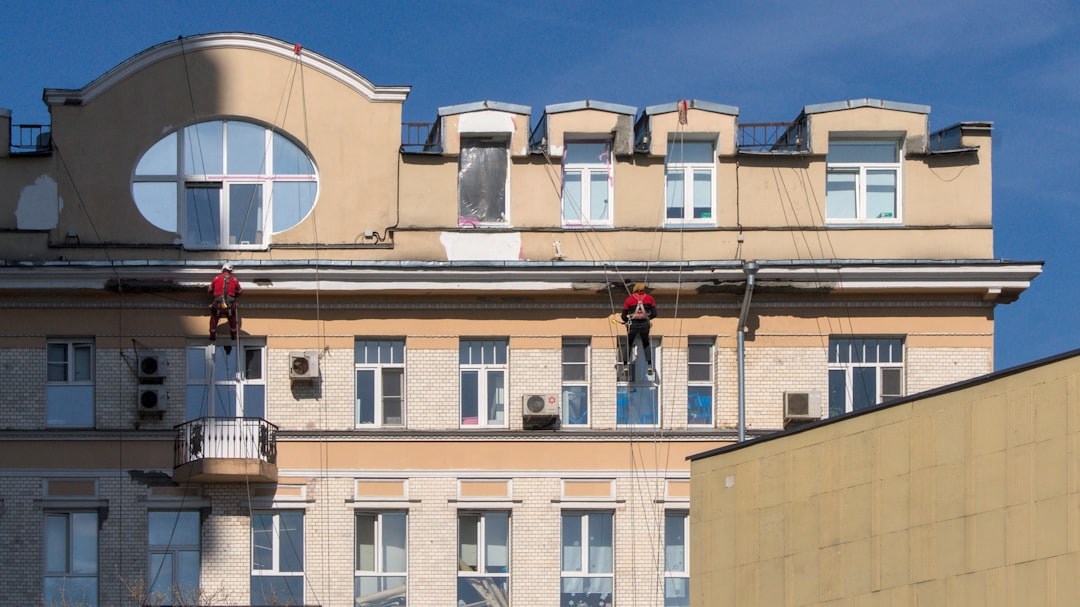
Apartment building maintenance involves all activities required to keep residential properties safe, habitable, and attractive. This includes routine inspections, preventive care, emergency repairs, and major system overhauls.
Essential maintenance operations include:
- Preventive maintenance – Regular HVAC inspections, filter changes, and system testing
- Corrective maintenance – Fixing broken appliances, leaky faucets, and malfunctioning equipment
- Emergency maintenance – Addressing gas leaks, burst pipes, and electrical hazards within 24 hours
- Common area upkeep – Landscaping, cleaning, lighting, and structural maintenance
- Unit turnovers – Deep cleaning, painting, repairs, and upgrades between tenants
Proper maintenance boosts tenant satisfaction and retention rates, leading to fewer vacancies and higher rents. It also prevents small issues from escalating into costly emergencies.
Industry data shows garden apartments spend about 9% of operating expenses on maintenance, while mid- and high-rises spend 6%. A large 800-unit complex may need a manager, supervisor, and several technicians to manage work orders and preventive tasks.
Consistent maintenance preserves property value and ROI. Neglect leads to deterioration, expensive repairs, and safety violations. Different property types have unique needs; high-rises require elevator maintenance, while garden apartments need extensive landscaping.
I’m Moe Shariff, owner of Apartment Services Group. With over eight years of experience, my Houston-based companies help property managers streamline their apartment building maintenance to reduce costs and improve tenant satisfaction.
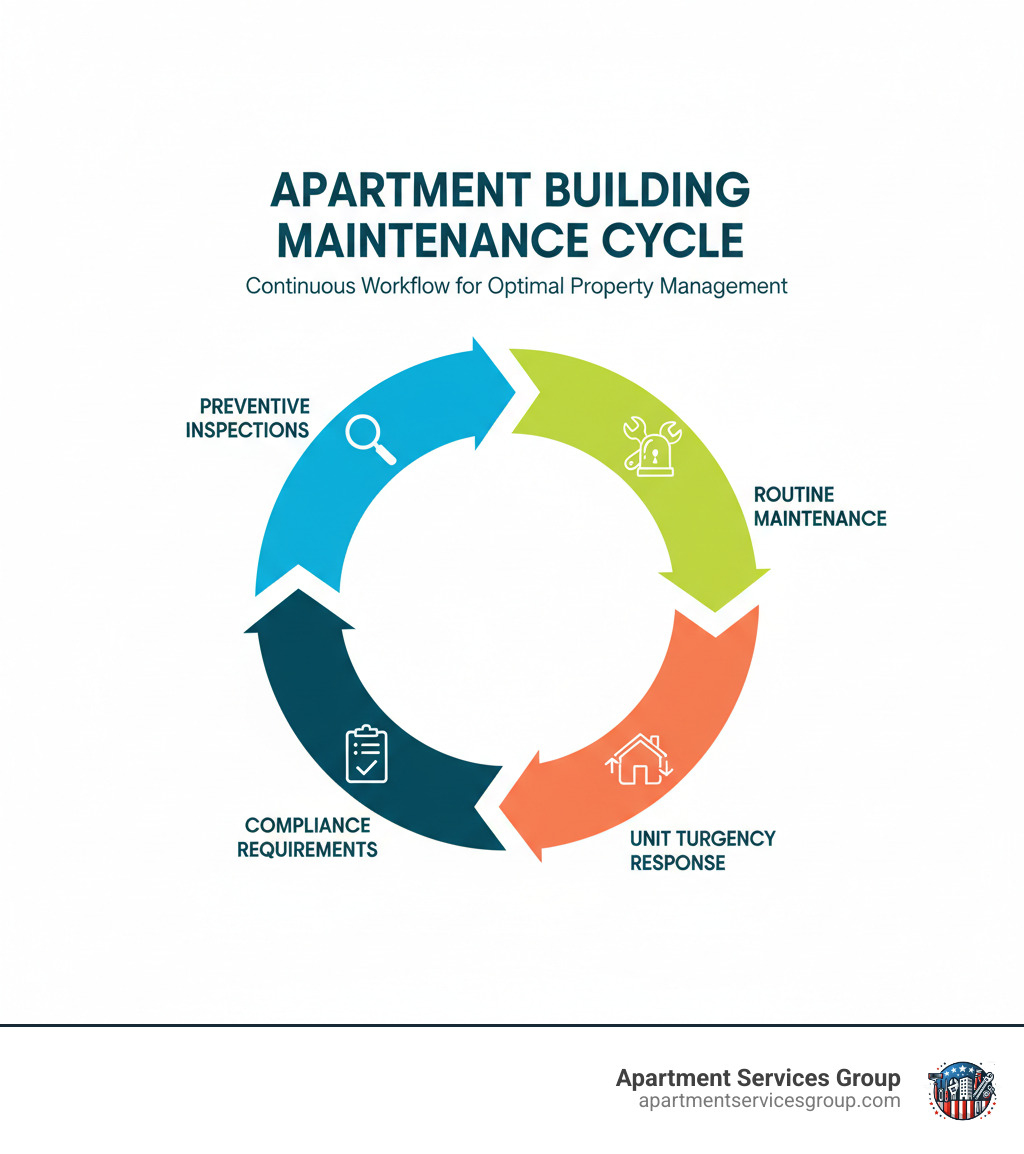
Apartment building maintenance word guide:
The Core Components of Apartment Building Maintenance
Apartment building maintenance requires careful attention to every detail, from the basement boiler to the rooftop garden, to ensure a positive living experience for your tenants.
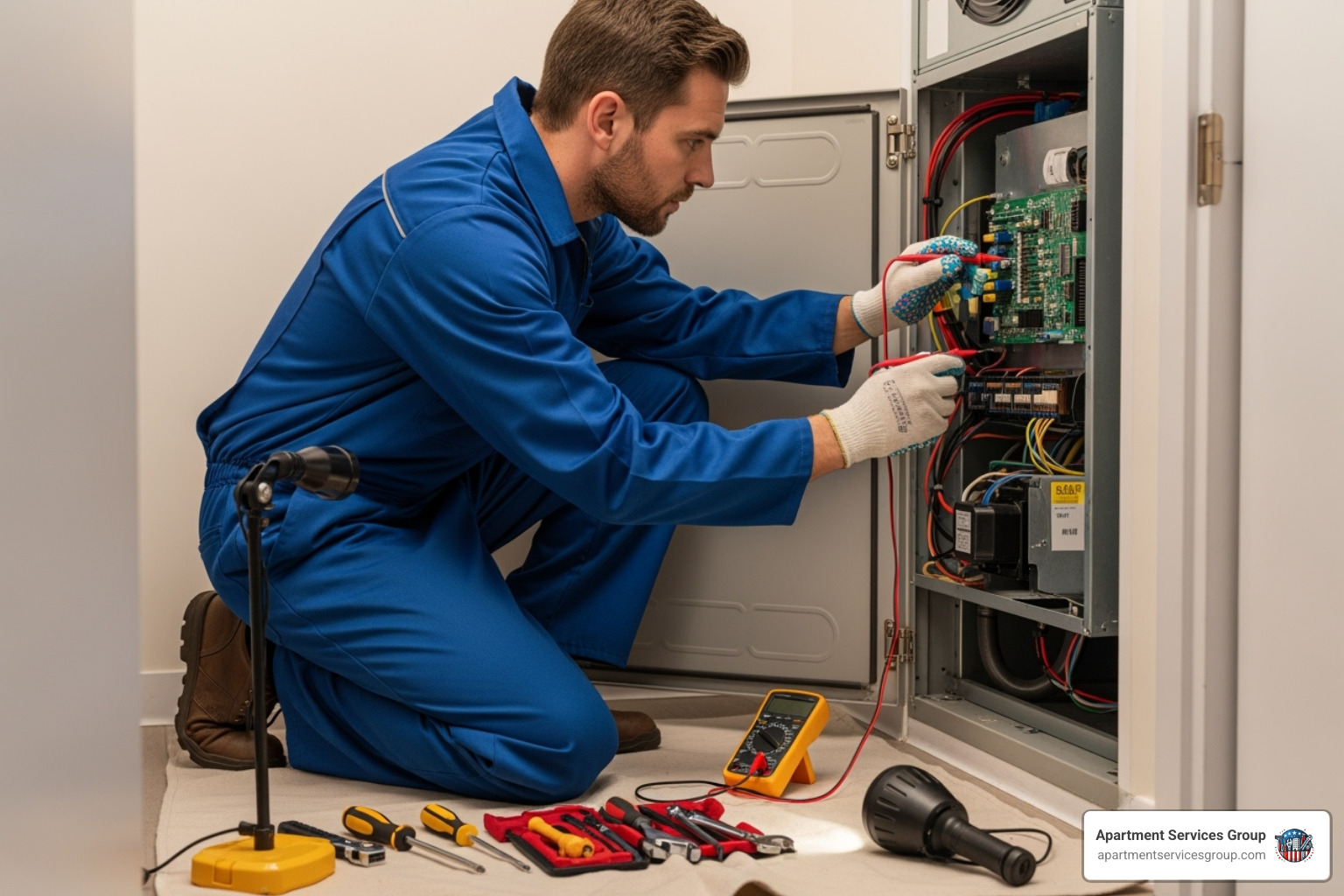
Key maintenance areas include plumbing, electrical, HVAC, security, common areas, landscaping, and pest control. Each is vital for keeping your property safe, comfortable, and attractive.
However, even the best plans face challenges. Budget constraints can tempt managers to delay crucial repairs, an approach that often backfires. Vendor management is another hurdle, as finding reliable and fair-priced contractors is difficult. Finally, a lack of tenant reporting can allow minor issues, like a small leak, to become major problems.
Types of Apartment Maintenance
Smart property managers organize maintenance into three categories based on urgency.
Preventive maintenance is a proactive approach involving routine checks and scheduled upkeep to prevent problems. This strategy is crucial for asset life extension; for example, a well-maintained boiler can last 20 years instead of 10 with proper care. It includes HVAC filter changes, water heater inspections, and testing fire safety systems.
Corrective maintenance addresses non-emergency reactive repairs like a dripping faucet, flickering light, or broken garbage disposal. Promptly handling these issues keeps tenants happy and prevents them from worsening.
Emergency maintenance covers situations with immediate health and safety risks that require a 24-hour response or faster. This includes gas leaks, burst pipes, and electrical hazards. Local laws often mandate these repairs within 24 hours to prevent disaster.
Key Systems and Areas Requiring Regular Upkeep
A successful apartment building maintenance program covers every critical system in your property.
HVAC systems are crucial for tenant comfort. Seasonal inspections and regular filter changes ensure efficiency, improve air quality, and lower energy costs. Our Apartment HVAC repair services emphasize preventive care to extend equipment life.
Plumbing systems need regular leak detection and drain cleaning to prevent backups and floods. Quick response is key for water damage prevention. If damage occurs, immediate Water Damage Houston services can prevent thousands in repair costs and mold.
Electrical systems require regular safety checks of circuit breakers, outlets, and wiring to prevent fire hazards. Warning signs like flickering lights or tripped breakers need immediate professional attention.
Common areas like lobbies, hallways, and fitness centers create a property’s first impression. They need regular cleaning and maintenance. Effective Multifamily Property Maintenance in these areas boosts tenant retention and rental rates.
Landscaping improves curb appeal and serves practical functions like ensuring proper drainage and preventing root damage to foundations. Well-kept grounds also reduce pest problems.
Security systems are essential for resident safety. Locks, lighting, cameras, and access controls need regular testing. Our Apartment Security: Houston solutions ensure all security measures are fully functional.
Building and Managing Your Maintenance Team
A successful apartment building maintenance program depends on the right team. When your crew works well together, the entire property runs smoothly.
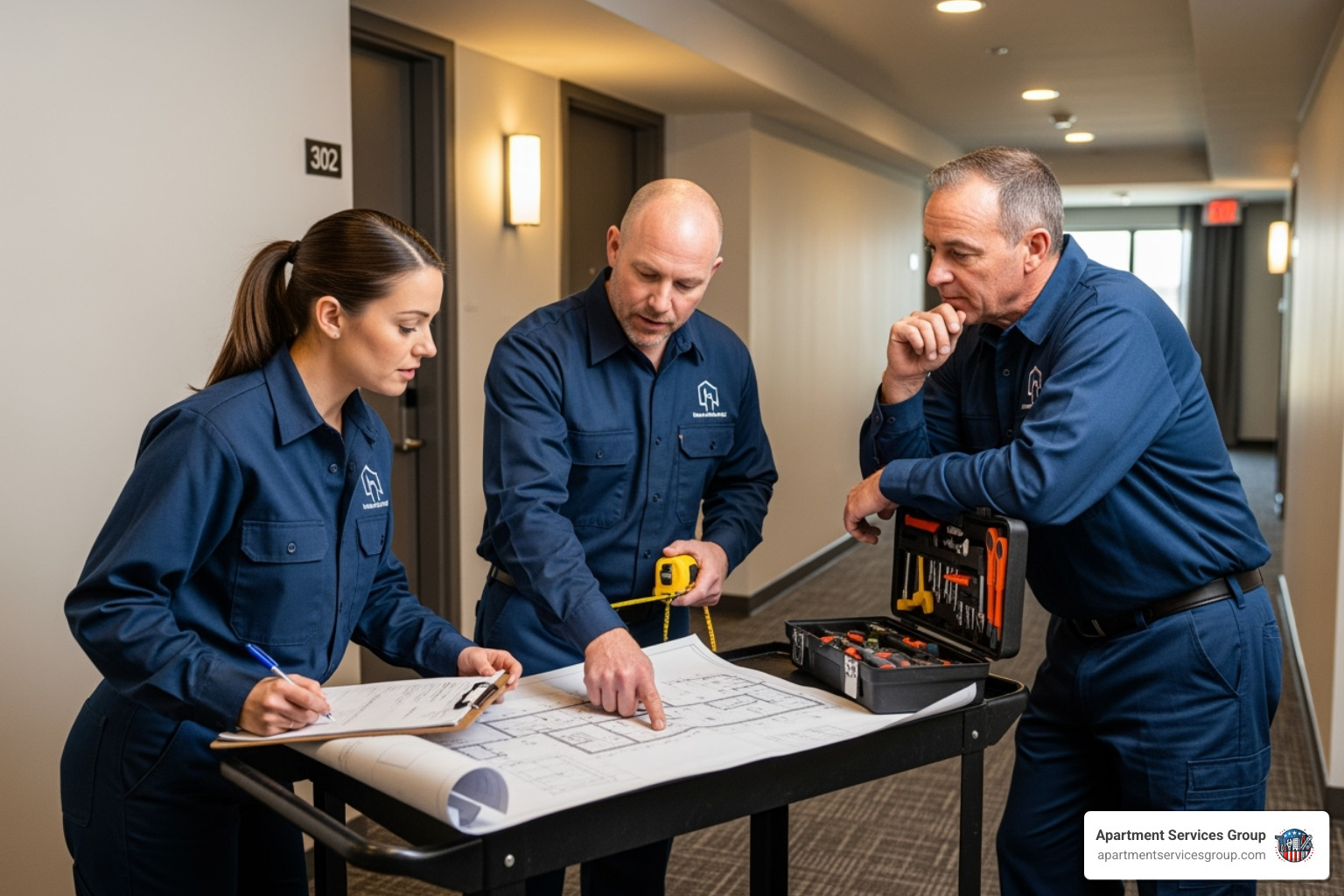
Proper staffing ratios are key. A good rule of thumb is one technician for every 150-200 units, plus a manager. For busier properties, two technicians per 100 units may be needed. If work orders are consistently delayed beyond 24 hours, it’s a sign you need more staff.
Your in-house team structure varies by property size, from a single maintenance manager at small complexes to a hierarchical team at larger ones. Essential skill sets for maintenance technicians include plumbing, electrical, HVAC, and carpentry. On-call schedules are necessary for handling after-hours emergencies.
Roles and Responsibilities
Each team member has a specific role to keep the operation moving:
Maintenance technicians handle daily repairs and work orders, from fixing doorknobs to troubleshooting appliances. They require diverse technical and people skills.
Maintenance supervisors manage teams of technicians, organizing tasks, ensuring safety compliance, and maintaining quality standards. They act as a bridge between the maintenance supervisors and the manager.
Maintenance managers oversee the entire department. These apartment maintenance managers lead the team, manage budgets, schedule preventive maintenance, and align department activities with property goals.
Training and Certifications for Maintenance Professionals
Professional training is essential for apartment building maintenance. Well-trained staff are safer and more efficient, reducing the need for outside contractors and improving tenant satisfaction.
Key industry certifications prove a team’s expertise. These include the CAMT Certification (Certificate for Apartment Maintenance Technicians) from the National Apartment Association and NAHMT or NAHMS Credentials from the National Affordable Housing Management Association.
Ongoing education, such as courses from the Apartment Maintenance Institute training, keeps your team’s skills current with new technologies and methods.
On-the-job experience is invaluable. While most positions require a high school diploma, hands-on skills are critical. According to Payscale, the average hourly rate for a technician is around $16.12, with experienced professionals earning more.
Creating and Implementing a Comprehensive Maintenance Plan
A solid apartment building maintenance plan is a strategic roadmap for shifting from reactive fire-fighting to proactive problem prevention. It keeps your property running smoothly and tenants happy.
| Feature | Proactive (Preventive) Maintenance | Reactive (Corrective) Maintenance |
|---|---|---|
| Cost Implications | Lower long-term costs due to fewer major breakdowns, extended asset life, and optimized resource use. | Higher long-term costs due to unexpected emergency repairs, accelerated asset depreciation, and potential for secondary damage. |
| Tenant Satisfaction | Higher tenant satisfaction due to fewer disruptions, consistent comfort, and a well-maintained living environment. Leads to higher retention. | Lower tenant satisfaction due to unexpected breakdowns, inconvenience, and feeling of neglect. Can lead to higher turnover. |
| Property Value | Preserves and improves property value through consistent upkeep, better curb appeal, and longer lifespan of critical systems. | Can diminish property value over time due to visible neglect, frequent breakdowns, and deferred major repairs. |
| Operational Efficiency | Scheduled tasks allow for efficient resource allocation, less overtime, and predictable workflows. | Unpredictable breakdowns lead to chaotic scheduling, emergency call-outs, and inefficient use of staff and resources. |
| Risk Management | Reduces risks of safety hazards, legal issues, and major property damage by identifying and addressing problems early. | Higher risk of safety incidents, tenant lawsuits, and extensive property damage from unaddressed issues. |
| Asset Lifespan | Significantly extends the lifespan of equipment and building components through regular servicing and early intervention. | Shortens asset lifespan due as components are run to failure, requiring more frequent and costly replacements. |
| Examples | HVAC filter changes, annual roof inspections, quarterly pest control, draining water heaters, testing smoke detectors. | Fixing a leaky faucet, replacing a broken refrigerator, repairing a non-emergency electrical outlet, unclogging a drain. |
Building the plan starts with a thorough asset inventory to understand the age and condition of every component. Next, scheduling preventive tasks based on manufacturer recommendations and experience is key. Detailed documentation of all work helps identify patterns and budget accurately. Finally, clear communication protocols for tenants, staff, and vendors ensure everyone knows their role.
Best Practices for Apartment Building Maintenance
Best practices for apartment building maintenance center on a proactive approach.
- Regular inspections help catch warning signs early before they become major problems.
- Detailed documentation creates a maintenance history to inform future decisions about repairs and replacements.
- Clear tenant communication simplifies work requests and manages expectations.
- Vendor management involves building relationships with reliable contractors and setting clear service agreements.
A seasonal checklist ensures year-round readiness:
- Spring: Prep HVAC for cooling, clean gutters, inspect roofs, and test smoke detectors.
- Summer: Monitor HVAC, maintain pools, check irrigation, and perform pest control.
- Fall: Prep heating systems, clean gutters, check weather stripping, and inspect fire safety equipment.
- Winter: Monitor heating, check insulation, prevent ice dams, and keep pathways clear.
Unit Turnovers and Renovations
Unit turnovers are an opportunity in apartment building maintenance to refresh units and attract quality tenants. Our Apartment turnkey services streamline this process.
A thorough move-out inspection identifies necessary work. Painting and deep cleaning create a fresh, appealing space, while all necessary repairs are handled to bring the unit up to standard.
This is also the perfect time for kitchen and common area upgrades. An Apartment Kitchen Renovation with new cabinets or Countertop Installation Services can significantly increase a unit’s rental value. Larger Apartment Renovation: Houston projects can further boost property appeal and rental income.
Leveraging Technology and Ensuring Compliance
Modern apartment building maintenance requires leveraging technology for efficiency and ensuring strict regulatory compliance. Technology helps streamline operations, provides valuable data analysis, and leads to significant cost reduction by making maintenance more reliable and predictable.
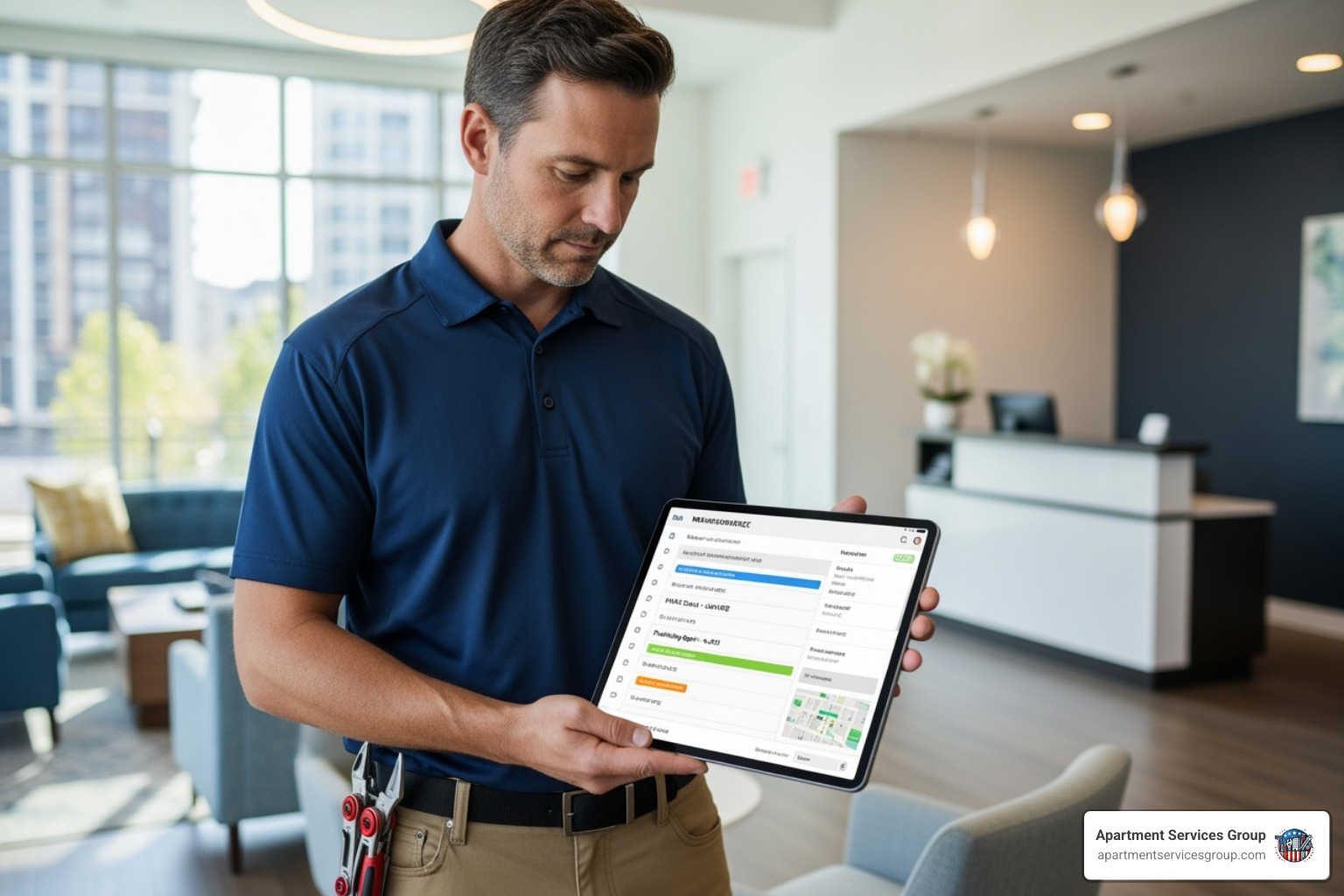
When a tenant reports a leak, a good system automatically creates and tracks a work order until completion, preventing lost requests.
The Role of Maintenance Management Software in Modern Maintenance
CMMS software (Computerized Maintenance Management System) is the backbone of modern property management. These systems are more accessible than ever, with affordable cloud-based options available.
Work order tracking logs and monitors every resident request from start to finish, ensuring accountability and building tenant trust.
Preventive maintenance scheduling automates reminders for routine tasks like HVAC filter changes and inspections, extending equipment life and preventing breakdowns.
Inventory management tracks parts and supplies, ensuring technicians have what they need to complete repairs quickly and reducing wasted time.
Reporting and analytics provide insights into maintenance trends, costs, and performance, helping managers make data-driven decisions for staffing and capital improvements.
Modern apartment building management software integrates maintenance with other property functions, creating seamless Apartment Complex Solutions that boost resident satisfaction and profitability.
Legal and Regulatory Aspects of Apartment Building Maintenance
Compliance with legal and regulatory standards is crucial for protecting residents and owners. Understanding the basics of apartment building maintenance law is essential.
Habitability requirements, mandated by state and local laws, are legal obligations requiring landlords to provide essentials like working heat, plumbing, and electrical systems.
Building codes dictate standards for all maintenance and renovation work. Non-compliance can lead to significant legal issues and safety hazards.
Safety regulations are critical, especially fire safety. This includes maintaining and regularly inspecting smoke/carbon monoxide detectors, fire extinguishers, and emergency lighting as required by local law.
ADA compliance requires accessibility in both individual units and common areas, including proper door widths, ramps, and parking.
Waste management is regulated to prevent pests and protect the environment. Our Apartment Trash Services: Ultimate Guide helps managers steer these rules.
Integrating compliance into standard maintenance routines is the key to protecting your property and residents.
Frequently Asked Questions about Apartment Maintenance
At Apartment Services Group, we frequently answer questions about the complexities of apartment building maintenance. Here are answers to some of the most common ones.
What is considered an emergency maintenance request?
An emergency is any issue that poses an immediate threat to resident safety or risks significant property damage, requiring a response within 24 hours or less. Key examples include:
- Gas leaks: Require immediate response and possible evacuation.
- Major water leaks or burst pipes: Water damage escalates quickly, leading to mold and structural issues.
- No heat in winter or no A/C in extreme heat: These are habitability issues that can be life-threatening.
- Electrical hazards: Exposed wires or sparking outlets pose a fire or electrocution risk.
- Security issues: A broken lock on a main entry or unit door compromises resident safety.
- No working toilet (in a single-bathroom unit): This is a basic habitability requirement.
How much should be budgeted for maintenance?
Proper budgeting for apartment building maintenance is crucial for profitability. As a benchmark, garden apartments typically budget 9% of their operating expenses for maintenance, while mid- and high-rise apartments allocate around 6%.
It’s vital to budget for two expense types: operational repairs (day-to-day fixes) from the annual budget, and capital expenditures (major replacements like roofs or HVAC systems). Setting aside monthly replacement reserves for capital expenses prevents financial shocks. A property’s age and condition heavily influence these budget figures.
What are a tenant’s responsibilities for maintenance?
Clear lease agreement terms are essential for defining maintenance responsibilities. Tenants are generally responsible for minor tasks like changing lightbulbs and batteries in smoke detectors (though landlords often handle this during inspections).
Reporting issues promptly is a tenant’s most critical responsibility. A small, unreported leak can turn into a major, expensive problem. Tenants must also maintain reasonable cleanliness to prevent pests and property damage.
Tenants are typically responsible for repairing damage caused by negligence, such as clogged drains from grease or holes in walls beyond normal wear and tear. Outlining these responsibilities in the lease from the start prevents future disputes and helps maintain a positive landlord-tenant relationship.
Conclusion
Effective apartment building maintenance is more than fixing problems; it’s a strategic investment in your property’s long-term success. Shifting from reactive to proactive care is key.
By investing in preventive maintenance, a well-trained team, and modern technology, you create a desirable living environment. This leads to higher tenant retention, better referrals, and a well-cared-for property.
The results are clear: well-maintained properties have higher rents, fewer vacancies, and better value, all while avoiding costly emergencies. This approach attracts quality tenants, reduces turnover, and builds a strong reputation. Responsive service turns residents into advocates.
At Apartment Services Group, we know every property is unique, but the core principles—proactive care, clear communication, and safety—are universal. Our Houston roots provide deep insight into the needs of Texas properties. We help owners transform maintenance from a headache into an efficient system.
This investment pays dividends, creating thriving homes, not just temporary rentals.
Ready to transform your property maintenance approach? Let’s talk about how we can help you create a maintenance strategy that works for your specific situation. Schedule a Consultation with our team today, and find how our comprehensive Apartment Complex Solutions can open up seamless operations and lasting success for your property.
Your residents—and your bottom line—will thank you.