Improving resident experience in apartment communities is non-negotiable if you want longevity and smooth operations. Skip the fluff—residents want clear communication, prompt service, and knowledgeable staff. Your staff and systems must deliver that, every single day.
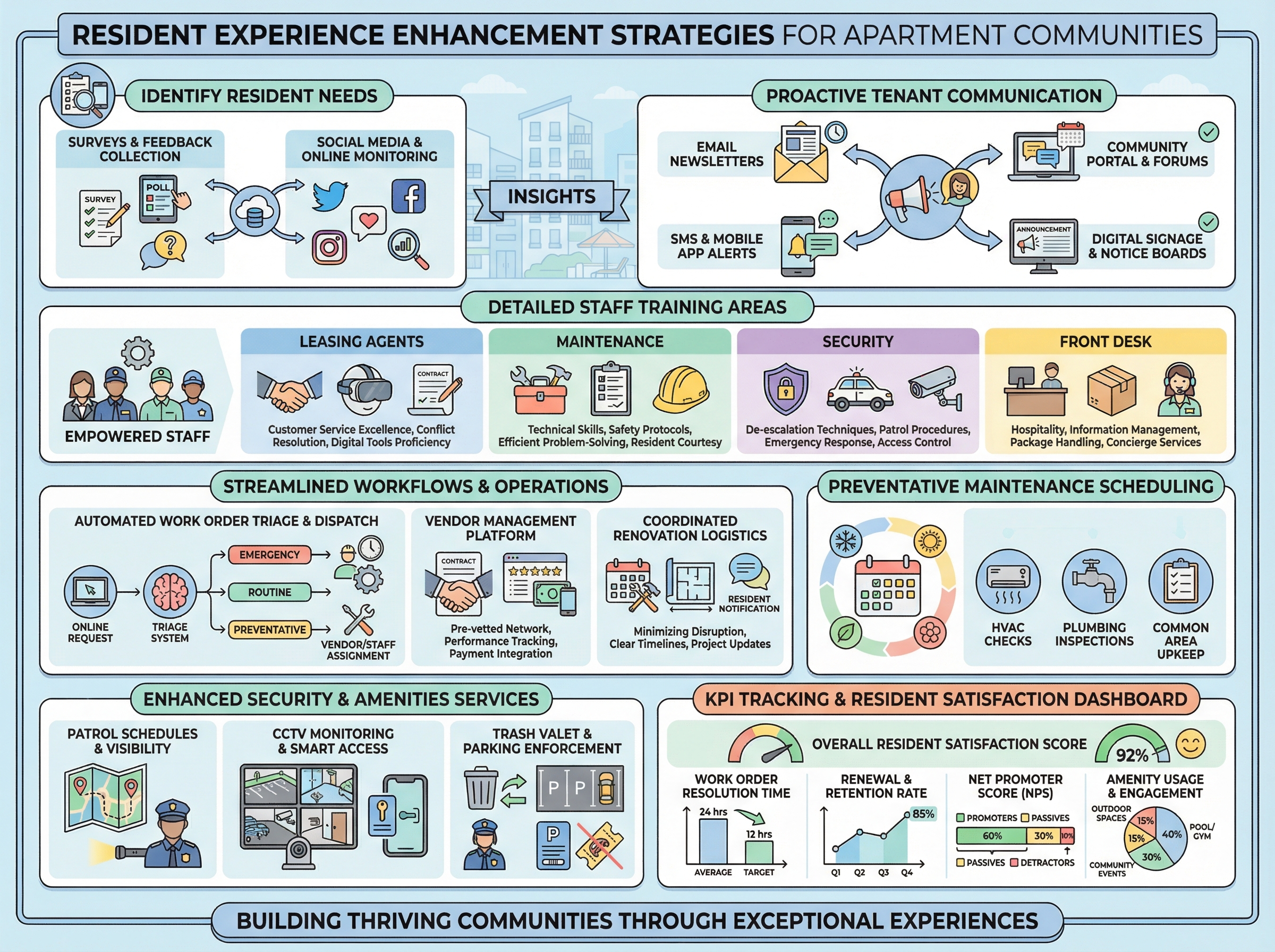
First, nail down resident needs and expectations. Don’t guess. Use surveys, social media, and casual chats to understand what bugs them. Common pain points: slow maintenance, unclear rules, parking hassles, security concerns. Prioritize friction points like these.
Next, proactive tenant communication is your secret weapon. Don’t wait for complaints. Send regular updates—maintenance schedules, policy reminders, community events. Use multiple channels: email, SMS, resident portal, even quick paper flyers for less tech-savvy tenants. Transparency reduces calls and complaints.
Educate tenants on procedures—how to submit work orders, who to contact after hours, parking rules, trash valet guidelines, and emergency protocols. A well-informed resident is a calmer one.
Now, the backbone: building an expert apartment services team. On-site staff and vendors must run like a well-oiled machine. Hiring matters, but training is where you separate amateurs from pros.
Train leasing agents not just in sales, but in conflict resolution and community culture. Maintenance staff must master diagnostics and prioritization. Security teams need clear protocols on patrols, CCTV monitoring, incident reporting, and dealing with trespassers. Front desk and concierge staff should know their role as the community’s face—friendly but firm, efficient and helpful.
Break training into bite-sized sessions and refreshers. Mix hands-on drills with quick tech tutorials. Scenario-based learning works for security or emergency situations—walk through possible incidents like parking disputes or after-hours noise complaints.
Streamline workflows for operational efficiency. Here’s the meat:
Start with work order triage. Use software that categorizes requests by urgency — HVAC leak versus light bulb replacement — and auto-assigns to the right technician or vendor. Prevent delays and double-work.
After-hours escalations? Have a clear chain of command and rotation schedule. Keep an on-call list handy. Communication tools must be foolproof so nothing slips through cracks.
Vendor dispatch? Centralize vendor management. One coordinator to approve, schedule, and track all contractors eliminates endless calls and confusion. It cuts friction between your teams and vendors—win-win.

Preventive maintenance saves money and headaches. Schedule routine checks on HVAC, plumbing, electrical systems, and building exteriors. Track upcoming needs separately from immediate repairs to avoid emergency chaos.
Turns and renovations require special attention. Coordinate painters, flooring, electricians, HVAC techs tightly. Communicate move-in dates clearly with leasing and front desk teams to avoid surprises that tick off residents. Quality control post-renovation is a must—inspect work before handing keys over.
Security is more than gates and cameras. Regular patrols, smart CCTV monitoring, and clear incident response protocols make residents feel safe. Train guards on professional but approachable conduct. They aren’t just watchers—they’re the community’s peacekeepers.
Trash valet and parking enforcement are small details with big impact. Ensure trash areas stay clean by coordinating valet schedules and enforcing vendor accountability. Parking must be orderly—rigorous but fair towing policies paired with clear signage reduce resident frustration.
Track KPIs religiously. Measure work order resolution times, tenant satisfaction scores, maintenance cost per unit, incident response times, and vendor performance metrics. Data tells you what’s working or sinking. Adjust fast.
A practical example: your maintenance team logs a HVAC repair needed in a unit. The system flags it urgent, auto-assigns a certified HVAC vendor. Meanwhile, your front desk notifies the resident about timing plus safety protocols. If after hours, the escalation list kicks in, making sure the vendor can act immediately. Post-fix, a quick tenant satisfaction check happens via app notification. Repeat with electrical, plumbing, painting—same system wins.
Security example: Night patrol detects suspicious activity. Guard follows scripted response, logs event on the central platform, alerts property manager and local police if necessary. Video footage is securely bookmarked for review. Residents get reassured via community alert.
Bottom line: improving resident experience in apartment communities boils down to mastering communication and training your team to act smart, fast, and coordinated. Centralize vendor management. Automate triage. Keep tenants in the loop. Measure everything.
It’s not rocket science, but it demands discipline and systems that deliver consistently. Fail in one area, and you’ll hear about it fast.
If you want a solid blueprint on how to build from scratch the smartest AI-powered property management workflows, check out the best step-by-step training available. It’s hands-on, practical, and designed to get you ahead, not lost in theory. You’ll thank yourself later.