Condominium Security Solutions: Unlock Safety 2025
Why Condominium Security Matters More Than Ever
Condominium security solutions are a blend of technology, personnel, and policies designed to protect residents and property. In condo living, security is a collective necessity, addressing unique challenges like tailgating, package theft in shared mailrooms, and securing both private units and common areas.
Effective security is a valuable amenity that boosts property value and resident satisfaction. It mitigates risks from burglary and vandalism to liability issues. The good news is that modern solutions combine people and technology for layered, effective protection. AI-powered cameras and mobile credentials are just two examples of today’s convenient and powerful security tools.
I’m Moe Shariff, owner of Apartment Services Group. For over eight years, I’ve helped Houston property managers implement condominium security solutions that protect residents and improve property value. Through American S.E.A.L. Patrol Division and our other service companies, we’ve seen how the right security approach transforms communities from vulnerable to vigilant.
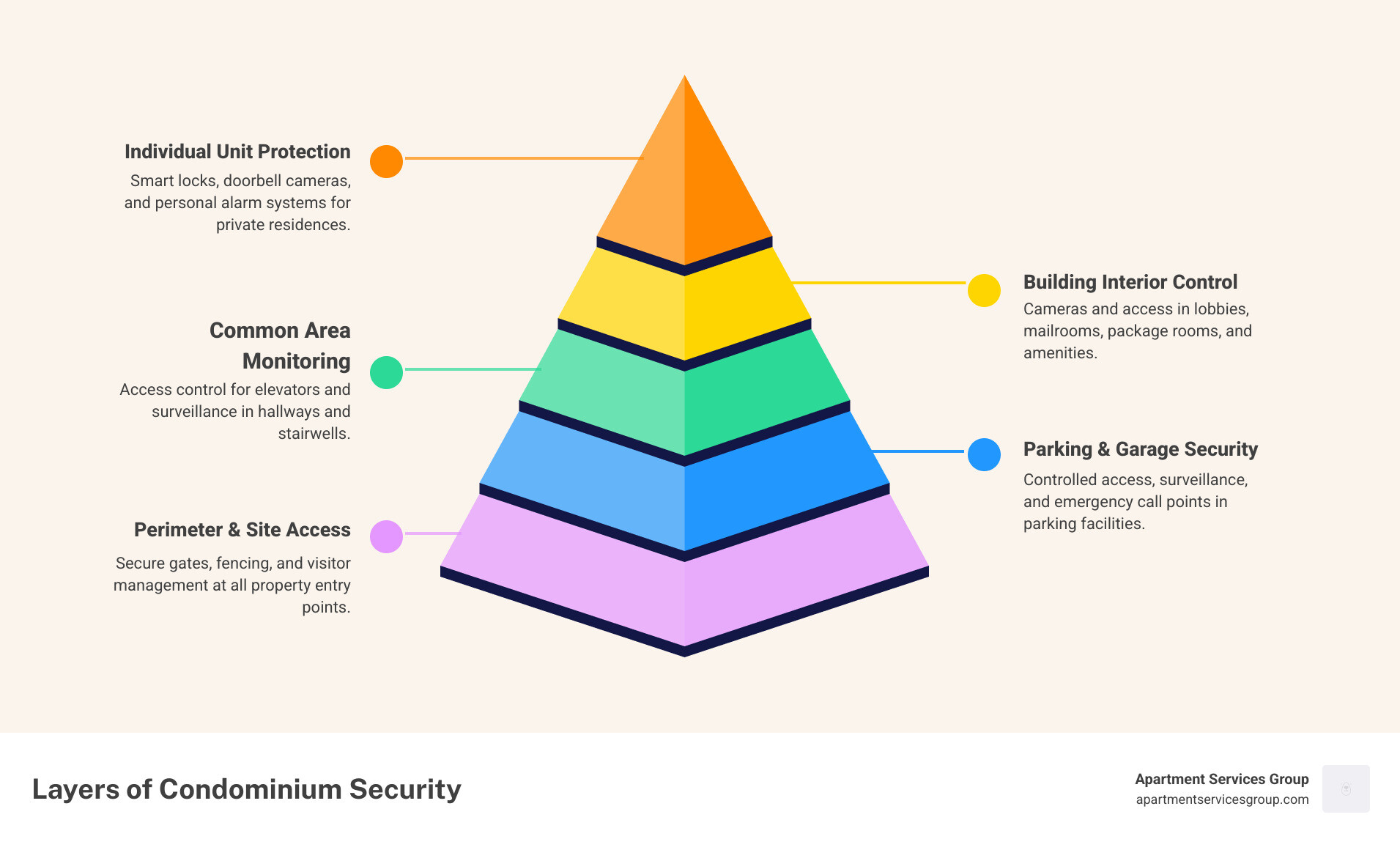
Understanding the Unique Security Risks in Condominiums
Living in a condominium means sharing walls, hallways, and amenities. This sense of community also introduces security challenges that single-family homes don’t face. One person’s lax security can affect everyone.
Over my years working with Houston property managers, I’ve seen these vulnerabilities firsthand. Key risks include:
- Burglary and Theft: This remains a top concern, from break-ins of individual units to theft of packages or bikes from common areas. The emotional impact of feeling violated at home is often worse than the financial loss.
- Package Theft: The rise of online shopping has led to “hallway pirates” stealing deliveries from lobbies and corridors, creating constant frustration for residents and management.
- Unauthorized Access and Tailgating: When an unauthorized person slips through a secure door behind a resident, your access control is bypassed. This common occurrence, often born from politeness, can lead to theft, vandalism, or worse.
- Vandalism and Property Damage: Graffiti or property damage signals that no one is watching, which can weaken community morale and visibly reduce property values.
- Vehicle Break-ins: Parking garages, with their limited surveillance and multiple escape routes, are prime targets for theft.
Beyond these physical threats, digital vulnerabilities are a growing concern. Unsecured shared Wi-Fi can expose personal data, while a hack of the building’s management system could compromise everything from elevators to security cameras. The cumulative effect of these issues is a decline in property value and a weakened sense of community. When residents feel unsafe, trust erodes, and the vibrant spirit of condo living disappears.
Fortunately, every one of these challenges can be addressed with effective condominium security solutions that combine technology, personnel, and smart policies to restore peace of mind.
Core Security Technologies for Modern Condos
Think of condominium security solutions as a three-legged stool: systems that deter crime, collect evidence of incidents, and enable a real-time response. Modern technology makes communities safer and life more convenient for residents.
Mastering Access Control Systems
Access control is your first line of defense. Modern systems go far beyond traditional keys:
- Key Fobs and Mobile Credentials: Replace easily copied metal keys, allowing residents to use their smartphones as digital keys for ultimate convenience.
- Biometric Scanners: Fingerprint or facial recognition offers top-tier security that’s nearly impossible to fake.
- Video Intercoms & Visitor Management: Let residents see who’s at the door and pre-authorize guests with temporary digital keys, eliminating lobby wait times.
- Gate and Elevator Control: Automated gate systems manage vehicle traffic, while elevator access control restricts entry to specific floors, enhancing security for all residents.
These systems create a seamless experience where one credential grants access everywhere, and every entry is logged for security and liability purposes.
The Role of Video Surveillance
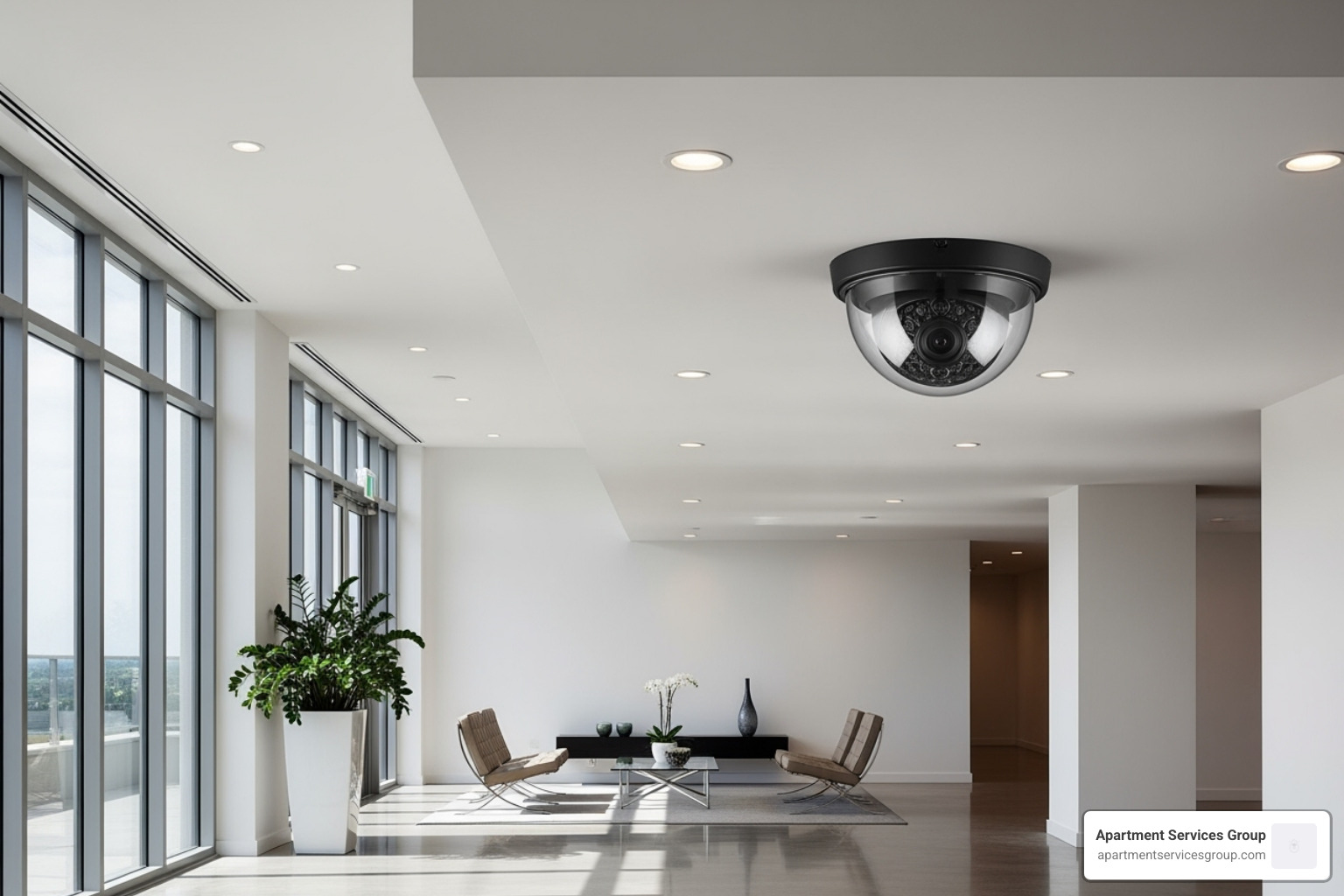
Video surveillance acts as a constant deterrent. Visible cameras discourage intruders and provide continuous monitoring of common areas like lobbies, parking lots, and amenity spaces. When incidents occur, high-definition cameras with night vision capture clear evidence crucial for investigations. The biggest game-changer is cloud-based storage, which secures footage off-site. This allows authorized personnel to access live or recorded video from anywhere, share clips with law enforcement instantly, and eliminate the risk of on-site equipment tampering.
Alarms and Environmental Sensors
While cameras handle visible threats, alarms and sensors protect against unseen dangers.
- Intrusion Alarms: Door/window sensors and motion detectors identify unauthorized entry or suspicious movement, especially after hours.
- Life Safety Alarms: Integrated fire and smoke alarms provide critical early warnings against the most destructive threats. Carbon monoxide detectors are also essential, protecting residents from this invisible, odorless gas. According to the CDC’s carbon monoxide poisoning data, hundreds of people die from accidental CO poisoning each year.
- Environmental Sensors: Water leak sensors can detect moisture early, preventing small drips from becoming catastrophic and costly floods.
When all these sensors are integrated, security personnel get a complete, real-time picture of the property’s status, enabling a rapid, coordinated response.
Comprehensive Condominium Security Solutions: A Layered Approach
Here’s something I’ve learned after years in the security business: the best protection doesn’t come from a single camera or even the fanciest access control system. It comes from layering multiple security measures so they work together like a well-trained team.
We call this the “Multiplier Effect.” When you combine people and technology in the right way, you don’t just add their strengths together—you multiply them. That’s what true condominium security solutions are all about.

The Power of Integrated Security Systems
Imagine an alarm triggers in the parking garage. With integrated systems, the relevant camera feed instantly appears on the security monitor, nearby doors can be automatically locked, and personnel see exactly what’s happening in seconds. This centralized management, where access control, video, and alarms communicate, provides complete situational awareness. It enables visual verification of entrants, automates responses to reduce human error, and streamlines operations for property managers.
The Human Touch: On-Site Guards vs. Virtual Guards
Technology is powerful, but it can’t completely replace the human element. The question is what kind of oversight is best for your community.
- On-Site Guards offer a reassuring physical presence. They can provide concierge services, patrol grounds, and respond directly to incidents. However, they are costly and can only be in one place at a time.
- Virtual Guards are state-licensed professionals who monitor your property remotely via high-resolution cameras and audio. They can verify visitors, challenge loiterers with a “voice-down” capability, and grant or deny entry. This solution offers broader coverage at a fraction of the cost of 24/7 on-site guards.
Many communities find a hybrid approach ideal, combining a daytime concierge with 24/7 virtual monitoring for the perfect balance of personal service and comprehensive security.
Implementing Modern Condominium Security Solutions with AI and Cloud Technology
Today’s technology is making communities safer than ever. AI-powered analytics turn cameras into smart observers that can detect specific activities, like loitering or unauthorized vehicles, and send real-time alerts while filtering out false alarms.
Cloud-based software has revolutionized system management. Footage is stored securely online, allowing property managers to access feeds and reports from anywhere. Sharing evidence with law enforcement is as simple as sending a link, and software updates happen automatically. This is how we create smarter, more responsive communities where residents feel genuinely safe.
If you’re curious about how these cutting-edge technologies could work for your community, I’d love to show you. Check out more info about Condominium Security Solutions and let’s talk about what’s possible.
Securing Key Areas: From Parking Lots to Individual Units
Condominium security requires a custom approach for each space, recognizing that high-traffic zones, vulnerable points, and private residences each have distinct needs. Our aim is always to provide targeted security strategies that ensure resident peace of mind.
Lobbies, Mailrooms, and Package Theft Prevention
These entry points are critical security zones.
- Video Intercoms: Allow residents to screen visitors and prevent unauthorized entry.
- Concierge Presence: A human presence deters unwanted individuals and assists residents.
- Secure Package Lockers: Smart lockers provide a secure, convenient solution for package deliveries, with automated notifications alerting residents upon arrival.
Parking Garages, Amenities, and Common Areas
These shared spaces, while enhancing the living experience, can also be hotspots for security breaches if not properly managed.
- Adequate and Motion-Sensor Lighting: Well-lit areas, especially parking garages and stairwells, are a powerful deterrent to criminal activity.
- Emergency Call Buttons: Placed in garages, gyms, and pools, these provide an immediate link to security or emergency services.
- Regular Patrols: Whether on-site or remote, regular patrols maintain vigilance.
- Access Control for Amenities: Ensures only authorized residents can use facilities like gyms and pools during designated hours.
- Surveillance in Stairwells and Elevators: Discreet cameras monitor these confined spaces to deter misconduct and unauthorized activity.
Resident Units and Personal Security
While the association secures common areas, residents play a key role in their own security.
- Individual Unit Responsibility: Residents are responsible for securing their own units with quality locks and optional personal alarm systems.
- Smart Locks and Doorbell Cameras: These devices offer convenience and allow residents to monitor their own front door and manage access remotely.
- Condo Association Rules: It’s crucial for residents to check with their association before installing personal security devices, especially cameras, to ensure compliance and respect for neighbor privacy.
Frequently Asked Questions about Condominium Security
Over the years, I’ve had countless conversations with condo board members, property managers, and residents who all share the same concerns about keeping their communities safe. Let me address the questions that come up most often.
Who is responsible for security in a condominium?
Security is a shared responsibility. The condo association is typically responsible for securing common areas like lobbies, parking garages, hallways, and amenities. They implement condominium security solutions like access control and video surveillance. Individual residents are responsible for securing their own units, including locks and any personal alarm systems. Always check your association’s rules before installing personal devices. When everyone does their part, the entire community is safer.
How can a condo association choose the right security provider?
Choosing the right partner is critical. Look for a provider with:
- Specific experience with condominiums and their unique challenges.
- Proper licensing and insurance to protect your association.
- A willingness to conduct a comprehensive security survey of your property to create a custom plan.
- System integration capabilities to work with any existing security measures.
A good provider will propose a solution that balances security, convenience, and budget, treating security as a value-adding amenity, not just an expense.
Can security cameras be installed in common areas?
Absolutely—in fact, cameras are essential for securing common areas effectively. They’re a cornerstone of modern condominium security solutions and play multiple important roles. Visible cameras deter potential criminals, they provide crucial evidence when incidents do occur, and they help everyone feel safer knowing their community is being monitored.
You’ll typically see cameras in hallways, elevators, lobbies, parking lots, stairwells, and around amenity spaces like pools and fitness centers. These are all fair game because they’re shared spaces where residents don’t have a reasonable expectation of complete privacy.
However—and this is important—associations must respect resident privacy. Cameras should never be placed where people expect privacy: inside individual units, in changing rooms, bathrooms, or positioned to look directly into unit windows. This isn’t just about being respectful; it can be a legal issue.
Here’s my strong recommendation from years of experience: post clear signage about your surveillance cameras. Let people know they’re being recorded in common areas. In many places, this isn’t just a best practice—it’s legally required. But beyond compliance, transparency builds trust. When residents know where cameras are and why they’re there, they feel more comfortable rather than watched.
Creating a Safer Community Together
When I think about what makes a condominium truly feel like home, security always comes to mind. It’s not just about locks and cameras—it’s that feeling you get when you walk through your lobby knowing you’re protected, that sense of belonging to a community where everyone looks out for each other.
Building a secure condominium isn’t a one-time project you check off a list. It’s an ongoing commitment that combines the best technology with genuine human care. Throughout this guide, we’ve explored how condominium security solutions work together—access control keeping unwanted visitors out, cameras watching over common spaces, alarms alerting us to dangers, and trained professionals monitoring it all. When these elements come together, something remarkable happens: crime drops, residents feel safer, and property values rise.
Here’s something many associations overlook: security is actually a valuable amenity, just like a pool or fitness center. When prospective buyers tour your building, a state-of-the-art security system speaks volumes. It says, “We care about the people who live here.” That message resonates, attracting quality residents and commanding higher prices.
But technology alone isn’t enough. The most secure communities I’ve worked with share something special—a security-conscious culture where residents understand their role. This means educating everyone about security protocols, teaching them how to use new systems properly, and even covering basics like fire safety and conflict resolution. When residents know how to report suspicious activity, avoid tailgating, and secure their own units, the entire community becomes stronger.
At Apartment Services Group, we’ve spent years perfecting this approach right here in Houston. Through American S.E.A.L. Patrol Division and our other service companies, we’ve helped property managers transform their communities from vulnerable to vigilant. Every property has its own personality, its own challenges, and we design condominium security solutions that fit like a glove—effective, convenient, and built to last.
The best time to improve your security was yesterday. The second-best time is right now, before an incident forces your hand. Taking a proactive approach means you’re in control, making thoughtful decisions rather than reactive ones.
Contact us for a comprehensive security assessment and let’s work together to create the safe, welcoming community your residents deserve. Our unparalleled expertise and dedication ensure a seamless and transformative living experience—because at the end of the day, that’s what security is really about: peace of mind for everyone who calls your condominium home.