Tenant education and communication strategies aren’t about fluff—they’re the backbone of smooth apartment community operations. If you’re a property manager or on-site staff, you know it’s not just about sending occasional emails or posting signs. You need a system that sets clear expectations, keeps residents informed, and makes your team run like clockwork. Here’s a practical blueprint that cuts through the noise.
Start with a solid foundation: build a tenant education program that ties directly into daily community life. Kick off during move-in with a welcome package. This should include a simple handbook outlining key policies—trash valet schedules, parking rules, maintenance request protocols, security measures—nothing fancy, just straight facts. Add emergency contacts and quick how-tos for your app or online portal if available. Don’t drop the ball here; a frustrated resident with no info equals more calls for staff later.
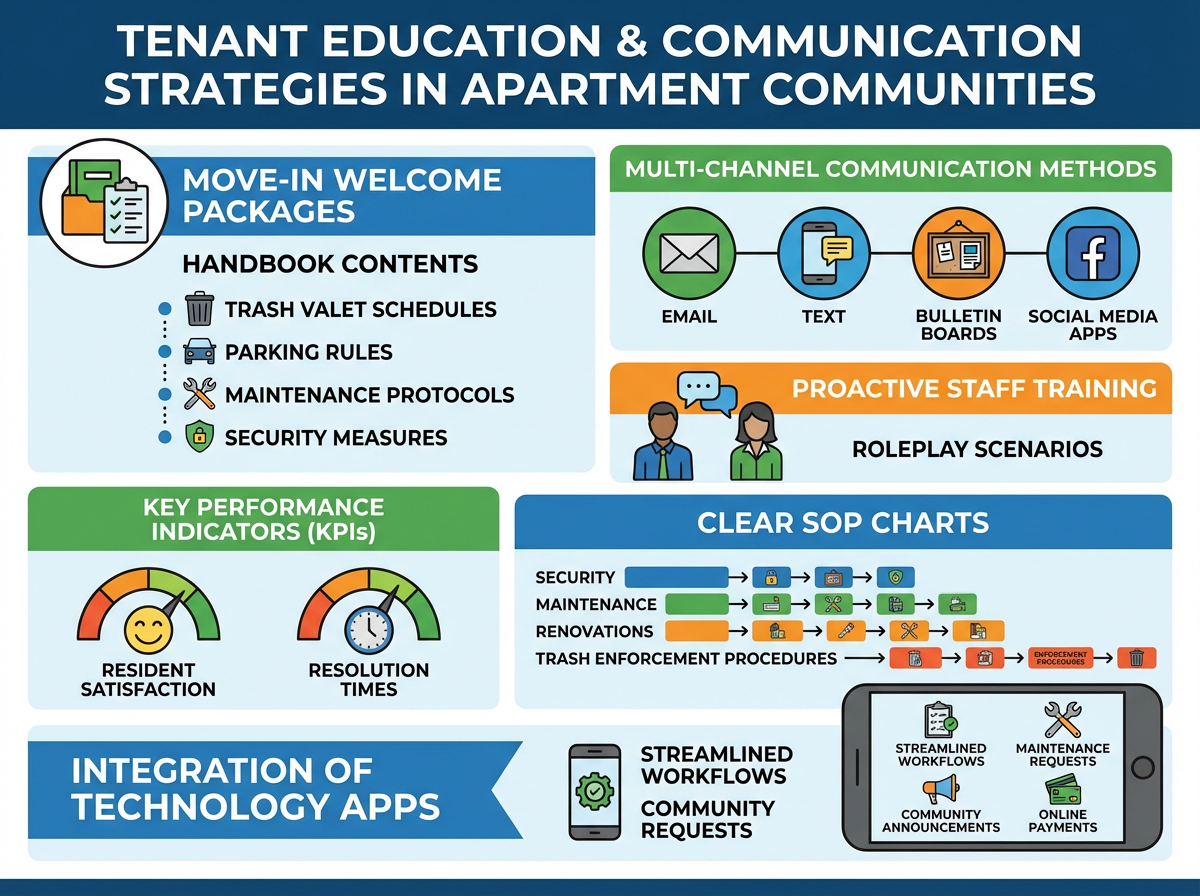
Next, make communication consistent and multi-channel. Combine digital announcements via text or email, community bulletin boards, and a dedicated social media group or app. One key mistake is relying on a single channel; some folks don’t check email daily, others aren’t tech-savvy. Using varied touchpoints increases the chance your message lands. For example, announce upcoming renovations one week ahead via email and remind again via flyers in common areas. Your goal: zero surprises.
Teach your on-site team to be proactive, not reactive. Regular training sessions are essential. Hold monthly briefings focused on common resident issues—like how to explain HVAC maintenance or parking rules clearly without sounding like a lecture. Roleplay scenarios: a resident calls about a broken elevator, or complains about a late trash pickup. Equip your team with scripts that are firm but friendly. This eliminates guesswork, helps maintain consistency, and speeds up response time. Bonus: track these trainings as a KPI.
Speaking of KPIs, here are the must-track metrics for tenant education and communication effectiveness: resident satisfaction scores, average maintenance request resolution time, and the frequency of parking violations versus reminders sent. These numbers tell you not just if communication happens, but if it works. Keep your eye on trends. If maintenance requests spike without a backlog, maybe your messaging about proper use of facilities didn’t land. Adjust fast.

Now, zero in on integrating communication into operations. Security coverage needs clear messaging. Residents must know guard patrol times, CCTV zones, and how to report suspicious activity. Post maps and sign-in sheets for security staff so residents feel safer and informed. Maintenance requests? Implement a simple workflow: resident submits request online or via phone, auto-notify the correct team, track completion, then follow-up with the resident. Automate reminders for overdue tasks. Transparency here kills frustration.
Renovations demand tight coordination. Announce timelines well in advance, provide daily or weekly progress updates, and set expectations for noise and access restrictions. Always include a point of contact for real-time questions. Don’t wing this one—nothing breeds complaints faster than surprise construction noise.
Trash valet and towing enforcement often cause tension. Minimize drama with clear signage and repeated reminders about pick-up times and parking rules before enforcement kicks in. Use templates for these notices, perfect them over time for tone and clarity. Your goal is to educate before you penalize, or residents feel punished, not informed.
Putting it all together: create standard operating procedures (SOPs) for each key area—security, maintenance, renovations, trash, towing. These SOPs should include communication templates, response time goals, and escalation paths. Train your team to follow them religiously. Make this part of onboarding new hires. SOPs are your insurance policy against inconsistent messaging and slow responses.
Build a reliable services team, not just a roster of workers. Reward excellent communication and resident feedback. Hold weekly check-ins to discuss issues from tenant calls or community observations. Use technology to track tasks and resident requests. Apps for property management are not optional anymore; they streamline workflows and keep everyone accountable.
In short, effective tenant education and communication strategies are about clarity, consistency, and connection. No need for fancy jargon or complicated campaigns. Deliver what residents need to know, when they need it, across multiple channels, backed by trained staff and solid SOPs. That’s how you reduce friction and elevate resident satisfaction.
If you’re looking to dig deeper, check out some of the best step-by-step training programs for building AI agents tailored for property management. They help automate routine communications, prioritize maintenance workflows, and analyze resident sentiment in real-time. It’s the future—and a smart way to handle this daily chaos faster, smarter, and with way less stress.