Apartment community operations improvement isn’t some mystery. You fix it by fixing communication, training your staff like pros, and streamlining how everyone works together—period. Property managers and multi-family operators can’t afford to guess what’s happening or rely on random info from tenants or vendors. You need a system. Here’s how you break it down in practice.
Start with tenant communication.
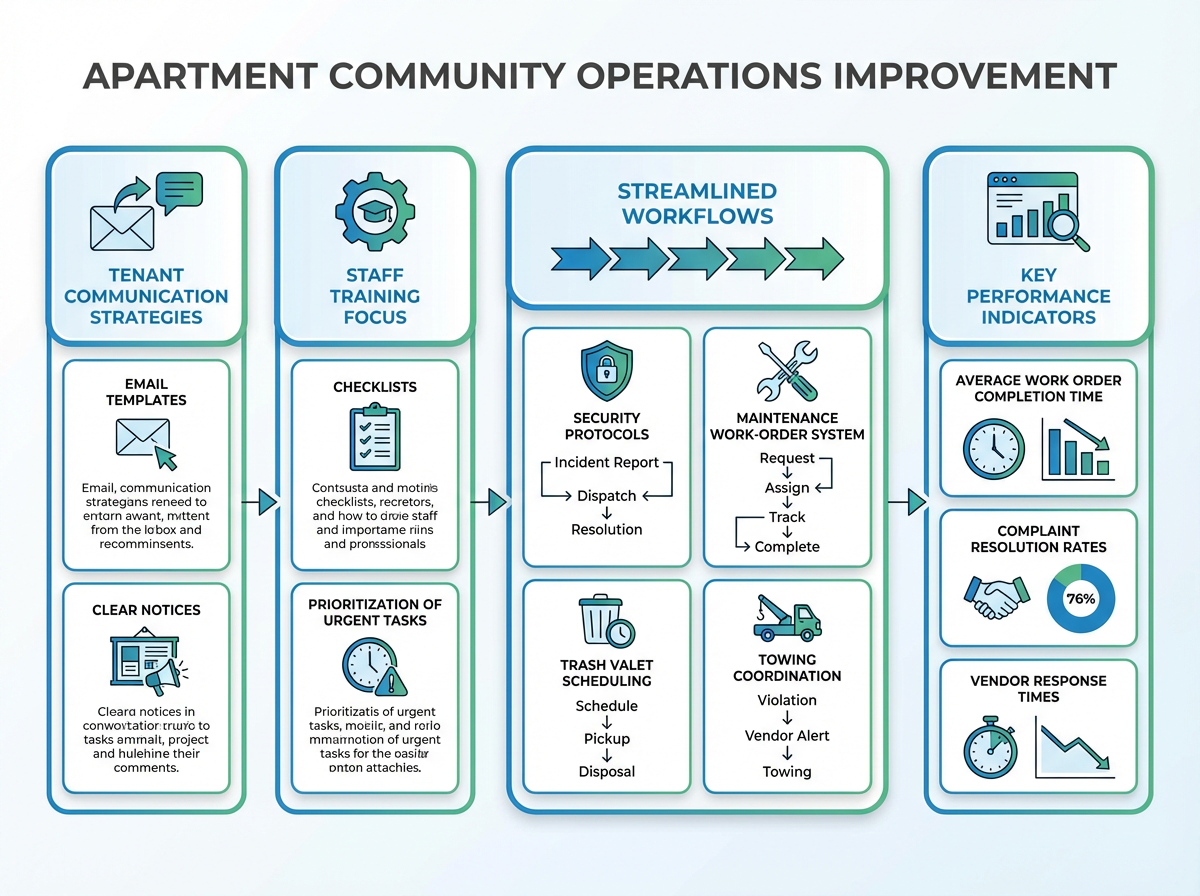
Start with tenant communication. Straight talk upfront saves headaches later. Educate residents when they move in: what to expect, who to call for what, rules for parking, trash, amenities, security protocols. Don’t just give them a pamphlet—use email templates that reinforce these messages monthly or quarter-over-quarter. Short, clear, polite reminders work better than essays. For example, a weekly trash valet schedule notice or parking enforcement alert that spells out what happens if you ignore rules. This sets expectations tight and cuts down on complaints.
Train your on-site team
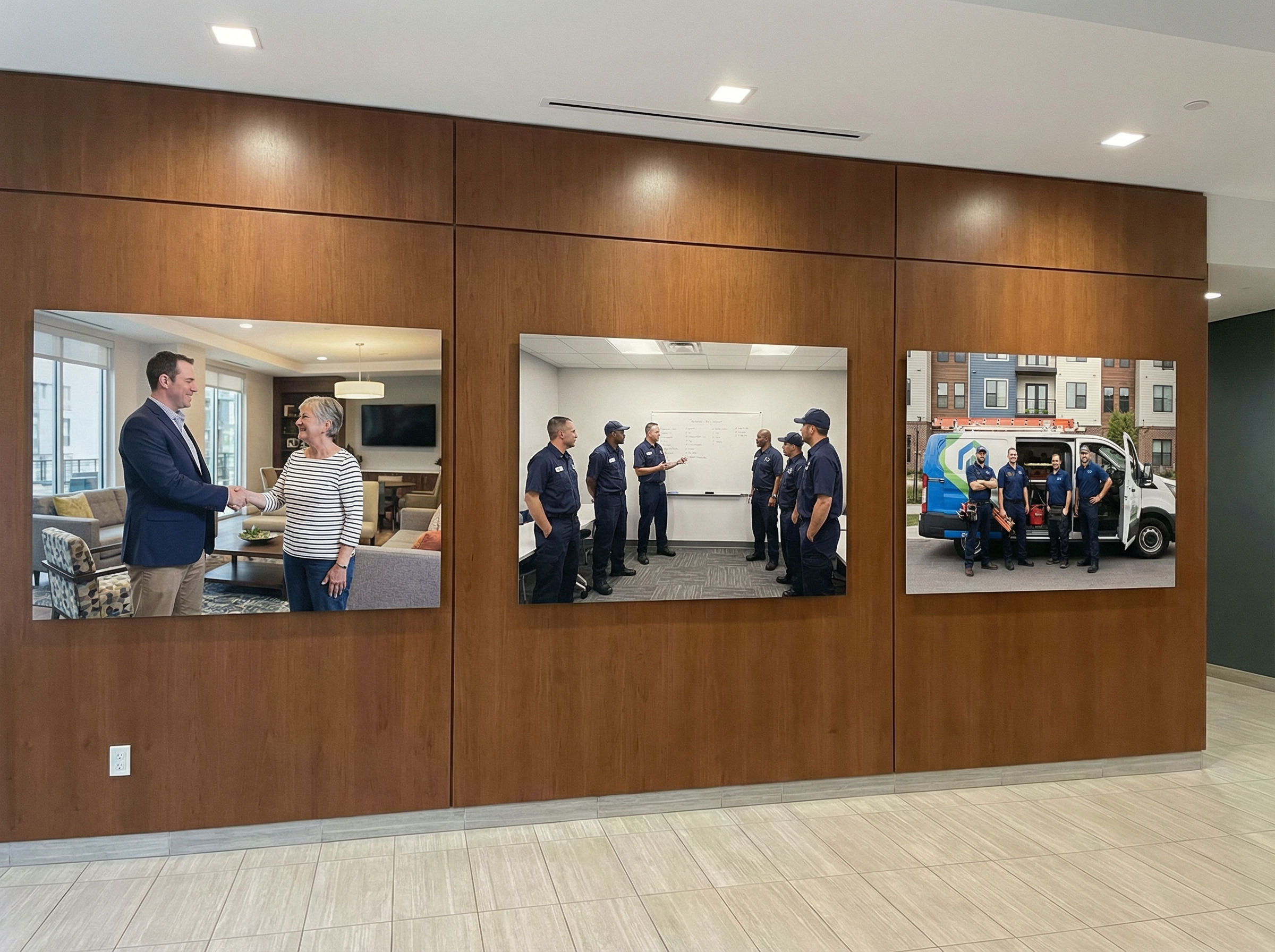
Then, train your on-site team like their paycheck depends on it—because it does! Make maintenance staff pros at triaging work orders efficiently. Create checklists to prioritize urgent issues like heating failures or security breaches, and standard procedures for common tasks like trash overflow or emergency lockouts. Train your leasing team to handle move-in and move-out inspections cleanly and log everything in a centralized system. Don’t wing it. Regular training sessions keep everyone sharp and accountable.
Operational workflows and coordination
For operational workflows: security, maintenance, trash valet, towing coordination—all these have to sync. Let’s talk workflow improvement step-by-step.
Security issues
Security issues? Set up after-hours response protocols with clear tiers—what’s serious (break-in), what’s minor (lost key), who calls whom, and how fast. Make sure your team uses access control logs religiously. One slip there and resident trust tanks.
Maintenance and renovations
Maintenance and renovations? Implement an online work-order system that flags urgent jobs automatically and tracks vendor schedules. Centralized vendor management speeds this up by cutting phone tag and confusion. Instead of dozens of calls, one point of contact pushes orders to the right vendor, confirms timelines, and reports back to residents in real-time. This moves faster and keeps residents less annoyed.

Trash valet and trash overflow
Trash valet and trash overflow get ignored at your peril. Institute daily sweep schedules with back-up staff in case of absenteeism. Weekly inspections spot blockages before they explode into complaints. Communicate these through tenant newsletters so residents know trash isn’t just magically disappearing—it’s a process.
Towing and parking enforcement
Towing and parking enforcement? Nothing sparks community anger faster than surprises here. Have crystal-clear signage everywhere plus a simple but strict incident logging system. Use digital checklists so staff can instantly report towing incidents, verify vehicle owners, and update residents. Consistency here means fewer confrontations—and fewer lawsuits.
KPIs to monitor
KPIs you need to monitor without fail: average work order completion time, resident complaint resolution rate, vendor response times, after-hours incident count, and parking enforcement compliance. Use dashboards to spot trouble fast, not to drown in numbers.
Don’t underestimate the power of templates and checklists. From move-in inspection sheets to trash collection logs, a good checklist saves hours and keeps quality uniform across staff. It’s boring but damn effective.
Pain points? After-hours calls overwhelm staff when there’s no triage system; maintenance delays happen when vendors aren’t coordinated centrally; resident complaints pile up when communication is sloppy; access control holes create security nightmares. Fix these by marrying communication with smart training and centralized service teams.
In sum, the core operations triad
In sum, apartment community operations improvement boils down to smart, clear communication to residents, relentless staff training focused on clear procedures, and a centralized approach to vendor and service management. This triad slashes response times, reduces resident headaches, and boosts your operation’s reputation.
If you’re serious about this, check out the best step-by-step training in the U.S. for building AI-driven assistant tools from scratch—they streamline communication, vendor management, and task scheduling better than anything on the market. No fluff, just practical tech that makes your life—and every tenant’s—way easier. Trust me, it’s worth a look.
As you refine resident communication, consider using specialized online forms and request flows similar to a free service quote system to capture and triage needs quickly. For larger upgrade projects and capital improvements, modeling your workflows after a professional renovation quote request process can keep expectations aligned.
Operational services like trash management benefit from structured ticketing and confirmation flows inspired by a streamlined trash service quote intake, while parking policy enforcement can mirror the clarity of a towing service quote and incident documentation process so nothing falls through the cracks.