Tenant communication and operational workflows in apartment communities are the backbone of a smooth-running multifamily property. Screw this up, and you get frustrated residents, stressed staff, and wasted money. Nail it, and you build a community that actually runs itself—and tenants who stick around. Here’s how to get it right without drowning in fluff.
First, understand tenants don’t just want info—they want clarity and responsiveness.
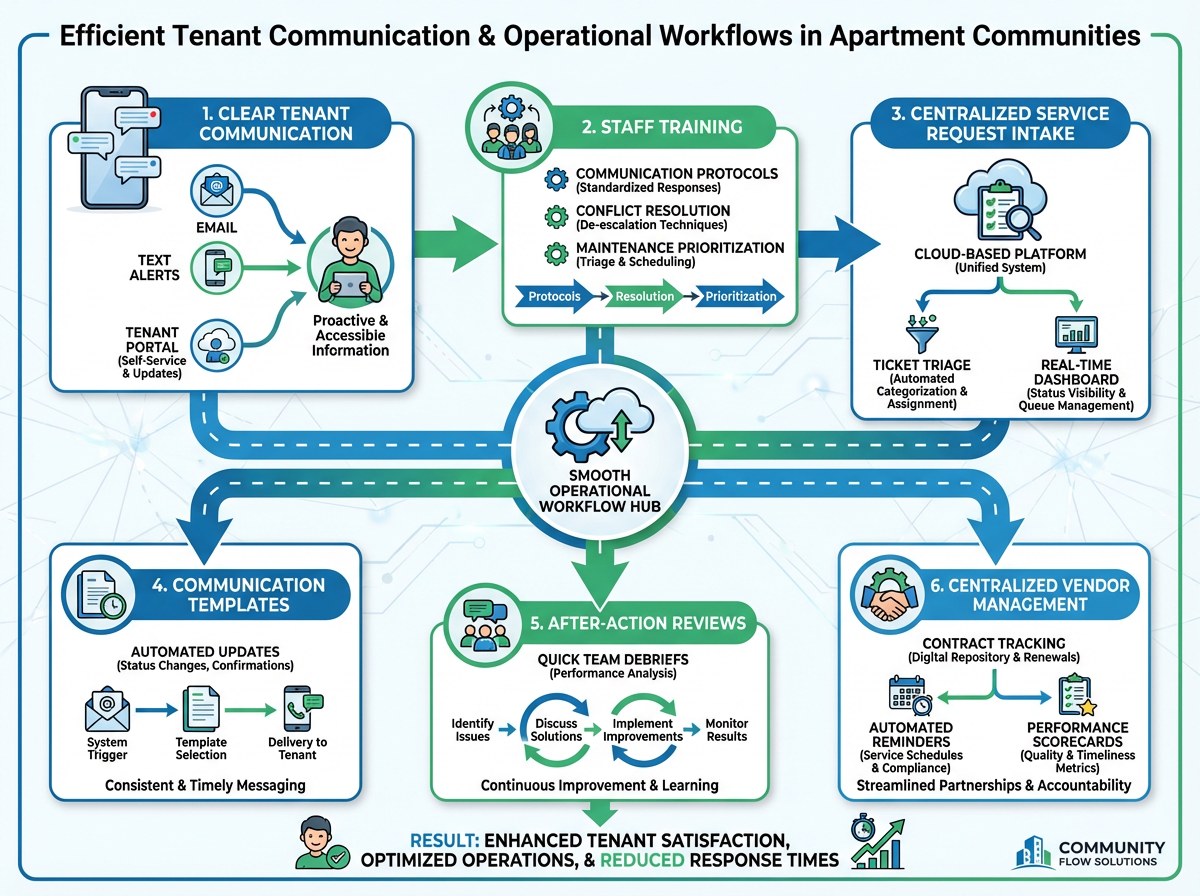
Don’t bombard them with noise or long-winded updates. Use simple, direct communication channels: email blasts, text alerts, and a tenant portal that actually works. Text is king. If a maintenance issue pops, a text update saying “We got your request, scheduled for tomorrow” beats a vague voicemail every time. Set clear expectations from day one. On move-in, give a straightforward “What To Expect” guide covering everything from parking and trash valet to emergency contacts. Make it digital and easy to access 24/7. Tenants don’t call because they should, they call because you made it hard to find answers elsewhere. Fix that.
Now, the elephant in the room—staff.
Your on-site team is the face of your property: leasing agents, maintenance techs, security guards, even third-party vendors. Without training, you get inconsistent service and unhappy tenants. Build a no-nonsense training program that covers tenant communication protocols, basics on conflict resolution, and technical skills specific to your property. Hold monthly refreshers and roleplay sessions. For maintenance, train staff on prioritizing requests—not all fixes are created equal. A broken lock? Next hour. A leaky faucet? Within 24 hours. Use a tiered system.

Operational workflows are where you make or break efficiency.
Step one: centralize service request intake. Whether it’s a security issue, trash valet not showing up, or towing enforcement, everything must funnel through one system—preferably a cloud-based property management platform. This stops lost tickets and confusion. Once requests come in, triage is critical. A simple checklist per service type ensures nothing falls through cracks. For example: if a security alert comes in after hours, your SOP kicks off instant contact with local police plus on-site guard notification. For construction or turns, schedule vendors with buffers built in—not hoping everyone shows up on the same day.
Communication templates are underrated. Use them. Develop clear scripts for acknowledging tickets, updating tenants during work, and confirming completion. This slashes back-and-forth and improves transparency. For instance, after a maintenance request, auto-send a “Tech dispatched at X time” message, then a “Issue resolved” note with feedback options.
After-action reviews (AAR) keep you sharp. Post any major incident or recurring issue, gather involved staff for a 15-minute debrief. What went well? What blew up? How to fix next time? Don’t make it a blame game; make it quick, actionable, and part of the culture.
Centralized vendor management isn’t optional anymore.
Juggling multiple contractors for security, renovations, and trash valet becomes a nightmare without one platform to track contracts, schedules, and invoices. Use software that sends automated reminders for service renewals and monitors KPIs like response times and completion rates.
Real-world example: a community I worked with had chaos over trash valet schedules and towing disputes. We implemented a centralized intake portal. Now, tenants submit trash complaints via text, maintenance triages and forwards to valet vendor automatically, and status updates hit tenant phones instantly. Result? Resident satisfaction up 30 percent in six months and towing disputes halved.
Another case: security teams often miss coordinating with maintenance during renovations. Introducing an SOP requiring heads-up 48 hours before any major turn allowed security to ramp staffing appropriately. No blackouts, no surprises, no pissed-off tenants rattling doors late at night.
To sum it up: focus on crystal-clear tenant communication, hardcore staff training with real scenarios, and ironclad operational workflows ready for anything.
Use that centralized vendor system like your life depends on it. Build checklists for request triage, create smart communication templates, and embed routine after-action reviews. The difference? Happy tenants who trust you, staff who waste zero time, and a property that actually works.
If you want a legit, step-by-step bootcamp to build AI agents that can automate and supercharge tenant communication and operational workflows, check out the best training that’s localized for property managers right here. It’s not magic but learning how to make smart tools work for you is a game changer. Trust me, you’ll want to drill down on that next.
Security service partners can be integrated directly into your workflows, while working with a reliable renovation contractor keeps turns and construction aligned with your schedules. For day-to-day operations, partnering with a professional trash and valet provider and consistent towing enforcement helps maintain order and resident satisfaction across the community.