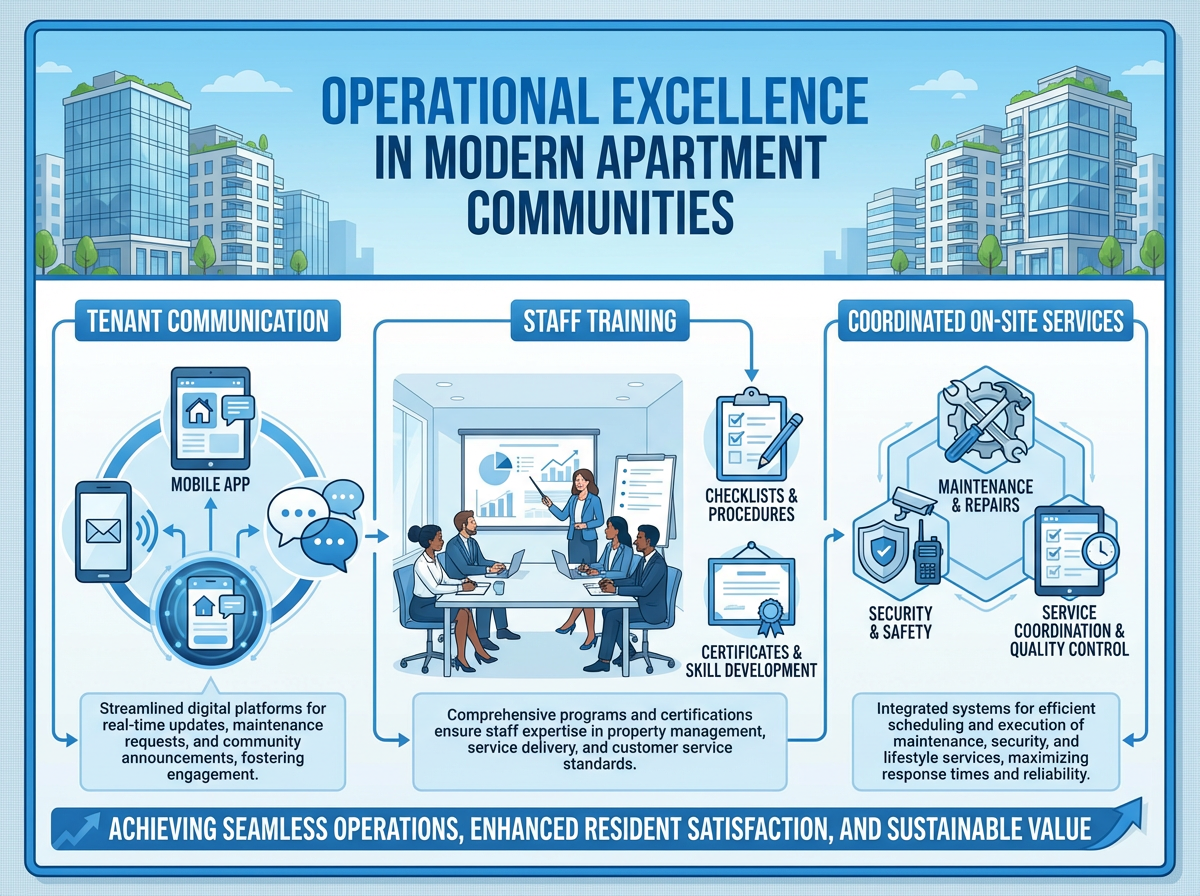
Operational excellence in apartment communities isn’t just a buzzword—it’s the bedrock of resident satisfaction and property profitability. Let’s cut through the fluff and get right to the operational guts: communication, understanding residents, staffing, training, and workflows. Nail these, and you turn a decent apartment complex into a standout community.
First up, educate residents and boost two-way communication.
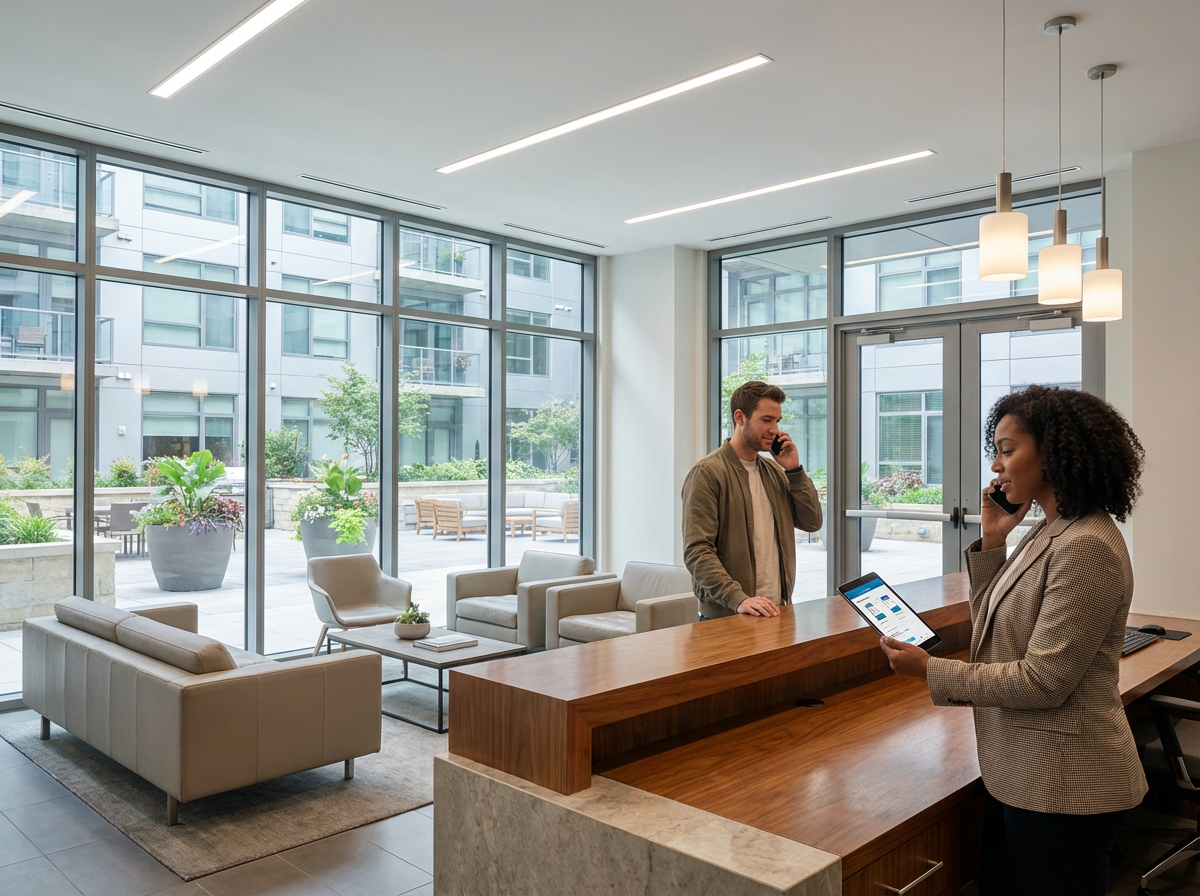
Most property managers think communication means sending emails or posting notices. Wrong. It’s about dialogue, not monologues. Create channels residents actually use—in-app messaging, quick SMS blasts, or a dedicated residents’ portal. Quick tip: use surveys to gauge satisfaction and capture needs before issues blow up. Expect a range of residents from task-oriented singles to families or seniors. Tailor communication styles accordingly. Parents might want straightforward updates on maintenance schedules, while younger renters prefer app notifications. Don’t assume one size fits all.
Know your residents’ expectations by segment. Track maintenance requests and tenant demographics. If your data shows frequent kitchen repairs in family units, prioritize preventive maintenance there. For tech-savvy younger residents, digital requests must be lightning-fast. Avoid the trap of blanket policies; bespoke service beats convenience any day.
Now, the on-site team—the nerve center of operational excellence.
You don’t want a random patchwork crew scrambling daily. Build a tight, coordinated team: office staff, maintenance, security, vendors. For example, security patrols synced with CCTV monitoring cut response times drastically. Analysis of incident patterns can help concentrate patrols where necessary, instead of random walks. Same with maintenance: integrate tracking systems, so repairs, turnovers, and renovations aren’t reactive but preplanned. Trash valet? Make it part of a routine workflow locked into vendor contracts, with clear SLAs for timely pickups and area cleanliness.
Speaking of vendors, centralize management. A scattered vendor list means no accountability. Assign a single point of contact who oversees service level agreements explicitly covering response times, quality checkpoints, and penalties for underperformance. It’s the only way to guarantee consistency and stay ahead of resident complaints.
Training can’t be off-the-cuff or yearly fire drills.
Embed structured, ongoing training programs. Break down sessions by role—front office must master communication tech and complaint de-escalation; maintenance crews need hands-on workshops on the latest repair techniques and safety protocols; security teams get scenario drills and tech updates on CCTV and incident logging. Consistency here is key; no excuses for patchy service or mixed signals.
What about workflows?
Slice your daily operations into clear, repeatable steps with owner-approved SOPs. For example: a maintenance request triggers an automated ticket, assigned to the technician with logged timelines and status updates sent straight to residents. If it’s a turnover, the process includes cleaning, inspection, and minor repairs scheduled tightly within days to speed up leasing. After-hours incidents? Immediate escalation protocols linked to security and management ensure swift, transparent responses.
Your parking enforcement and towing policies must be crystal-clear, enforced consistently. Automate notifications for violations, link tow vendors with strict SLA terms, and ensure drivers’ patrols verify problem vehicles before action—no surprises, no resident angst.
Operational excellence in apartment communities demands ruthless focus on these pillars:
resident communication, understanding diverse tenant needs, solid staffing, targeted training, and bulletproof workflows with tight vendor control. Skip any of these, and you’re in “good enough” territory, which, let’s face it, no one wants.
Want a practical roadmap?
Start by mapping your current communication tools and resident segments. Next, audit your on-site teams and vendor SLAs for gaps. Develop role-specific training plans and rollout digital workflow platforms to automate maintenance and incident management. Monitor, iterate, repeat.
To support these efforts, consider partners that align with your service standards—from security patrol and protection providers to renovation and unit turn specialists. Tighten your vendor ecosystem further with reliable trash and waste management services and clearly defined towing and parking enforcement partners that operate under strict SLAs.