Tenant communication and workflow improvement in apartment communities isn’t rocket science, but if you treat it like one, you’ll end up with frustrated residents and a burnout staff. Let’s strip the fluff. You run a multifamily property. Your bottom line? Happy tenants, smooth operations, and no costly surprises. Here’s how to get there—fast.
First, transparency in tenant communication.
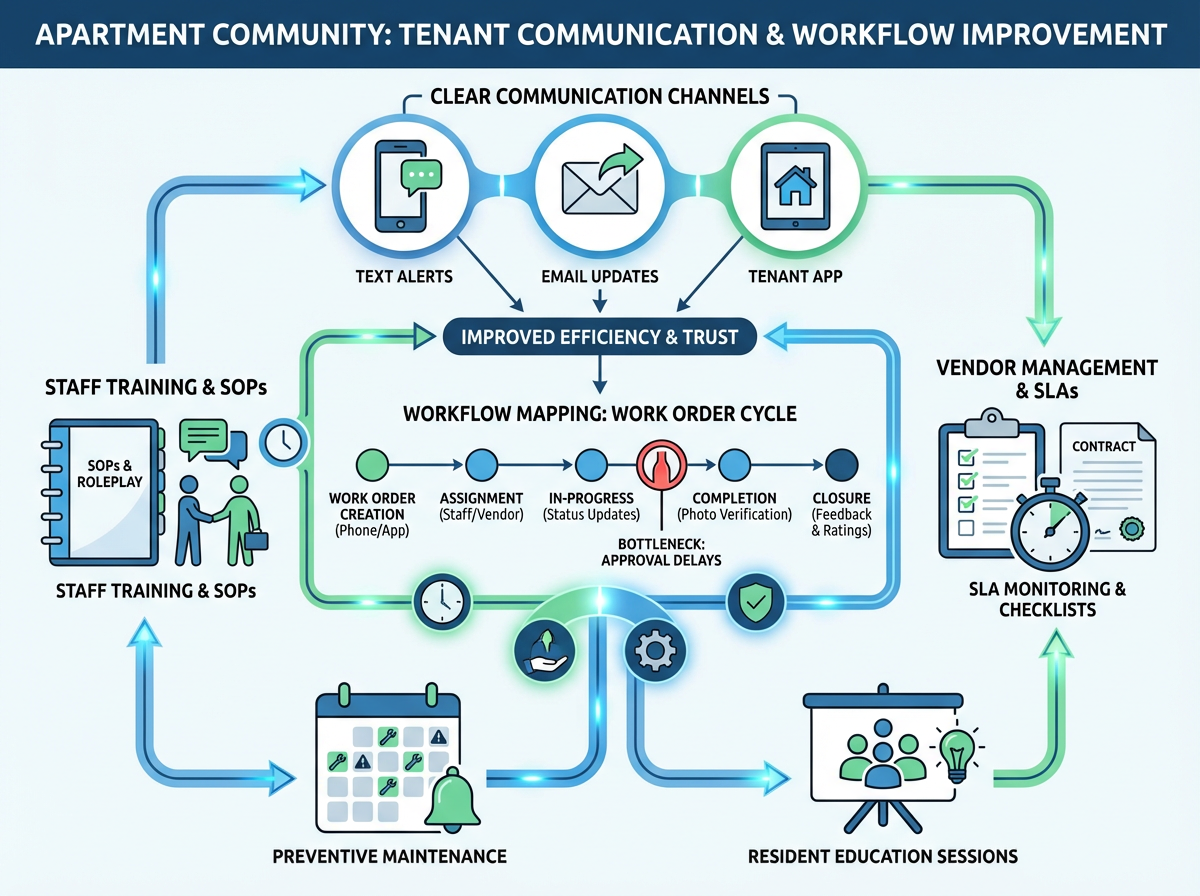
First, transparency in tenant communication. Set clear channels from day one. Use a dedicated app or portal that residents actually want to use. Forget paper notices that end up as doorstop. Text alerts for urgent issues. Email for updates. A monthly newsletter that actually says something useful. Don’t just blast info; listen. Make it easy for tenants to reach out with concerns or maintenance requests, and respond within 24 hours max. Track everything. No excuses.
Next, staff training.
Next, staff training. Your on-site team is your frontline army. Security, maintenance, renovations, trash valet, towing—they’re the gears that keep the machine running. Standardize training with clear SOPs. Break it down: how to handle work order intake, what counts as emergency vs. routine, how to do preventive maintenance checklists, protocols for after-hours incidents. Roleplay communication scenarios so your team knows how to diffuse tension and manage resident expectations without drama. Document every training, reinforce monthly. No one shows up knowing less than last month.
In terms of workflow improvement,
In terms of workflow improvement, start by mapping out every process top to bottom. How does a work order get created, assigned, and closed? Where are the bottlenecks? Use software that integrates with your communication channels so nothing slips through the cracks. Preventive maintenance schedules aren’t a nice-to-have—they’re a must. Create calendar alerts and assign clear ownership. Track KPIs like average response time, resolution time, number of emergency calls, resident satisfaction scores, and recurring issue flags. If your trash valet schedule overlaps poorly with tenant move-ins or renovations, adjust. If towing enforcement causes more complaints than compliance, rethink tactics.

Vendor coordination matters.
Vendor coordination matters. Confirm contracts with clear SLAs and penalties for no-shows or low performance. For renovations and turnovers, create checklists: inspection, cleanup, repair, final walkthrough, and tenant move-in prep. Assign a single point of contact who tracks progress daily. For security and CCTV monitoring, have protocols on who reviews footage, how often, and how incidents are documented. Fire watch? Train specific staff and schedule shifts accordingly, with logs for accountability.
Let’s talk resident education.
Let’s talk resident education. If tenants understand the why behind policies, they’re less hostile when things go sideways. Host quarterly info sessions or webinars covering topics like preventive maintenance importance, trash disposal rules, or security updates. Make sure materials are visually clear and jargon-free. Offer incentives for participation—simple stuff like a raffle or discounts on rent-related fees work better than you think.
Real-world example:
Real-world example: A property I worked with slashed emergency maintenance requests by 30% in six months just by standardizing tenant requests through a mobile app and training the team on triage SOPs. Response times improved from 48 to 12 hours on average. Residents noticed. Complaints dropped. Revenue held steady.
Metrics matter.
Metrics matter. Track tenant communication volume, response times, staff training hours, work order completion rates, and resident satisfaction scores monthly. Spot trends fast. Adapt processes before small problems balloon.
Here’s a quick checklist to hammer home:
Here’s a quick checklist to hammer home: Establish clear tenant communication channels with 24-hour response mandates. Standardize staff training on operational SOPs and customer interaction. Map workflows end-to-end; identify bottlenecks and automate when possible. Schedule and enforce preventive maintenance. Tighten vendor management with contract SLAs. Educate tenants regularly to foster cooperation. Use real-time metrics to evaluate and tweak.
Don’t overlook the power of consistent follow-up. Good intentions fail when forgotten. Assign managers to audit communications and workflows weekly. This isn’t a set-it-and-forget-it deal. It’s a living system.
For services like maintenance coordination and operational support, consider requesting a free quote from specialized providers. If your property is planning upgrades, explore renovation partners and get a free quote for upcoming projects. To streamline trash management and valet services, you can also obtain a free quote from waste service experts, and for parking and towing enforcement, reach out for a free quote to support your towing policies.