Private Towing Company: 4 Steps to Secure Property
Why Private Property Towing Matters for Your Houston Apartment Community
A private towing company is a licensed service provider that removes unauthorized, illegally parked, or abandoned vehicles from private property on behalf of property owners and managers. Here’s what you need to know:
What Private Towing Companies Do:
- Remove vehicles parked without authorization from private lots, apartment complexes, and commercial properties
- Enforce parking rules for property owners through contracted agreements
- Provide legally compliant signage warning of towing policies
- Store towed vehicles in secure impound facilities
- Operate 24/7 to respond to parking violations
Why Property Managers Use Them:
- Maintain parking availability for residents and authorized visitors
- Keep fire lanes, emergency access routes, and handicap spaces clear
- Remove abandoned vehicles that occupy valuable parking spaces
- Enforce lease agreements and parking policies consistently
Having vehicles parked on your property without permission can be a major headache. For apartment complexes and multi-family properties in Houston, parking scarcity is already a challenge—and when unauthorized vehicles take up spots meant for your residents, it creates frustration, safety concerns, and potential liability issues. For example, it’s not uncommon for a single towing service in a major metropolitan area to perform hundreds of private property tows every year for commercial property owners, demonstrating just how common this problem is across North America.
The solution is a professional private towing service, but navigating the legal requirements, choosing the right partner, and setting up an effective towing policy requires knowledge of local regulations, consumer protection laws, and best practices for enforcement. Property managers need to understand signage requirements, authorization procedures, and their responsibilities—as well as the rights of vehicle owners whose cars are towed.
I’m Moe Shariff, owner of American Towing Group and Apartment Services Group, and I’ve spent over eight years helping Houston property owners manage the complexities of parking enforcement through reliable private towing company partnerships. This guide will walk you through everything you need to know to implement an effective, legally compliant towing program for your property.
Understanding Private Property Towing: A Necessity for Property Management
If you manage an apartment complex or commercial property in Houston, you’ve probably dealt with this scenario more than once: An unauthorized vehicle sits in a prime parking spot for days. Or someone blocks the fire lane during an emergency. Or a resident calls to complain that a visitor took their reserved space—again.
These aren’t just minor inconveniences. They’re real problems that affect your residents’ daily lives and your property’s safety and value. This is exactly why private property towing exists, and why it’s become an essential tool for property managers who take their responsibilities seriously.

Private property towing is simply the removal of vehicles that don’t belong on your property—whether they’re parked without permission, violating posted rules, or have been abandoned. It’s about maintaining order in your parking areas and making sure the people who actually live or work at your property can park where they’re supposed to.
When you have a clear towing policy enforced by a professional private towing company, you’re protecting several critical aspects of your property. Unauthorized vehicles get removed quickly, keeping spaces available for residents. Fire lane safety is maintained so emergency vehicles can always access your buildings. Reserved parking enforcement ensures that residents who pay for specific spots actually get to use them. All of this contributes directly to tenant satisfaction and helps with protecting property value over the long term.
For more insights on maintaining your property’s value and operations, check out our guide on Property Management.
Why It’s Essential for Property Owners
Let’s talk about why private property towing isn’t just a nice-to-have service—it’s genuinely essential for running a well-managed property.
Parking scarcity is a real issue in Houston and most urban areas. When unauthorized vehicles take up limited spots, legitimate residents and visitors end up circling the lot or parking blocks away. That creates frustration and complaints that land on your desk.
Customer convenience and resident safety go hand-in-hand with good parking management. Your residents work hard all day and deserve to park near their homes when they get back. Your commercial tenants need their customers to find parking easily. When someone blocks a driveway or parks across multiple spaces, it’s not just annoying—it can create genuine safety hazards by blocking sightlines or impeding pedestrian walkways.
Preventing abandoned vehicles is another crucial reason to have a towing partner. An abandoned car sitting in your lot for weeks sends the wrong message about your property. It can attract vandalism, become a dumping ground for trash, and make residents feel like management doesn’t care about the community.
Finally, there’s the matter of upholding lease agreements. If your leases include parking rules—and they should—you need a way to enforce them fairly and consistently. A private towing company gives you that enforcement mechanism without putting the burden entirely on your staff.
Benefits of a Clear Towing Policy
When you establish a clear, well-communicated towing policy and partner with a reliable towing service, the benefits extend far beyond just removing problem vehicles.
The biggest benefit? Deterrence. When drivers see prominent signage stating that unauthorized vehicles will be towed at owner’s expense, most people think twice before parking illegally. Clear warnings prevent violations before they happen.
A professional towing partnership also ensures fair and consistent enforcement. When rules are applied uniformly—not just when someone complains or when staff happens to notice—residents trust that management treats everyone equally. Nobody can claim you’re playing favorites or selectively enforcing policies.
From a practical standpoint, working with a private towing company creates a reduced administrative burden for your team. Instead of your maintenance staff or leasing agents spending hours dealing with parking complaints, making phone calls, and tracking down vehicle owners, the towing company handles the entire process. Your staff can focus on what they do best.
You’ll also notice improved traffic flow throughout your property. Vehicles parked in fire lanes, blocking driveways, or taking up loading zones create bottlenecks and frustration. Quick removal keeps traffic moving smoothly and ensures delivery trucks, moving vans, and service vehicles can access your property without hassle.
Perhaps most importantly, a well-enforced parking policy contributes to improved community appeal. A property where parking is orderly, abandoned vehicles are removed promptly, and residents can always find their assigned spots simply feels better managed. It shows you care about the details that make daily life easier for everyone who lives there.
The Legal Framework: What Property Owners Must Know
Here’s something I’ve learned over eight years in the towing business: understanding the legal side of private property towing isn’t just about avoiding lawsuits—it’s about doing right by everyone involved. When you know the rules inside and out, you can enforce parking policies confidently, knowing you’re protecting both your property and vehicle owners’ rights.
The legal landscape varies from state to state, but the core principles remain consistent. As a Houston property manager, you’ll want to familiarize yourself with local ordinances that govern how private towing companies can operate in your area. These rules work hand-in-hand with state laws that set the broader framework for consumer protection and towing practices.
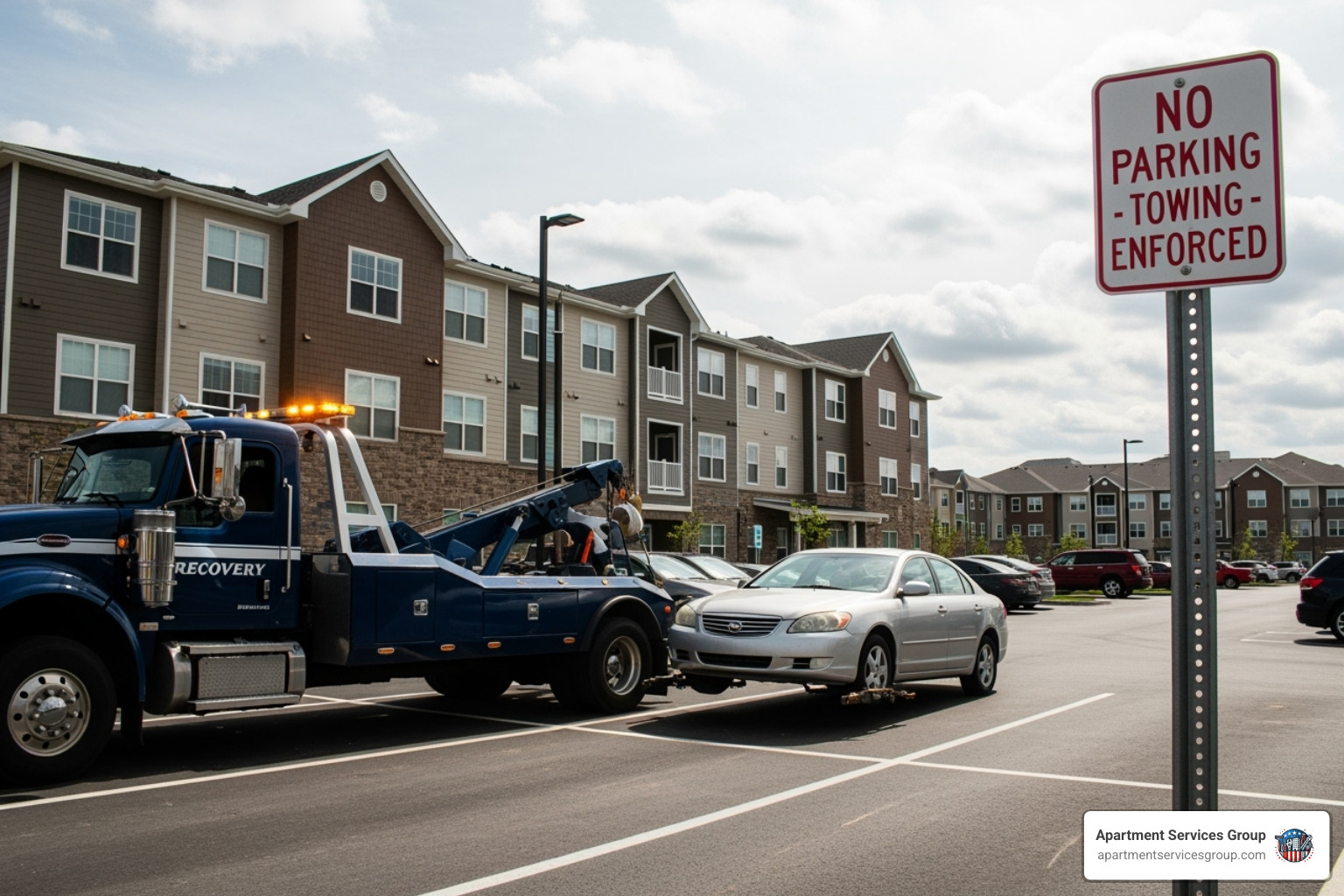
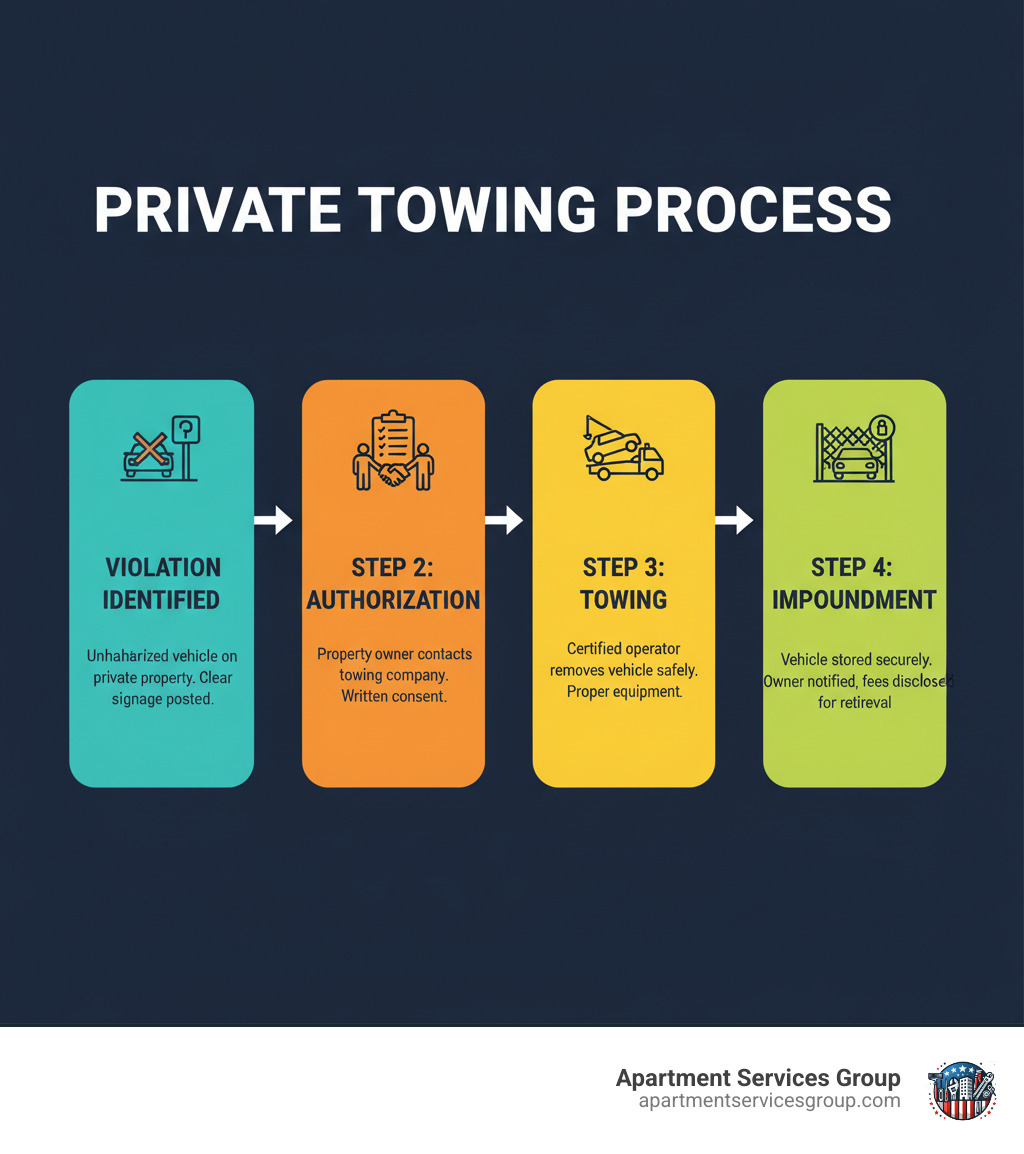
Think of proper signage as your first line of defense—and your legal shield. For a tow to be legally defensible, your property needs clearly visible warning signs that tell drivers exactly what will happen if they park without authorization. These aren’t just casual “No Parking” suggestions. The signs must include specific information: that unauthorized vehicles will be towed at the owner’s expense, the name and contact number of the towing company, and often the towing costs.
Many jurisdictions have strict requirements about sign size, font height, reflectivity, and placement. The details matter. A sign that’s too small, poorly lit, or tucked behind a tree won’t hold up if someone challenges the tow.
Before any vehicle gets hooked up to a tow truck, there’s a critical step: written authorization. Unless police or municipal authorities order the tow, your private towing company needs explicit permission from you—the property owner or your designated representative. This documentation protects everyone involved and creates a clear paper trail showing the tow was legitimate.
Rate disclosure is another non-negotiable requirement. Professional towing companies must tell vehicle owners upfront what the tow will cost, including all associated fees. The final bill can’t exceed that quoted amount unless the vehicle owner agrees to additional services. This transparency requirement exists under various Consumer Protection Act regulations to prevent price gouging and surprise charges.
Everything we do in private property towing must demonstrate clear compliance with applicable laws. From the moment we post signs to the day a vehicle owner retrieves their car, every step needs to follow the legal playbook. This isn’t bureaucracy for its own sake—it’s how we maintain trust and fairness in the community.
Managing access and security across your property involves multiple layers of protection. Our Apartment Access Control systems work alongside parking enforcement to create a comprehensive security approach.
Responsibilities of a Private Towing Company
When you partner with a professional private towing company, you’re not just hiring someone to haul away cars. You’re working with a service provider who carries serious legal responsibilities to both you and the vehicle owners.
Certification and licensing form the foundation. Legitimate towing operators must hold valid certificates and licenses to operate in their jurisdiction. In many places, these requirements are getting stricter. For instance, some regions now require tow truck drivers to provide copies of their towing certificates on request, ensuring they meet professional standards.
Every tow truck, invoice, and consent form should display the company name and certificate number. This transparency helps everyone verify they’re dealing with a legitimate operator, not some fly-by-night outfit.
When a vehicle owner comes to retrieve their car, they deserve to know exactly what they’re paying for. That’s why reputable towing companies provide itemized invoices breaking down every charge—the initial hook-up fee, mileage, storage by the day, and any additional services. No hidden fees, no surprises.
Payment flexibility matters too. Professional towing companies accept multiple forms of payment—credit cards, debit cards, and cash—so vehicle owners can retrieve their cars without unnecessary hassle.
Once a vehicle arrives at the impound lot, it must be stored in a secure facility. We’re talking locked gates, security cameras, and sometimes additional security measures. The goal is protecting the vehicle from theft, vandalism, or weather damage while it’s in the company’s care.
Speaking of care, damage prevention during the actual tow is crucial. Professional operators use the right equipment for each vehicle type—flatbeds for all-wheel-drive cars, wheel lifts for standard vehicles, specialized equipment for motorcycles. They’re trained in proper loading techniques that protect the vehicle from scratches, dents, or mechanical damage.
Here’s something vehicle owners often don’t know: even after their car is towed, they have the right to access personal belongings inside the vehicle during regular business hours. A good towing company won’t charge extra for this—they understand that someone might need to retrieve their laptop, medication, or other essentials while figuring out how to pay the impound fees.
These responsibilities aren’t just good business practices—many are legal requirements that protect consumers from predatory towing operations.
Setting Up a Towing Agreement
Getting started with a private towing company is simpler than you might think. Most professional operators have streamlined the process because they want to make it easy for property managers like you to get parking enforcement up and running quickly.
Start by researching potential partners. Look for companies with solid reputations, positive reviews, and clear knowledge of local towing laws. Check their fleet size and capabilities—can they handle the types of vehicles common at your property? Do they offer 24/7 availability? How quickly do they typically respond to calls?
Once you’ve identified a promising partner, schedule an initial consultation to discuss your property’s specific needs. Every apartment complex is different. Maybe you’re dealing with a chronic problem of non-residents parking overnight, or perhaps you need help clearing abandoned vehicles that have been sitting for months. A good towing company will listen to your challenges and tailor their services accordingly.
Free account setup is standard with reputable providers. You’ll typically complete a Private Property Impound Authorization Form that spells out the terms of service and officially grants the towing company authority to remove vehicles from your property. This document is crucial—it’s your legal foundation for enforcement.
Signage provision and installation often comes next, and here’s the good news: professional towing companies usually provide and install legally compliant signs at no charge. They know the local requirements and will make sure your property is properly posted. If you ever need to remove or relocate signs, they’ll handle that too.
Take time to establish clear communication protocols with your towing partner. Who on your staff can authorize a tow? What information does the towing company need when you call? How quickly can they respond? Many companies aim to have unauthorized vehicles removed within an hour of your call, but it’s good to confirm expectations upfront.
Make sure you understand the full scope of contracted services. This includes the types of towing equipment they’ll use (flatbeds for luxury cars, wheel lifts for standard vehicles, specialized trucks for underground garage access), their 24/7 dispatch availability, and how they handle abandoned vehicle removal, which sometimes involves additional legal steps.
Once your agreement is in place, your private towing company essentially becomes an extension of your property management team. They’re there when you need them, enforcing your parking policies professionally and legally, so you can focus on the hundred other things that demand your attention each day.
For comprehensive support with all aspects of your property management needs, explore our apartment complex solutions to see how we can help create a better living experience for your residents.
Choosing the Right Private Towing Company Partner
Finding the right private towing company to work with is one of the most important decisions you’ll make for your property. This isn’t just about getting cars moved—it’s about forming a true partnership with professionals who understand your standards, respect the law, and deliver reliable service when you need it most.
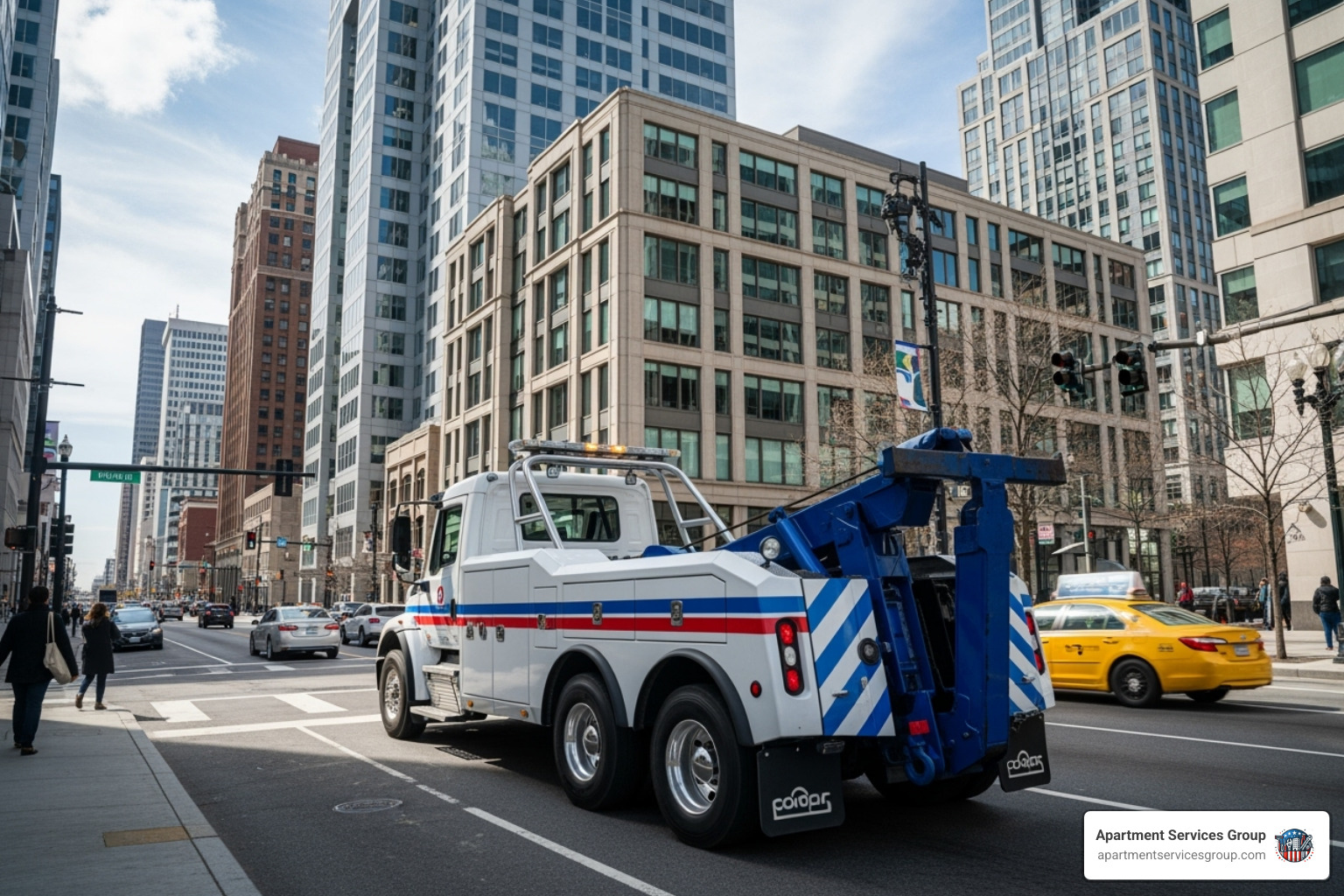
When we help property managers select a towing partner, we start by looking at their fleet size and capabilities. A company with a large, diverse fleet can handle whatever situation comes up. For example, a large towing service in a major metropolitan area might operate over 100 tow trucks, equipped for everything from light-duty cars to heavy-duty vehicles and even challenging underground garage situations. This kind of versatility means you’re covered no matter what rolls onto your property.
Round-the-clock availability is another must-have. Parking problems don’t wait for business hours, and neither should your towing partner. Leading towing partners offer 24/7 service, which means that a 2 AM parking violation gets handled just as efficiently as a 2 PM one. This keeps your property running smoothly at all hours.
Response time matters tremendously. When a resident calls your office frustrated because someone’s blocking their assigned spot, you need help fast. Top-tier services, for instance, often arrive on-site in less than 30 minutes. That kind of speed turns a potentially heated situation into a resolved one before tempers flare.
Modern technology like GPS tracking systems has revolutionized the towing industry. Companies using this technology can dispatch the nearest truck instantly and give you accurate arrival estimates. It’s transparent, efficient, and keeps everyone informed.
Insurance and bonding might sound boring, but they’re absolutely essential. A fully licensed and bonded company protects your property from liability if something unexpected happens during a tow. This peace of mind is worth its weight in gold.
Professional reputation speaks volumes. Before partnering with any company, we recommend checking online reviews to see what other property managers and vehicle owners say about their experience. Look for companies with honest reputations and a genuine commitment to customer satisfaction—even when dealing with frustrated vehicle owners.
Finally, your towing partner should be an expert in compliance and local regulations. They should know Houston’s towing laws inside and out, ensuring every tow is legally sound and properly documented. This expertise protects you from potential legal headaches down the road.
Choosing the right partner means less stress for you and a better experience for your residents. For more ways to improve your property’s safety and management, explore our Apartment Security solutions.
Key Services Offered by a Professional Private Towing Company
A truly professional private towing company brings more to the table than just hauling away problem vehicles. They offer a complete toolkit of services designed to solve every parking challenge your property might face.
Unauthorized vehicle removal is the core service—swiftly and safely removing cars from no-parking zones, fire lanes, reserved spots, or anywhere they don’t belong. But it goes well beyond that. Some companies provide parking enforcement monitoring, where they regularly patrol your property to catch violations before they become major problems. This proactive approach can be a game-changer for busy commercial properties.
The legally compliant signage piece is huge. Many companies handle the entire process—designing, providing, and installing the required warning signs that meet local regulations. This takes a major compliance headache off your plate and ensures everything’s done right from day one.
Equipment variety matters more than you might think. A company offering flatbed towing can transport vehicles without any risk of damage—perfect for newer cars or situations where you want extra care. Wheel lift and other specialized equipment handle different scenarios, from tight parking spots to vehicles with mechanical issues.
If your property has underground parking—and many Houston apartments do—you need a company with low-clearance tow trucks specifically designed for these tight spaces. Many professional towing companies highlight their underground towing capabilities, which use smaller, specialized trucks that can steer height-restricted garages without scraping ceilings or damaging infrastructure.
Abandoned vehicle removal deserves special mention. Those cars that sit for weeks or months aren’t just eyesores—they’re potential liability issues. Reputable companies have specific processes for handling abandoned vehicles, including proper documentation and notification procedures that keep you legally protected.
Private vs. Municipal Towing Services
Understanding the difference between private property towing and municipal towing helps clarify what you’re actually getting when you partner with a private towing company. While both services move vehicles, they operate under completely different rules and circumstances.
| Feature | Private Property Towing | Municipal/Police-Ordered Towing |
|---|---|---|
| Authority to Tow | Property owner or authorized manager | Law enforcement or municipal parking authority |
| Purpose of Tow | Enforce private parking rules and lease agreements | Address public safety issues, traffic violations, or criminal investigations |
| Cost Responsibility | Vehicle owner pays all towing and storage fees | Vehicle owner pays, though some jurisdictions may subsidize certain costs |
| Vehicle Destination | Private impound facility chosen by towing company | Municipal impound lot or designated facility |
Private property towing happens at your request, giving you control over parking enforcement on your property. Municipal towing, on the other hand, occurs when police or city officials order a vehicle removed from public streets—usually for safety reasons, expired registration, or involvement in criminal activity.
The key distinction is who initiates the tow and why. When you call a private towing company, you’re enforcing your property’s parking rules. When police order a tow, they’re addressing broader public safety or legal concerns. Both are necessary services, but they serve entirely different purposes in keeping our communities safe and functional.