
Property portfolio management: Your Ultimate Guide 2025
Why Property Portfolio Management Matters More Than Ever
Property portfolio management is the strategic approach to overseeing multiple real estate investments as a unified collection of assets, focusing on maximizing returns, minimizing risks, and achieving long-term financial goals.
Key aspects of property portfolio management include:
- Strategic oversight of multiple properties as one cohesive investment strategy
- Financial optimization through data-driven decision making and performance tracking
- Risk mitigation via diversification across property types, locations, and tenant bases
- Long-term wealth building through coordinated acquisition, improvement, and disposition strategies
- Performance monitoring using key metrics like cash flow, occupancy rates, and ROI across all properties
The real estate industry has evolved. Managing properties with spreadsheets is outdated; today’s market demands a tech-driven approach. The portfolio management market is projected to reach $11.4 billion by 2027, showing that investors now treat their properties as an integrated portfolio, not just individual assets.
Think of a property manager as a building superintendent handling daily operations, while a portfolio manager is the CEO making strategic decisions for the entire business. Both are vital, but portfolio management provides the strategic vision to turn scattered properties into a wealth-building machine.
I’m Moe Shariff, a Houston-based entrepreneur. Over the past eight years, I’ve built service companies and managed diverse property portfolios. I’ve seen how the right strategic approach transforms overwhelming property ownership into systematic wealth creation for myself and other investors.
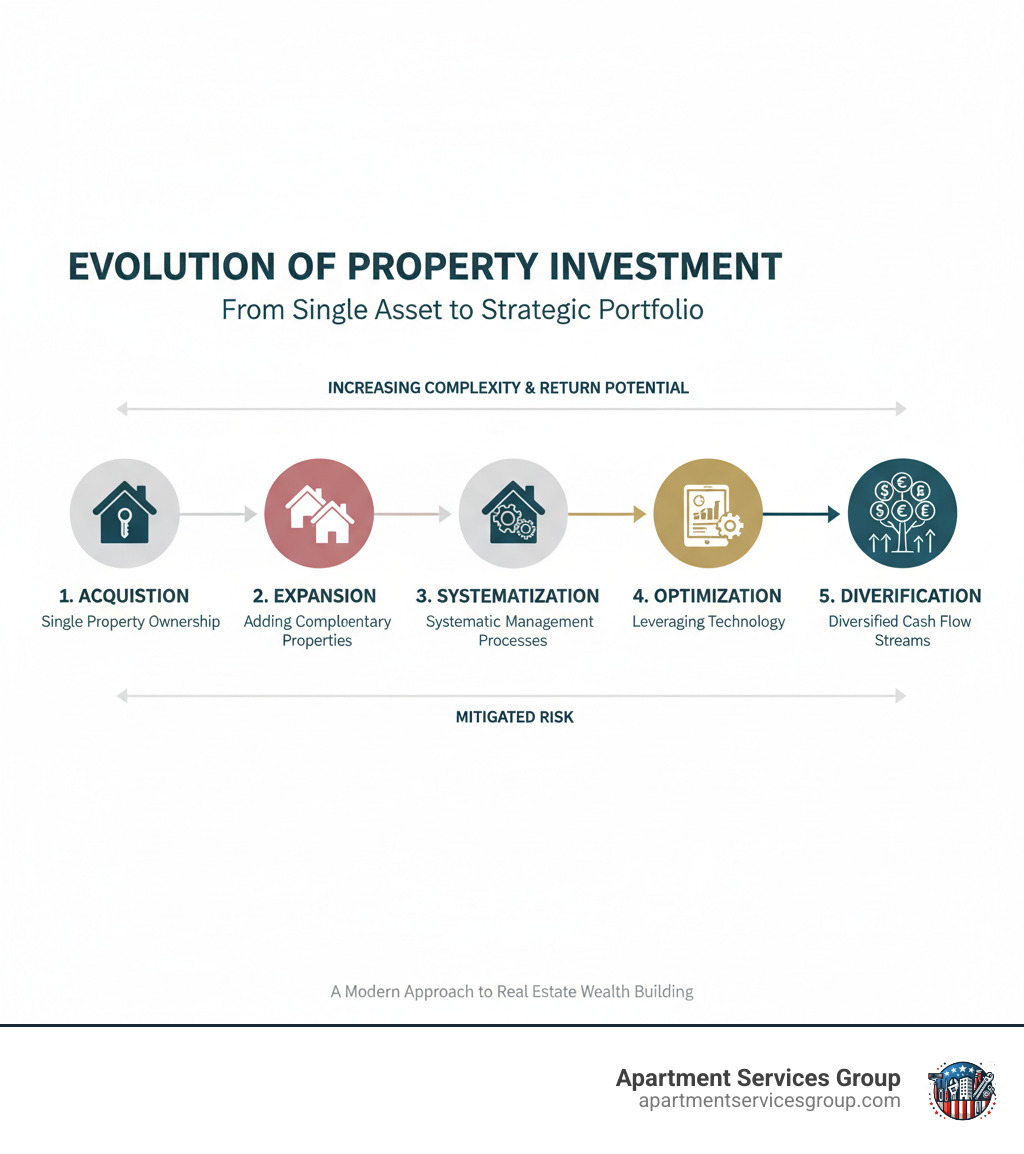
Property portfolio management terms simplified:
Property Portfolio Management vs. Property Management: Understanding the Difference
When you buy your second rental property, you face a critical choice: manage each property separately or think like a portfolio manager. The difference can make or break your long-term wealth-building strategy.
Let’s clear up the confusion. While they sound similar, property management and property portfolio management are as different as a restaurant chef and a restaurant chain CEO—both essential, but operating at different levels.
Property management is the hands-on, day-to-day work of keeping individual properties running smoothly. Property managers handle rent collection, maintenance calls, tenant screening, and legal compliance. They are in the trenches, marketing vacant units and addressing tenant complaints.
Property portfolio management, on the other hand, is the bird’s-eye view. It’s about treating your properties as a unified investment strategy. The portfolio manager thinks strategically about the bigger picture: market trends, risk mitigation, financial optimization, and long-term growth. While your property manager worries about filling a vacant unit, your portfolio manager analyzes whether you should sell that property and reinvest elsewhere.
The CEO versus building superintendent analogy is perfect here. The superintendent (property manager) keeps the building running day-to-day. The CEO (portfolio manager) makes strategic decisions about company direction and profitability. Both are crucial but operate in different spheres.
| Aspect | Property Management | Property Portfolio Management |
|---|---|---|
| Scope | Individual properties or small clusters | Multiple properties as unified investment entity |
| Primary Goal | Optimize operations, maintain steady income | Maximize portfolio value, achieve strategic objectives |
| Focus | Day-to-day operations, tenant relations | Strategic oversight, financial performance |
| Key Tasks | Rent collection, maintenance, tenant screening | Market analysis, risk assessment, investment strategy |
Property management is operational and tenant-centric—it’s about making sure today runs smoothly. Portfolio management is strategic and market-centric—it’s about positioning your investments for tomorrow.
Understanding this difference changes everything. Instead of just collecting rent, you start building a coordinated wealth-creation machine. That’s the power of thinking like a portfolio manager.
Core Strategies for Effective Property Portfolio Management
Think of property portfolio management as conducting an orchestra. Each property is an instrument, and your job is to make them all work together to create consistent cash flow and long-term wealth. You need a strategic approach that treats your holdings as a unified investment machine.
Industry experts now optimize over seven billion square feet of space using strategic portfolio management principles. That’s a lot of real estate working smarter, not just harder.
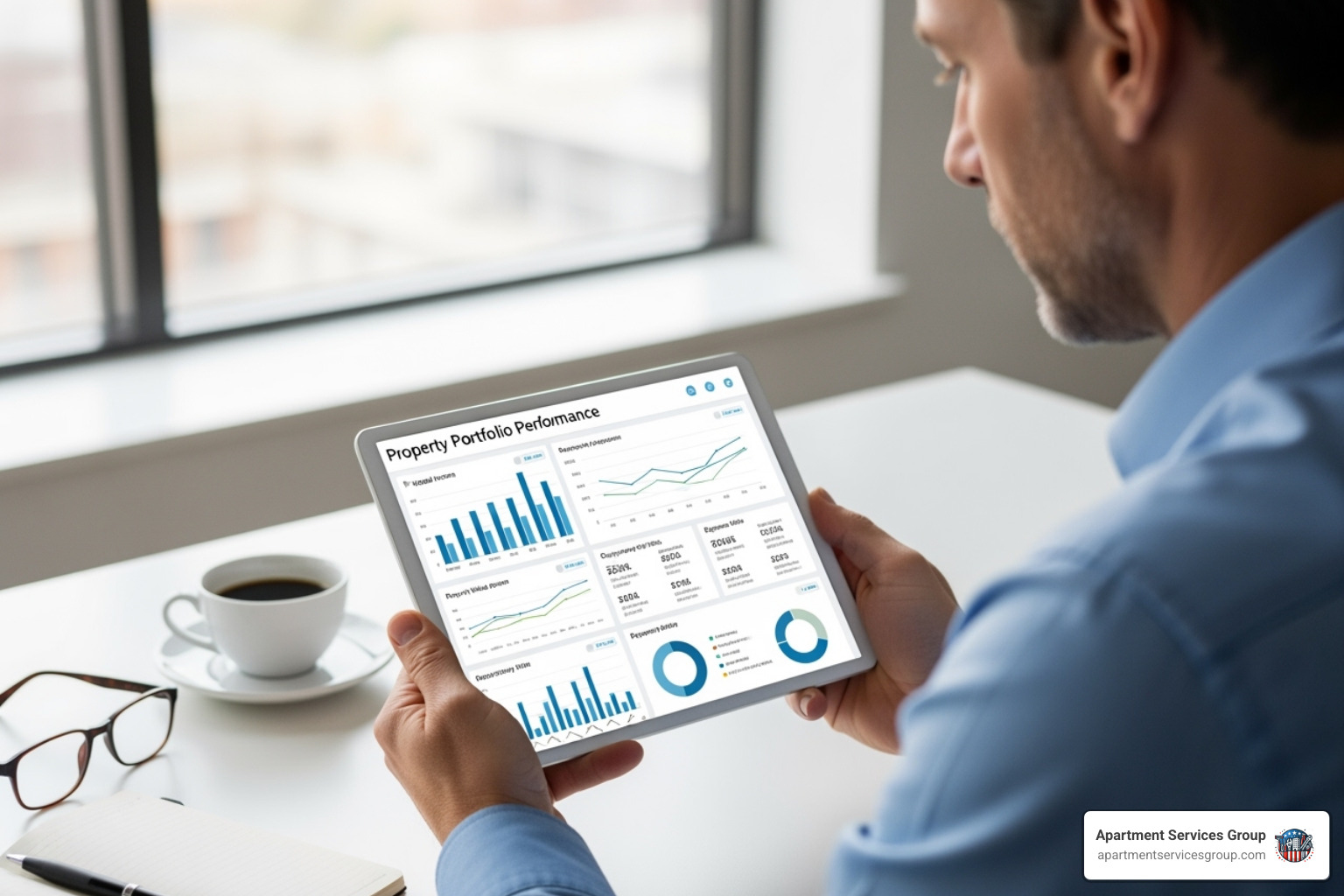
The secret lies in three core strategies: strategic property selection, smart diversification, and proactive risk management. Master these, and you’ll transform scattered real estate investments into a wealth-building powerhouse.
1. Strategic Property Selection and Acquisition
Many investors go wrong by buying on gut feelings. Smart portfolio managers treat every acquisition like a chess move. Market analysis is key. Before making an offer, understand economic drivers like job growth, population trends, and demand for your property type.
Location evaluation goes beyond the old mantra. Consider proximity to amenities, transportation, and future development plans. An average property today could be in tomorrow’s hottest neighborhood.
Property types matter. Residential, commercial, and industrial spaces behave differently, each with its own risk-reward profile. Understanding these differences helps you build a balanced portfolio.
The due diligence phase separates the pros from the amateurs. This means financial modeling, valuation techniques, and comprehensive inspections. At Apartment Services Group, we combine comprehensive data with in-depth capital markets expertise to get the perspectives you need to optimize your real estate investment strategy.
2. The Power of Diversification for Risk Mitigation
Don’t put all your eggs in one basket. In property portfolio management, this wisdom is critical for long-term success.
Geographic diversification protects you from local market downturns. If one market takes a hit, your other locations can keep your portfolio stable.
Property type diversification works similarly. A mix of residential and commercial properties can help your portfolio weather different market conditions.
Tenant mix diversification adds another layer of protection. For multifamily properties, having tenants from various industries means you’re not devastated if one sector struggles.
The beauty of diversification is stabilized cash flow. A well-diversified portfolio produces more predictable returns, making it easier to plan and reinvest.
3. Proactive Risk Management in Your Portfolio
Smart investors prepare for challenges before they arrive. Proactive risk management means identifying potential problems and having solutions ready.
Risk identification means understanding what could go wrong, from market recessions and operational issues to legal violations and financial challenges like interest rate changes.
Insurance coverage is your first line of defense. Adequate property, liability, and rent loss insurance can protect you from unexpected events.
Well-crafted lease structuring provides flexibility. Including clauses for various scenarios protects both you and your tenants by creating clear expectations.
Regular inspections and maintenance prevent small problems from becoming expensive disasters. Our team specializes in multifamily property maintenance, helping owners stay ahead of issues.
Financial risk management includes monitoring debt-to-equity ratios, maintaining cash reserves, and planning for interest rate fluctuations.
The goal isn’t to eliminate risk, but to anticipate and minimize it. Successful portfolio managers use in-depth analysis of your business, helping drive your company toward ultimate performance.
Leveraging Technology and Data for Optimal Performance
Trying to manage multiple properties with spreadsheets and sticky notes is overwhelming. That’s why modern property portfolio management has acceptd technology as its secret weapon.
Managing a portfolio without tech is like using a paper map instead of GPS—you’ll waste time and miss opportunities. A telling statistic: 60% of landlords now prefer to collect rent online. This shift is about efficiency, accuracy, and staying competitive.
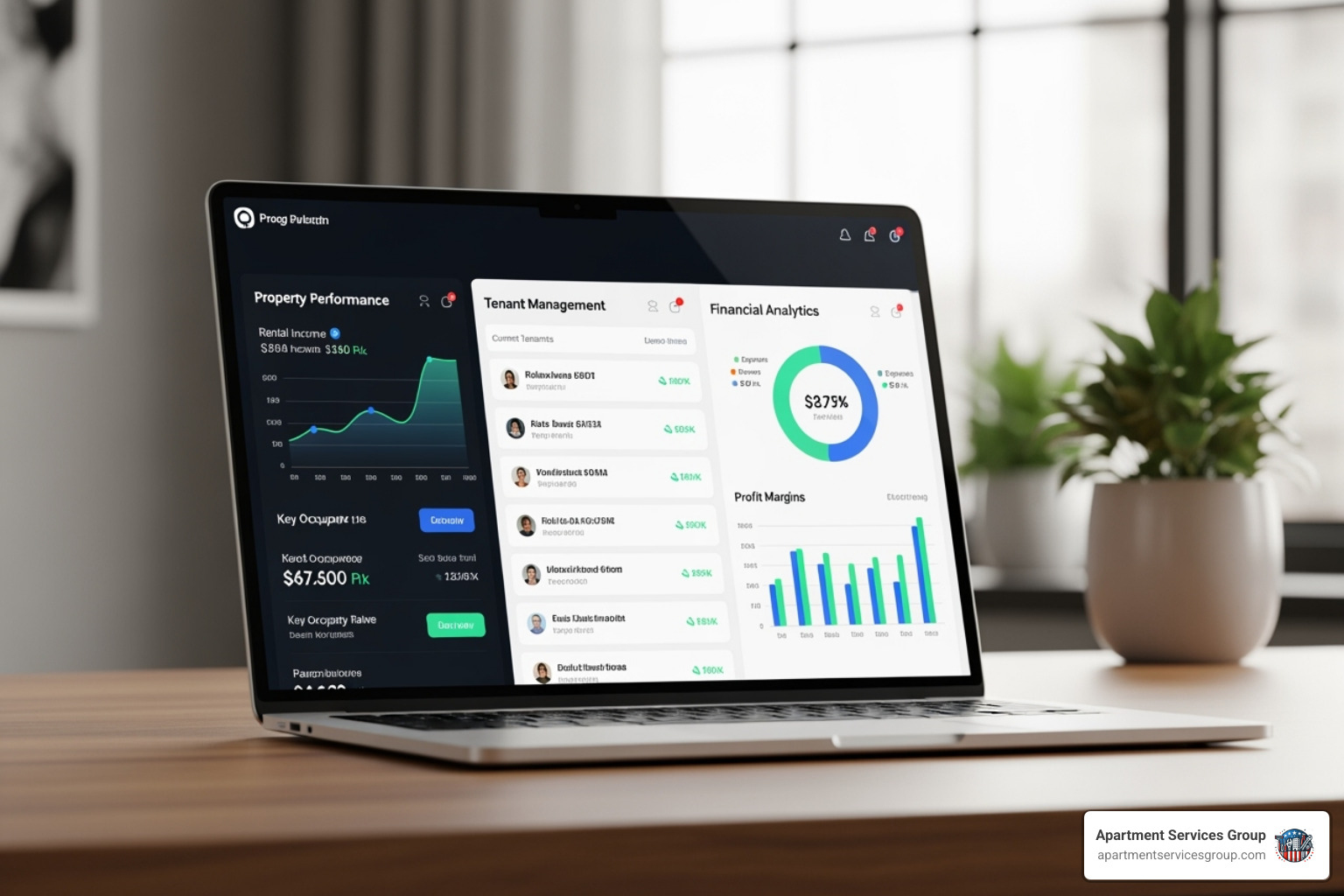
How Technology Streamlines Property Portfolio Management
Technology is the central nervous system of your portfolio strategy, connecting all aspects of your properties into one coordinated system.
Centralized data management is a game-changer. Instead of hunting through files, all your tenant information, financial records, and property details are in one secure, accessible place.
Automated workflows handle repetitive tasks like rent reminders, late fee calculations, and lease renewal notifications. Maintenance requests get routed automatically, saving you time.
Financial tracking and reporting capabilities are invaluable. Software automatically categorizes expenses, tracks income, and generates detailed performance reports for each property and your entire portfolio.
At Apartment Services Group, we’ve seen how the right apartment building management software transforms chaotic operations into smooth systems.
Essential software types include Property Management Software (PMS), deal analysis tools, e-signature platforms, and online rent collection tools that improve cash flow.
Making Data-Driven Decisions for Maximum ROI
The real magic happens when organized data helps you make smarter decisions.
Key Performance Indicators (KPIs) are your portfolio’s vital signs. You’ll track occupancy rates, rental income growth, and maintenance costs per unit to gauge portfolio health.
Real-time analytics show you what’s happening now across all properties. You’ll immediately know about high maintenance requests or slow rent collections, not weeks later.
Forecasting capabilities help you see around corners. By analyzing historical data and market trends, software can predict vacancy spikes and suggest optimal rental rates.
Most importantly, technology helps you identify underperforming assets before they become major problems. The data highlights issues objectively, without emotion or assumptions.
This data-driven shift makes you proactive, not reactive. You move from defense to offense, optimizing your property portfolio management strategy for maximum returns. Technology makes management smarter, more profitable, and less stressful—an essential advantage in today’s market.
The Modern Property Portfolio Manager: Skills and External Factors
Running a successful property portfolio requires being a strategic business leader. Think of a portfolio manager as the conductor of an orchestra, making every property, decision, and market trend work in harmony.

Essential Skills for a Successful Manager
The best property portfolio management professionals wear many hats.
Financial acumen is the backbone of portfolio management. This means understanding financial statements, cash flow patterns, and capital allocation to maximize returns. You must know why a property performs as it does and how to optimize it.
Analytical skills separate good managers from great ones. Digging into market data, spotting trends, and conducting due diligence can prevent costly mistakes.
Market knowledge goes beyond property values. Successful managers understand local economic drivers, demographic shifts, and development plans that could impact investments for years.
Negotiation skills are used daily, whether acquiring properties, securing financing, or working with contractors. Finding win-win solutions directly impacts your bottom line.
Strategic thinking lifts property ownership to a coordinated wealth-building machine by aligning decisions with long-term financial goals.
Leadership and communication are crucial as your portfolio grows. You must coordinate with managers, contractors, and lenders, keeping all stakeholders informed to align objectives.
Successful managers also need strong problem-solving skills and adaptability. Real estate is unpredictable. The ability to quickly assess and implement solutions determines whether a challenge is a minor setback or a major financial hit.
Finally, understanding legal and regulatory frameworks is essential for protecting your investments from costly compliance issues.
Navigating External Market and Economic Influences
Even the best strategy must account for forces beyond your control. The key is building resilience and adaptability.
Market trends constantly reshape the real estate landscape. The rise of remote work and demographic shifts create new demand patterns that smart managers anticipate.
Economic conditions like interest rates, inflation, and unemployment directly impact your portfolio. Understanding these indicators helps you time major decisions effectively.
Government policies on zoning, taxes, and environmental regulations create both opportunities and challenges. For example, initiatives like the Greening Government Strategy can impact property operations.
Successful portfolio managers don’t just react to external factors; they anticipate them. By staying informed on policy changes, economic forecasts, and demographic studies, they position their portfolios to weather storms and capitalize on opportunities, turning challenges into advantages.
Frequently Asked Questions about Property Portfolio Management
Real estate investors often come to us with similar questions about property portfolio management. After years of helping Houston property owners optimize their investments, we’ve noticed certain concerns pop up repeatedly. Let’s explore the most common ones.
What are the key benefits of a robust property portfolio management strategy?
A robust strategy makes your properties work together to create something greater than the sum of their parts.
Increased and stable cash flow is the foundation. Multiple income streams offset fluctuations, so if one property has a vacancy, others keep the money flowing.
Long-term wealth creation through appreciation becomes more predictable. We’ve seen investors build multi-million dollar portfolios over a decade through smart acquisitions, value-add improvements, and strategic timing.
Risk mitigation through diversification protects your investment. Investors with geographically diverse portfolios weathered the 2008 financial crisis much better than those in single markets.
Tax advantages like depreciation and interest write-offs multiply across your portfolio, boosting after-tax returns.
Most importantly, you’re building equity faster. Each property adds to your net worth and provides cash flow for future acquisitions, creating a wealth-building snowball effect.
How many properties do I need to have a “portfolio”?
You technically have a portfolio the moment you own your second property. However, property portfolio management is about your mindset and approach, not your property count. The principles are the same whether you own 2 properties or 200.
You’re thinking like a portfolio manager when you view your properties as interconnected investments contributing to your overall financial goals. The difference isn’t in the numbers—it’s in the strategic approach.
Can I manage my own property portfolio?
Absolutely! Self-management can offer direct control and cost savings, especially with a smaller portfolio. However, it demands significant time, expertise, and the right systems.
When should you consider bringing in professionals? Common triggers include lack of time as your portfolio grows, geographic distance making management inefficient, or portfolio complexity that requires specialized expertise.
Consider your desire for expert optimization. We’ve seen investors increase their returns by 20-30% by partnering with professionals who understand market nuances and strategic opportunities. The decision depends on your goals, time, and comfort level with delegation.
Conclusion: Building Your Future with Strategic Portfolio Management
We’ve journeyed through property portfolio management, and it’s clear why it’s a game-changer. The difference between managing properties one-by-one and taking a portfolio approach is like playing chess instead of checkers—one requires far more strategic thinking.
We’ve seen how strategic oversight transforms scattered holdings into a wealth-building machine. While day-to-day property management is essential (the building superintendent), the strategic vision of portfolio management (the CEO) creates long-term value.
The three pillars—data-driven decisions, diversification, and risk management—are practical tools. Combining them with smart property selection and technology means you aren’t just hoping for good returns; you’re systematically building them.
Modern technology has democratized sophisticated investment strategies. Analytics and automation tools once reserved for large institutions are now available to individual managers. The 60% of landlords collecting rent online represents a shift toward more efficient, data-rich management.
Here in Houston, we at Apartment Services Group have witnessed how effective portfolio management transforms investor returns. Our comprehensive approach—from maintenance and renovations to security and management—supports these strategies. Well-maintained properties perform better financially and attract quality tenants.
The beauty of property portfolio management is that it scales with your ambitions. You’re building equity faster, creating multiple income streams, and positioning yourself for long-term wealth.
Your future in real estate doesn’t have to be overwhelming. With the right strategic approach, supported by technology and expert partnerships, you can build a portfolio that works as hard as you do.
Ready to see how strategic property portfolio management can transform your real estate investments? Explore our comprehensive apartment complex solutions and find how Apartment Services Group can help you build the future you’ve been planning.