Resident communication and staff training are the two pillars that keep apartment operations from collapsing into chaos. If you’re managing multifamily properties and still winging this, you’re collecting headaches like trophies. Let’s cut the fluff and get practical on how to educate residents and build a service team that actually delivers. No buzzwords, no corporate fluff, just what works.
First, understand residents before you try talking to them.
Know their expectations—quiet hours, maintenance speed, safety concerns—this isn’t guesswork. Send a quick survey on move-in about their preferences and pain points. Update it annually. Use real data, not assumptions. Once you know what residents care about, tailor your communication.
Step one: clear, consistent channels. Set up a dedicated resident portal, app, or even just a well-managed email where all communications funnel through. Make it obvious where people report issues or ask questions. Don’t scatter information across 5 different platforms; chaos follows. Your communication frequency matters too—weekly updates, monthly newsletters, or push notifications about maintenance schedules. Keep it punchy and relevant.
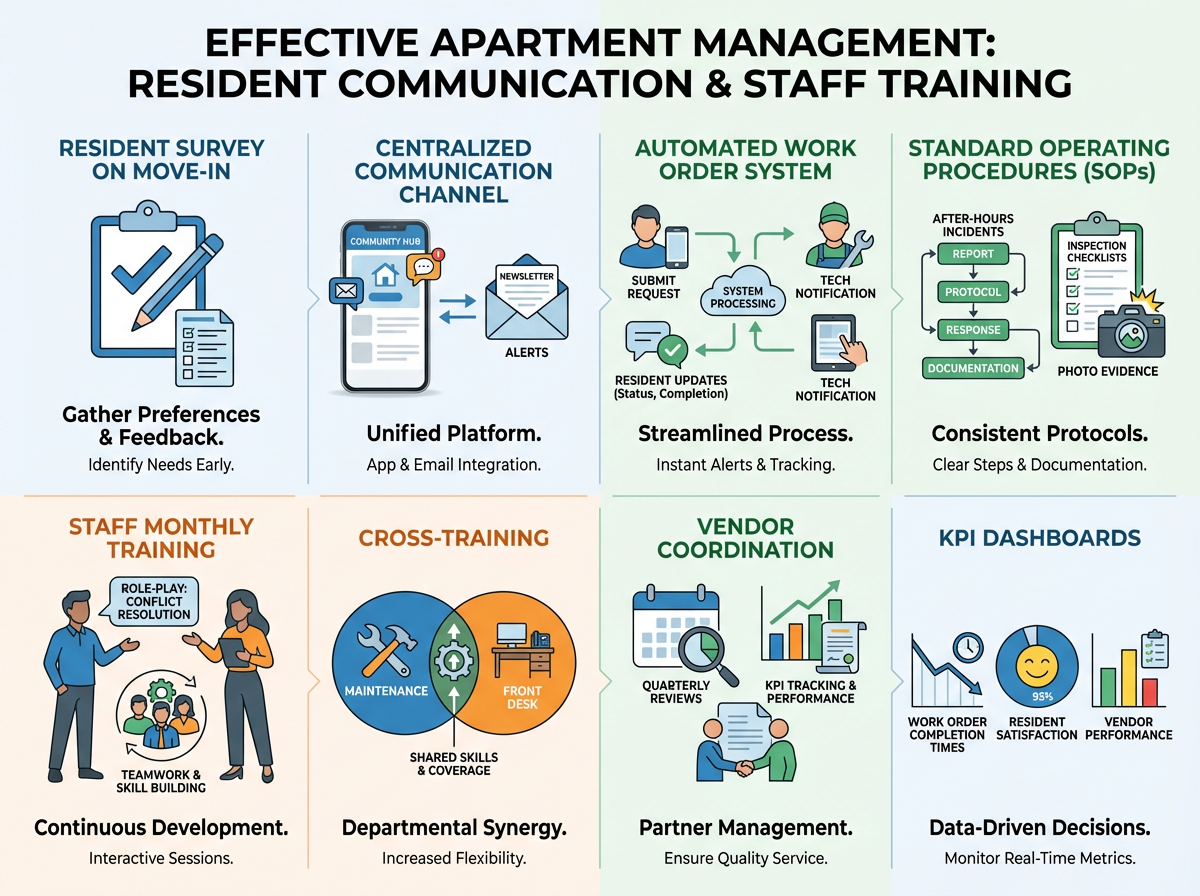
Step two: streamline workflows by digitizing and automating work orders. When a resident reports an issue, it goes straight into a system that logs, assigns, and tracks completion times. Use simple software that notifies the right technician and sends status updates back to the resident automatically. This cuts downtime and cuts back on residents calling the front desk every 10 minutes. For inspections and turn processes, create checklists that staff must complete and upload photos before closing a work order. No exceptions—accountability is built-in.
After-hours incidents are tricky but predictable. Equip your team with clear SOPs on escalation paths: who to call, how to log incident details, and how to communicate follow-ups to residents. Use a logbook (digital or analog) that every shift updates. Common mistakes happen when after-hours staff are left guessing. Don’t let that be you.
Now onto staff training—the backbone of execution.
Don’t just onboard once and forget it. Conduct monthly refreshers focusing on communication skills, customer service, and emergency protocols. Use role-playing scenarios: a shouted complaint about noise? A maintenance emergency? If your staff can’t respond confidently and empathetically, your residents know it instantly.

Cross-training matters too. Maintenance should know basic customer service. Front desk staff need to understand maintenance timelines and limitations. This builds a unified front rather than a blame game between departments.
Vendor coordination is often neglected but essential.
You’re not just managing people on your payroll but a swarm of contractors for security, renovations, trash valet, towing—all of them prone to breakdowns and delays. Hold quarterly vendor reviews tied to KPIs like response time, Resident Satisfaction Score (RSS), and issue resolution rates. Get tough. Vendors who don’t meet standards don’t stay. Demand weekly status reports on ongoing projects. Demonstrate you’re not a pushover.
Use measurable KPIs everywhere. Track average work order completion times, resident satisfaction scores, first-contact resolution rates, and vendor performance. Make dashboards visible to your team. Everyone should know where they stand or fall short.
Here’s a quick checklist for communication and training:
1. Survey residents on move-in about needs.
2. Set a single, clear communication channel.
3. Automate work order tracking with resident updates.
4. Create and enforce SOPs for turns, inspections, after-hours incidents.
5. Train staff monthly, using role-play and refreshers.
6. Cross-train between departments.
7. Hold vendors to performance KPIs and review quarterly.
8. Use dashboards for transparency and accountability.
Real-world kicker: A mid-sized Texas complex slashed resident complaints by 40% in six months just by upgrading their reporting portal and scheduling monthly role-play training for staff. Efficiency rose because everyone knew their role, and residents saw movement on issues. Simple stuff, done right, beats fancy systems no one uses.
In short, resident communication and staff training aren’t optional—they’re a system you build step-by-step.
Start small if you have to, but start now. Your residents will notice. Your turnover rates will drop. Your stress will decrease.
Want to build AI Agents for apartment management workflows or automate resident communications even further? Check out the best step-by-step training tailored for the US multifamily market. It’s straightforward, no fluff, and gets you from zero to savvy in weeks. Because managing apartments should be about smart systems, not firefighting.