Tenant communication and workflow improvements in apartment communities aren’t optional anymore; they are survival tactics. If you’re managing multi-family properties and still relying on scattered emails, guessing tenant needs, and juggling a team with zero clear protocols, you’re burning time and money daily. Let’s fix it fast.
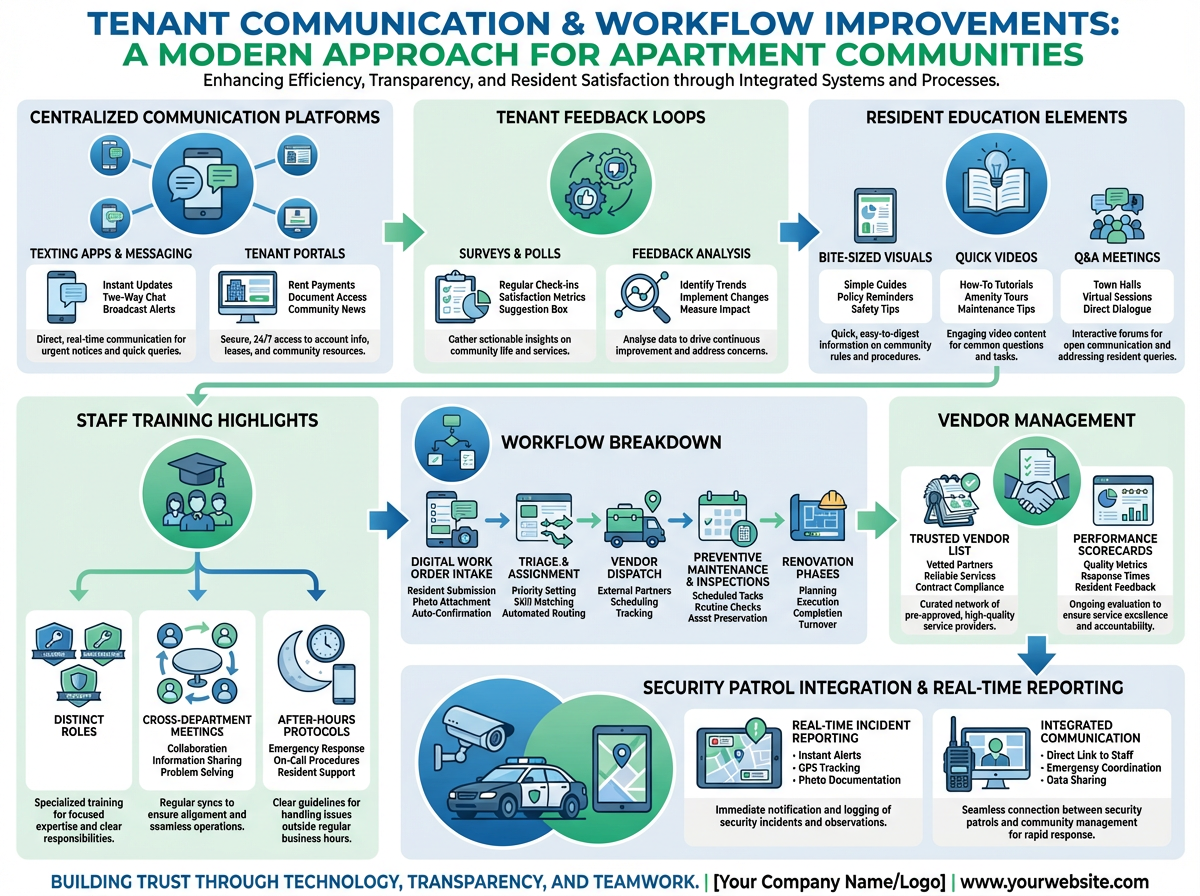
Start with tenant communication. Forget sending generic announcements that land in spam. Residents want clarity, speed, and relevance. Use a centralized communication platform that residents can access easily—think texting apps or tenant portals, not just email. That way, emergency alerts, package arrivals, maintenance updates hit instantly. Real-world example: One community used a chat-based app to update tenants on urgent maintenance and saw complaint calls drop by 30 percent within a month. People want to feel heard, so set up clear feedback loops–simple surveys post-maintenance or quick polls about amenities. You’re not just informing; you’re listening. That’s the first step in aligning expectations.
Next, resident education.
This usually gets ignored until it’s too late. Teach your residents how the system works upfront: when to expect maintenance, how to report issues, parking rules, and trash policies. Don’t dump 15 pages of rules in their welcome packet. Break it down into bite-sized visuals, quick videos, or infographics sent periodically. Real talk: people ignore the handbook. Make info bite-sized and obvious. Host a quick quarterly Q&A meeting—virtual or in-person—to address common questions and preempt frustrations. This builds trust and cuts down on repetitive calls.
On to staff training.
If your leasing, maintenance, and security teams don’t have tight, distinct roles and training, workflow collapses. Your leasing team should be experts in resident onboarding, rent policies, and conflict de-escalation—not fumbling over maintenance requests. Maintenance must master quick issue triage and smart scheduling, not just reacting randomly. Security needs training on daily patrol setups, incident reporting, and CCTV monitoring—not wandering aimlessly. Best practice: regular cross-department meetings where teams update each other, understand workflows, and pick up quick protocol refreshers. Don’t forget after-hours protocols. Everyone must know who handles what when the office is closed. Drill this. No one can afford confusion at 2 AM.
Workflow—here’s where it gets juicy.
Break down the process in these bite-sized chunks: work order intake, triage, vendor dispatch, after-hours protocols, inspections, preventive maintenance, renovation turns, trash valet coordination, and towing enforcement. Start with digital work order intake using a system everyone logs into—no paper, no missed notes. Maintenance triages requests by severity and assigns quick fixes internally or directs vendors for bigger jobs. This centralized dispatch prevents job duplication or neglect.
Vendor management? Centralize it. Pick three to five trusted vendors for all categories—maintenance, renovations, towing, trash valet—and build relationships. Track performance with scorecards: response times, quality, costs. This cuts time spent chasing repairs or chasing bills.
Inspections and preventive maintenance demand a real calendar. Automate reminders for quarterly inspections and preventive maintenance checks—don’t wait for a problem to show. Renovation turns? Plan them in phases: inspection, repair, cleaning, final inspection. Schedule them tightly but realistically. Trash valet and towing require daily oversight with clear rules posted and constant enforcement by staff who know when to act.
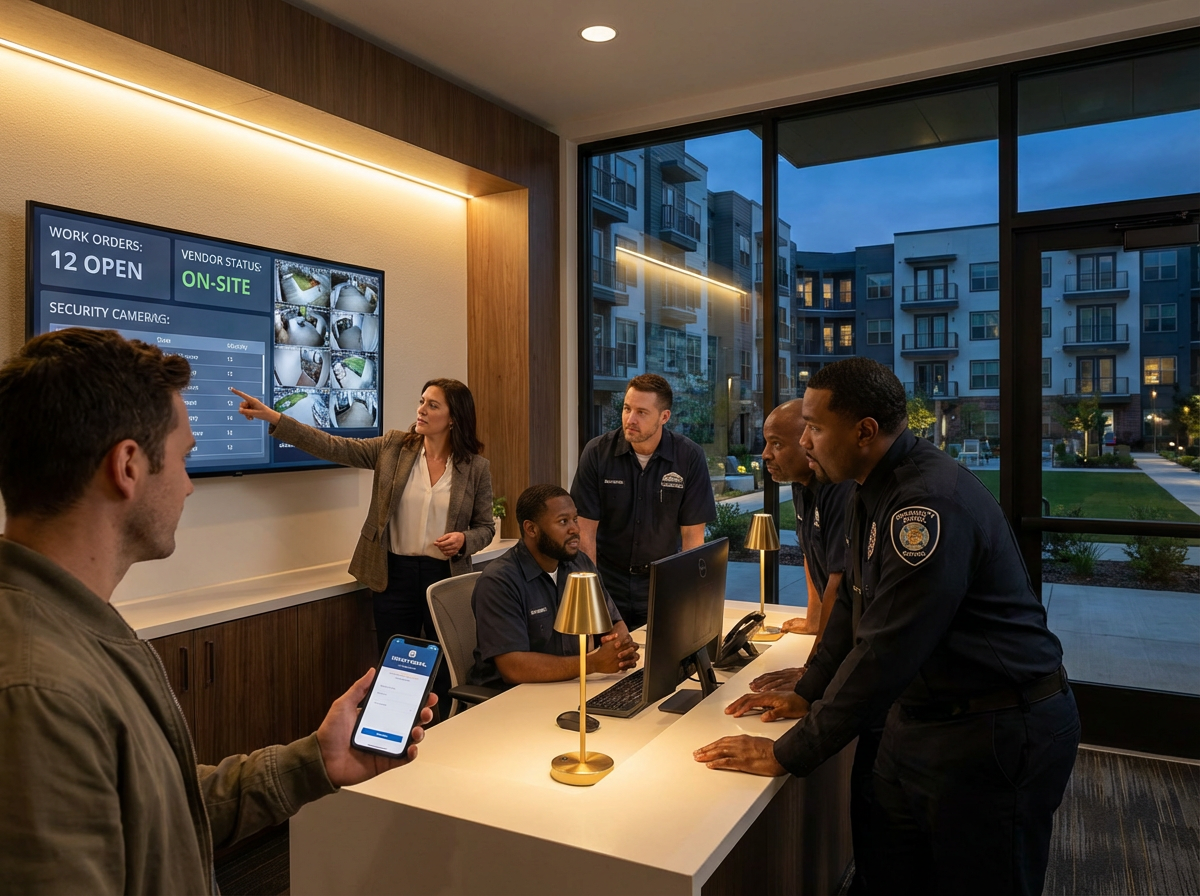
Picture this: your security team runs patrols and reviews CCTV footage daily, flags unusual activity, and syncs with leasing and maintenance for swift follow-up. Trash valet announces weekly schedule changes via tenant portal so everyone’s prepped. Maintenance has a dashboard showing all open work orders with deadlines and assigned vendors—it’s all visible, no guesswork. After-hours emergencies route to an on-call technician and handled without tenant confusion.
Here’s a quick checklist for property managers:
Tenant communication—central platform, instant updates, feedback loops.
Resident education—simple materials, regular touchpoints.
Staff training—role clarity, cross-team briefings, after-hours drills.
Work order system—digital, prioritized, tracked.
Vendor management—consolidated list, regular performance reviews.
Scheduled inspections—automated reminders, preventive approach.
Renovation turns—phased, realistic timeline.
Trash valet and towing—daily coordination, clear enforcement.
Security—integrated patrols, real-time incident reports.
Conclusion
Cutting down tenant complaints and operational chaos hinges on tightening these elements. It’s not rocket science but it demands commitment to process over excuses.
If you want to nail this, don’t just read about it—train your team live, tweak as you go, and document everything. And don’t forget, keeping tenants happy means keeping communication clear and workflows sharp.
Interested in building killer AI Agents that automate workflows like this? There’s a solid step-by-step course out there, tailored for property managers and operators, showing you exactly how to build from scratch and level up on-site services with AI. It’s worth a look if you want to move beyond the chaos and go full throttle into future-proof management.
towing enforcement, trash policies, and renovation turns can all be streamlined further with specialized partners. For security-sensitive properties, consider integrating towing and patrol workflows into your central system for even tighter control.