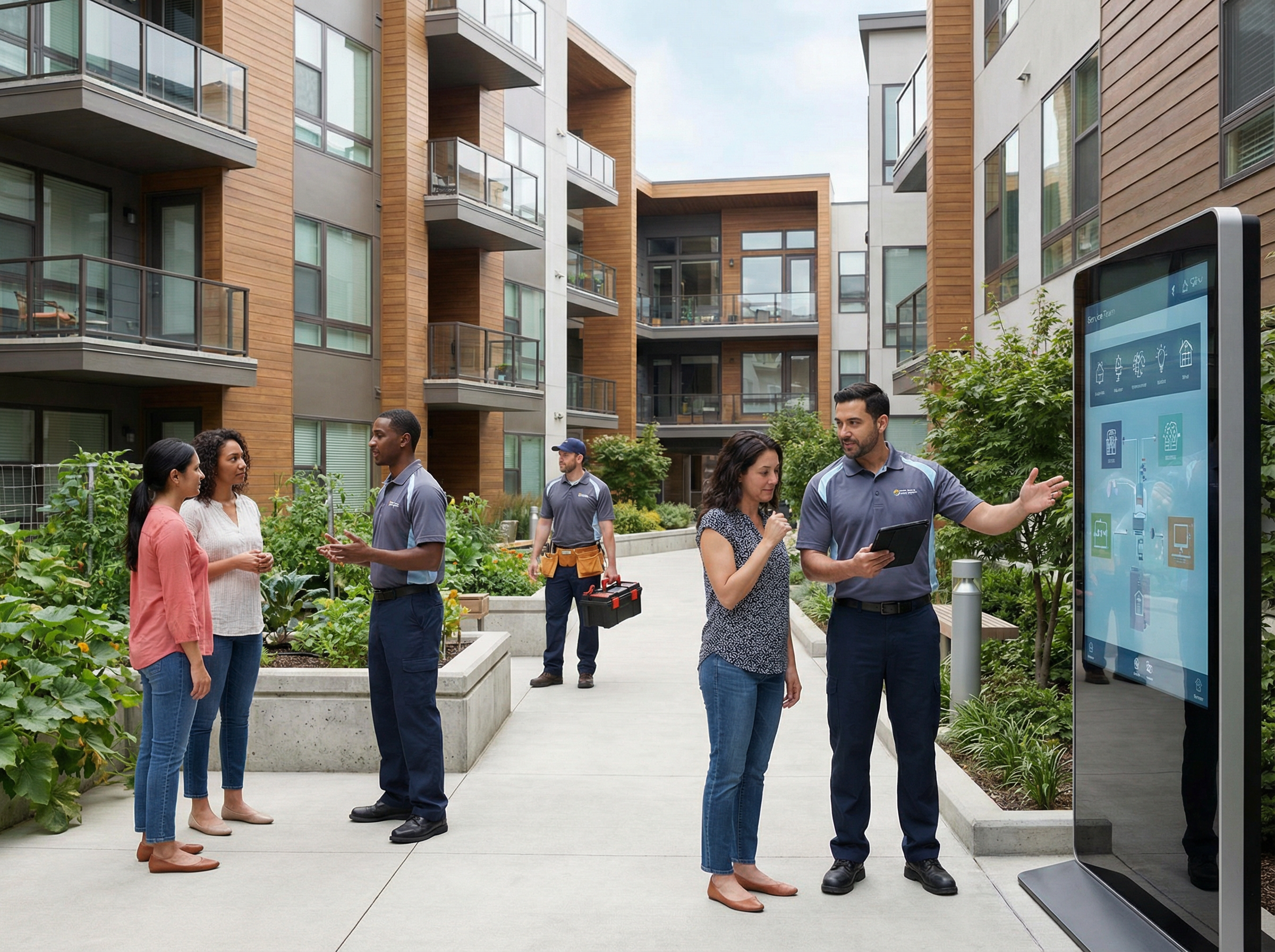
Tenant education and communication strategies are the backbone of any high-performing on-site service team in modern apartment communities. If you think residents will just figure out how to handle requests or emergencies on their own, forget it. Property managers and apartment operators need a clear game plan, or you’ll drown in complaints, churn, and chaos.
Step one: Set crystal-clear expectations with tenants from day one.
That means onboarding packets or welcome guides explaining how to submit maintenance requests, who to contact for security issues, and what the service windows are for things like HVAC repairs or trash valet. Don’t assume they know or care about your internal processes—you have to spell it out in plain, direct language. A quick email or text follow-up going over these points works wonders.
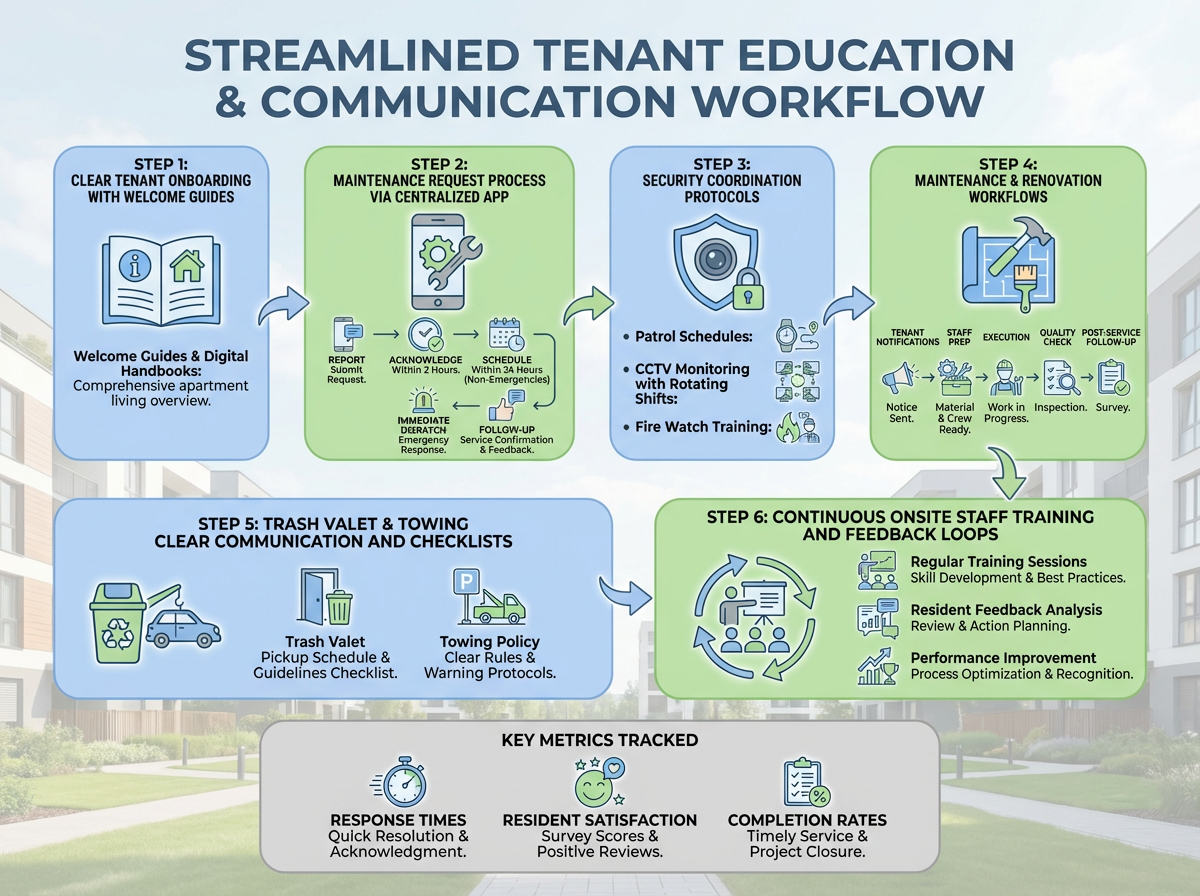
For example, a simple step-by-step workflow for handling resident requests might look like this. Tenant reports issue via a centralized platform or service app. On-site team acknowledges the request within two hours. Service call scheduled within 24 hours for non-emergencies, immediate dispatch if urgent. Follow-up scheduled post-service to confirm resolution. Don’t leave people hanging; communication during the process is as crucial as the fix itself.
Security coordination can’t be sloppy, either.
Define patrol schedules and communicate them to tenants—transparency builds trust. Have fire watch protocols clearly documented and staff trained to execute without hesitation. CCTV monitoring should have assigned personnel with rotating shifts to avoid burnout and complacency. Use checklists to ensure rounds are consistently logged and reported. Residents notice when security feels amateurish; you’re aiming for confidence, not just visible presence.
Maintenance and renovations are where many teams crumble.
HVAC, plumbing, electrical, and unit turns all demand tightly managed scheduling. Build workflows that start with tenant notification about upcoming work, followed by staff prep (tools, parts, permit checks), execution, and a final quality check. Post-service communication to tenants closes the loop. On-site teams should get hands-on training for common repairs and be empowered with escalation paths when things go south fast. Your job is to make sure the team is proactive, not reactive.
Trash valet and towing might seem small—but sloppy execution here kills your street cred fast.
Clear communication on pickup schedules, what can or cannot be left out, and towing policies (with warnings first) makes life easier for everyone. Use checklists for staff to confirm each task is complete before moving on.
Training your on-site staff can’t be a one-and-done.
Regular workshops focusing on customer service, effective communication, emergency procedures, and technical skills pay off. Role-playing difficult resident interactions or unexpected situations builds confidence and consistency. Harness feedback loops—after-service surveys or quick check-ins—to adjust training in real time.
Templates and checklists are your secret weapon.
Having simple email or text scripts ready for common scenarios saves time and removes guesswork. For instance, a maintenance request acknowledgment email might say: “Thanks for reaching out. We’ve received your request and your service appointment is scheduled for (date/time). We’ll update you once completed.” No fluff, just facts.
Key metrics? Track response times, resident satisfaction scores, completion rates on maintenance and security rounds, and incident resolution times. Numbers reveal gaps. If resident complaints spike after a renovation, something’s off. If response times lag, no matter how great your team is, you lose trust fast.
Multi-family communities thrive when communication flows both ways.
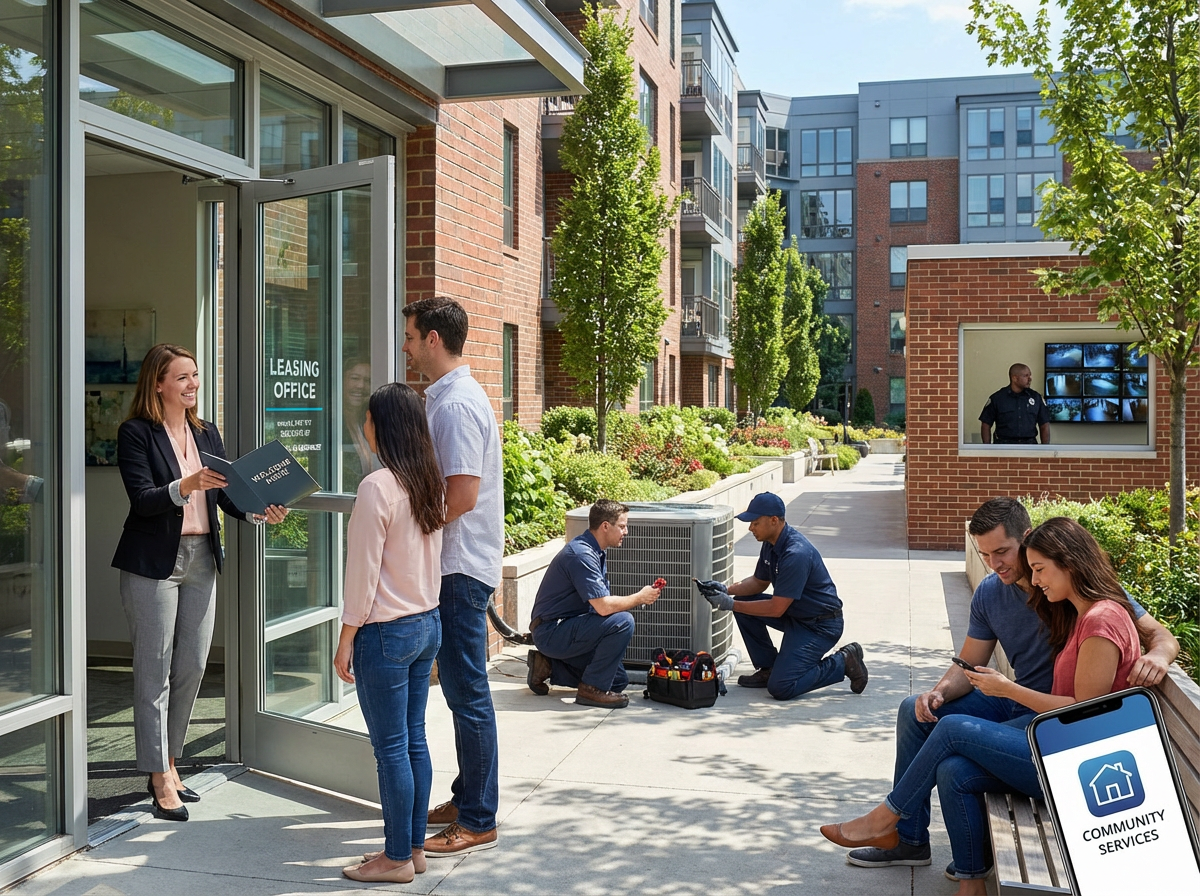
Encourage residents to use your centralized platform or app. One spot for requests, security alerts, payments, community announcements, and vendor coordination reduces confusion. Vendors get logged, schedules tracked, and accountability enforced. No more “I told maintenance twice” or “security never showed.” It all lives in one place.
Bottom line: tenant education and communication strategies are not optional window dressing. They’re core operational levers that separate mediocre apartments from sought-after communities. Nail this, and your on-site service team isn’t just functional—they’re a competitive advantage.
If you want to dive deeper and see exactly how to build AI-powered tools and workflows that handle all this automatically, check out the best step-by-step training tailored for apartment operators right here. It’s practical, hands-on, and saves you headaches—not just theory. Because in this game, smart work beats hard work every time.
Explore related resident-facing services like security patrol and protection, streamlined trash and waste service, and reliable vehicle towing support to round out your on-site operations. For larger rehab projects, don’t forget to leverage dedicated apartment renovation services that keep residents informed and satisfied throughout the process.