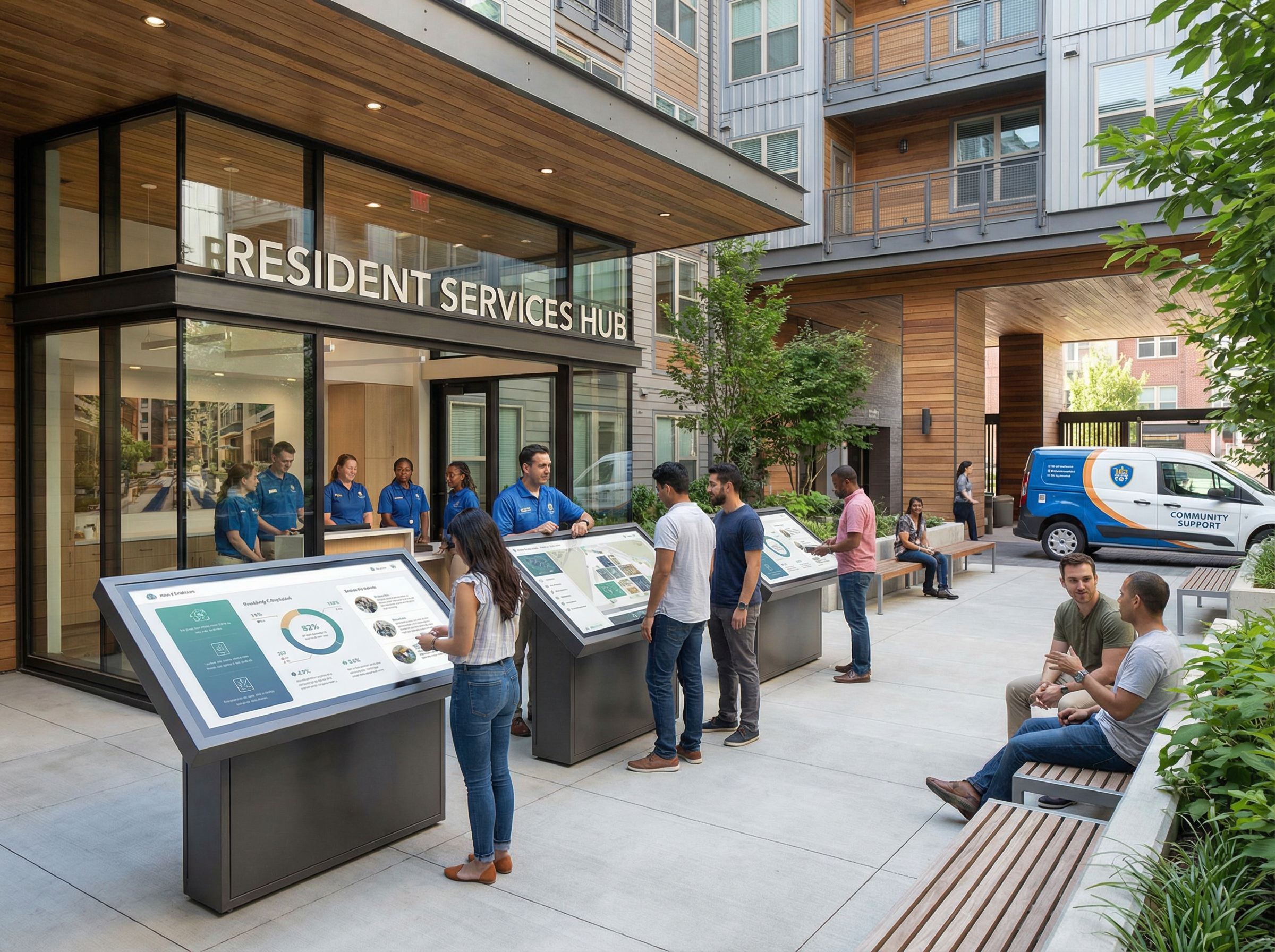
Tenant education and communication strategies are not optional anymore—they’re the backbone of smooth, profitable apartment communities. For property managers and multifamily operators, this means clear expectations, rapid responses, and an integrated service approach that residents actually appreciate. Here’s how to cut through the noise and get it done right.
Start with understanding tenant needs.
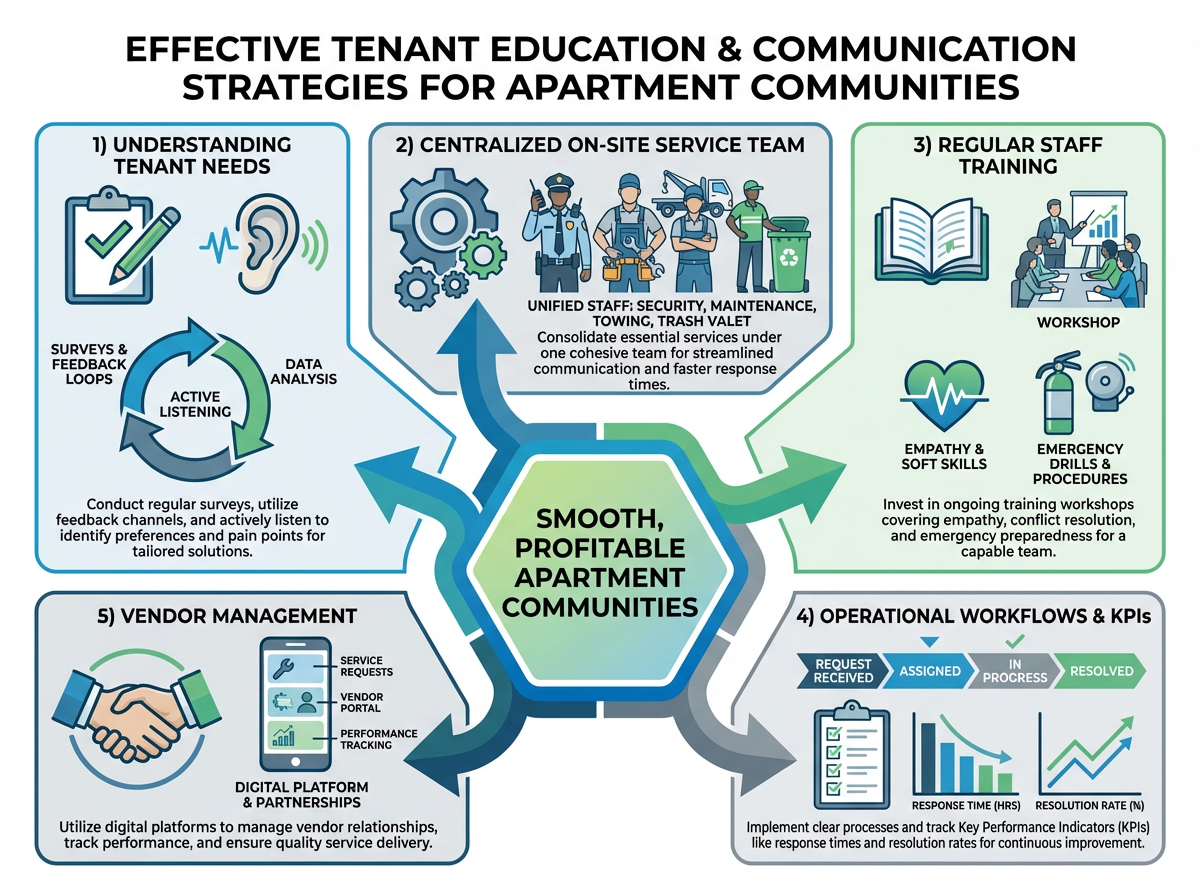
Start with understanding tenant needs. Every community is different but listening is universal. Use surveys, feedback channels, and data from service requests to spot patterns. Are residents frustrated by parking rules? Do maintenance requests pile up after hours? Knowing what grinds their gears helps you create content that hits home. Don’t just tell them the rules; explain why they matter. For example, with parking enforcement, a quick video or checklist on towing policies and gate access saves headaches and resentment.
Build a centralized on-site service team
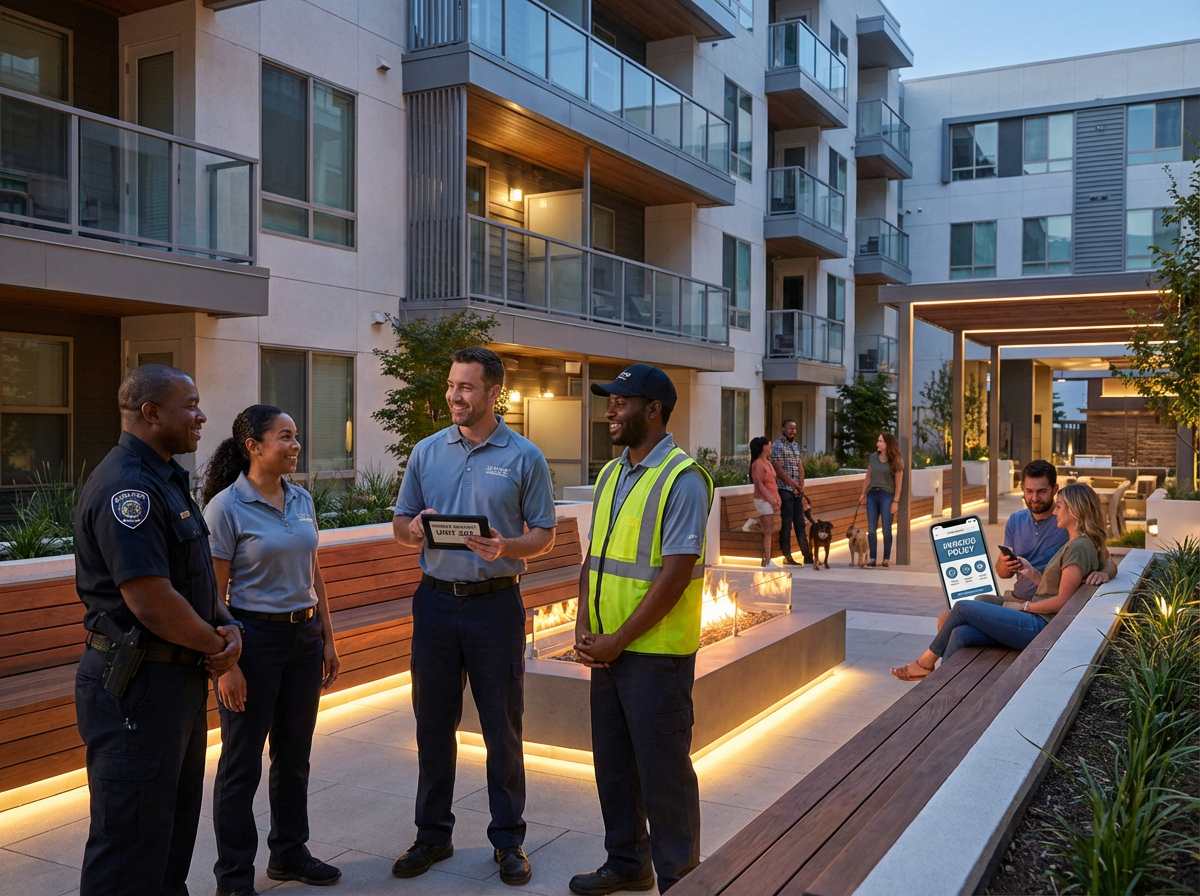
Now, build your centralized on-site service team like a Swiss watch, not a hammer. Security, maintenance, renovation crews, trash valet, and towing must operate as one unit, connected through a single platform. This isn’t fluff—real-time communication tools help everyone see requests, prioritize them, and track resolutions. Imagine a tenant reports a broken gate after hours. The security team alerts maintenance immediately. The on-call technician shows up faster because they already have the vendor’s exact contact info and past repair history on the platform. That’s efficiency you and your residents notice.
Training is your secret weapon.
Training is your secret weapon. Regular, scenario-based drills are non-negotiable. Run through after-hours emergency protocols involving gate access or suspicious activity caught on CCTV. Teach trash valet staff how to flag overflowing bins or communicate with maintenance without chasing down managers. Workshops on customer service remind every team member—whether they handle renovations or towing—that empathy beats bureaucracy every time. Have quick reference SOPs available digitally, so no one fumbles when seconds count.
Streamline operational workflows
Operational workflows get messy fast without structure. Start simple: log every service request with timestamps, assignee, and completion status. Use KPIs to measure response time (target under 24 hours for routine issues), resolution rates, and repeat complaints. When trash valet misses pickups or towing mistakes happen, analyze why. Was the issue miscommunication or lack of training? Fixing the root saves time, money, and frustration.
Centralize vendor management
Vendor management is a headache made easier by centralization. One platform to onboard, monitor, and pay vendors reduces double handling and confusion. Need a renovation job? Check past vendor performance and resident ratings before booking. Want to escalate security concerns? One alert, send to internal staff or external guard company seamlessly. This cuts down phone tag and accountability gaps.
Here’s a checklist to keep on-site teams sharp:
Here’s a checklist to keep on-site teams sharp: 1) Daily briefing to review pending and closed tasks. 2) Weekly review of KPIs and resident feedback. 3) Monthly cross-team workshops to solve persistent problems. 4) Real-time alert system for urgent issues like after-hours gate failures or parking violations. 5) Clear documentation for escalation pathways and contact info.
SOP ideas
SOP ideas: Step one, acknowledge every tenant request within 30 minutes. Step two, diagnose if in-house team can fix it or if vendor engagement is required. Step three, deploy resources with ETA communicated transparently. Step four, confirm resolution and collect tenant feedback. Step five, log data for continuous improvement. No exceptions.
Build trust through communication
Remember, residents want feeling understood and respected. When education hits their inbox timed just right (not too often, not too little) and communication feels personal, trust builds. That trust translates into fewer emergency calls, smoother renovations, and compliance that almost manages itself.
Integrated tenant education and AI-powered service
At the end of the day, the best tenant education and communication strategies hinge on tight integration: knowing tenant pain points, centralized and trained service teams, streamlined workflows, and data-driven vendor management. Every move reduces friction. Every step improves resident experience, cuts costs, and boosts community reputation.
If you’re serious about leveling up, dive into the best step-by-step training available for building AI-powered service agents from scratch. They take centralized platforms and tenant communication to the next level—cutting your workload while making residents genuinely happier. No hype. Just smarter operations. Check it out when you’re ready to revolutionize resident management.