Tenant education and staff training in apartment operations is your secret weapon for running a lean, resident-friendly community. Forget vague theories—here’s how to nail this down and see real results.
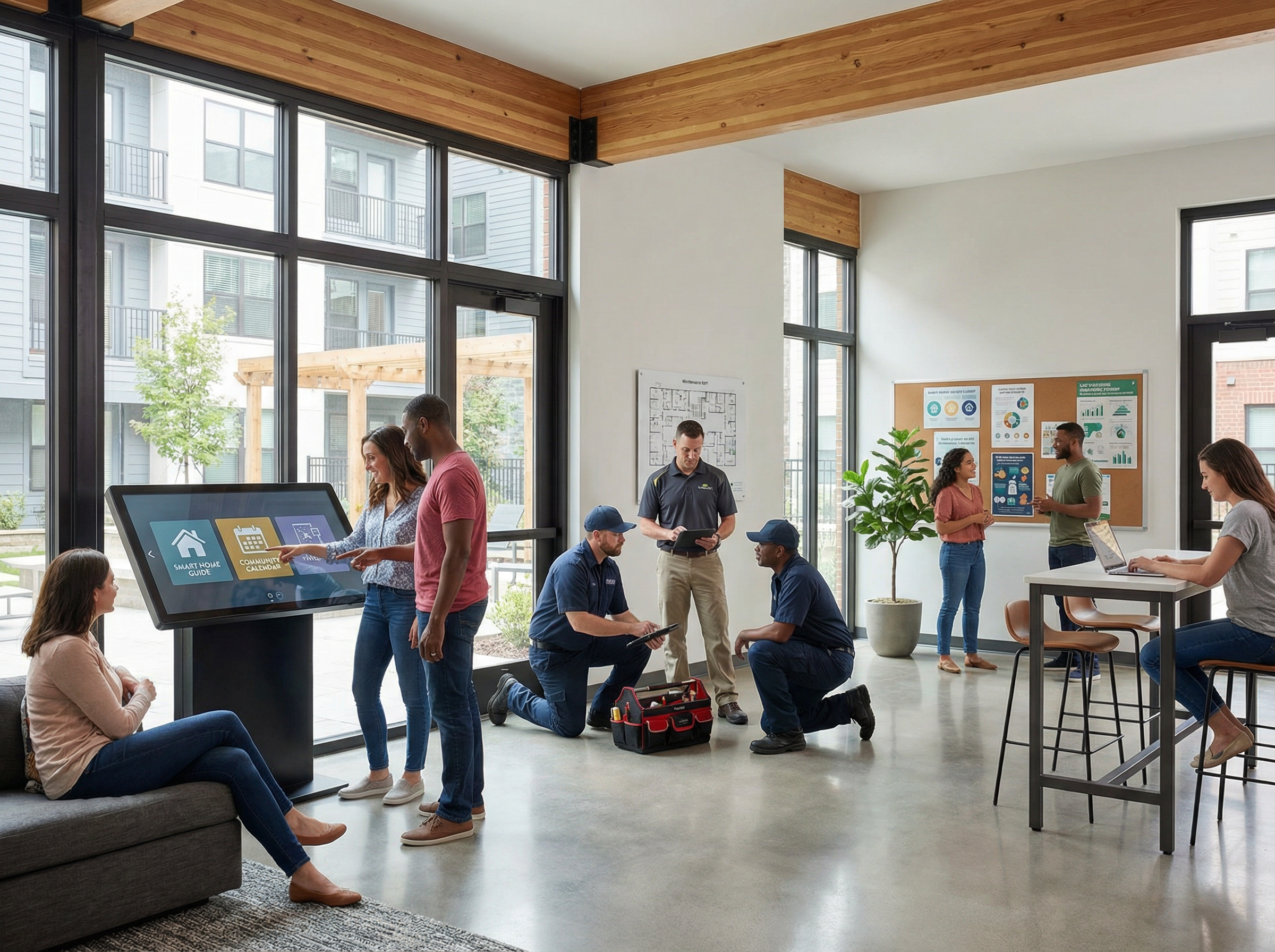
Start with tenant education. New residents need a zero-confusion move-in and orientation playbook. Give them a clear checklist: lease terms boiled down, parking rules, trash valet schedules, service request protocols, emergency contacts. Deliver it via email and a crisp welcome packet or app. Reinforce it at move-in with a short walkthrough—no jargon, just facts that matter. This upfront clarity cuts phone calls and friction in half.
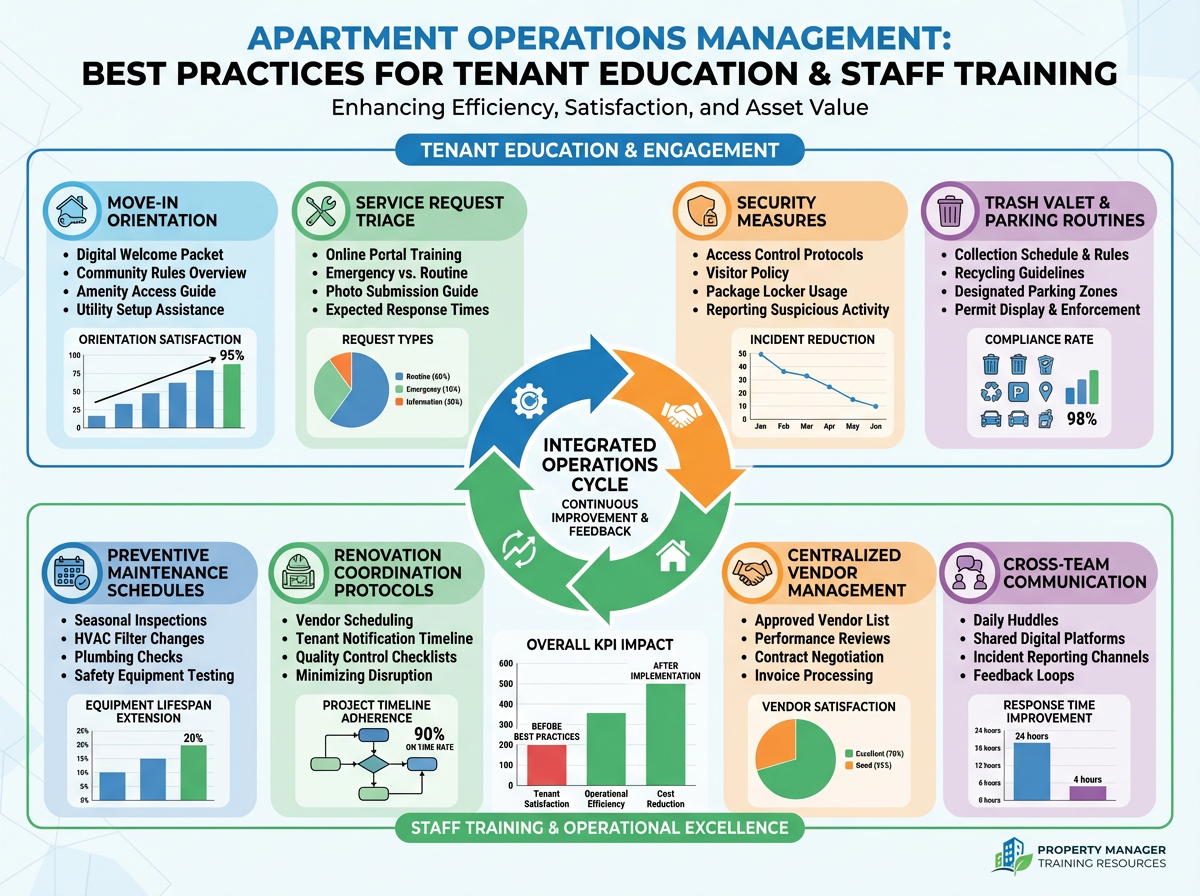
Next, service request triage. Train your staff to categorize requests fast—urgent safety, maintenance fixes, or minor complaints. Use a ticket system with priority flags. The goal: no request lost, no resident left hanging. Measure this with KPI like response time under 24 hours and completion rate over 90 percent. Get everyone on board with scripts to acknowledge requests quickly and set realistic expectations.
Preventive maintenance is not optional. Staff must follow a strict schedule—think HVAC filters, plumbing checks, lighting audits—with documented sign-offs. This reduces emergency repairs and keeps residents happy. Use simple logs or software dashboards to track. KPIs? Fewer emergency fixes, reduced resident complaints, lower maintenance costs.

Renovation coordination needs a tight, cross-team protocol. Property managers, maintenance, contractors, and leasing must sync calendars weekly. Give residents heads-up notices 72 hours before any disruption, in multiple formats. Assign a point person to monitor contractor progress daily. KPI here is renovation completion on time and minimal resident complaints during projects.
Security is more than gate attendants waving lazily. Develop a layered approach: daily patrol checklists for guards, monitor CCTV feeds systematically, and train fire watch staff on rapid response. Gate attendants need scripts for visitor screening and incident reporting. Use incident logs and random audits as KPIs. Tight security messes with resident peace of mind and cuts liability risks.
Trash valet and parking enforcement are frontline operations that scream “organized or chaos.” Set fixed schedules with clear mapping for trash pickup zones. Educate tenants continuously on acceptable waste. For towing and parking enforcement, staff training should cover legal guidelines, fair notice, signage enforcement, and documentation. Use KPIs like reduction in parking complaints and towing disputes to measure success.
Centralized vendor management streamlines everything. Don’t let a dozen contractors run wild. Use a vendor portal or software to track contracts, schedules, invoices, and performance scores. Share this info with your team regularly to avoid duplicated work or missed tasks. When every department understands vendor roles and timing, operations sync up naturally.
Cross-team communication can’t be an afterthought. Hold weekly stand-ups with leadership, leasing, maintenance, security, and housekeeping. Make these super strict: no chit-chat, pure status updates and problem-solving. Tie these meetings back to actual KPIs and visible dashboards—everyone needs to see if operations suck or soar.
All these elements feed each other. Educated tenants create fewer service headaches. Well-trained staff troubleshoot faster and keep projects tight. Centralized control and coordination turn chaos into a well-oiled machine.
Start by drafting your move-in packet and training modules—then build loops where feedback from tenants and staff improves the system. Measure every stage; tweak or ditch what doesn’t move the needle.
Running modern apartments is complex, no doubt. But mastering tenant education and staff training in apartment operations is where you crush inefficiency and supercharge resident satisfaction.
If you want a deeper dive with ready-to-use templates and playbooks tailored for property managers juggling real-world chaos, check out the best step-by-step training for building AI Agents from scratch. It’s surprisingly relevant and will save you more time than you expect. Give it a look—you won’t regret it.
For related operational support like service request handling, you can streamline vendor-side tasks and documentation. When planning upgrades or rehab work, consider coordinating with a professional renovation partner and request a renovation quote to keep projects on budget and on schedule. For parking and curbside areas, integrating reliable towing and parking enforcement support can help reduce disputes and complaints, while smart scheduling of waste pickup with a dedicated provider offering a trash service quote keeps your trash valet operation consistent and resident-friendly.