Large Item Trash Pickup: 4 Essential Steps
Why Large Item Trash Pickup Matters for Your Property
Large item trash pickup is a service for disposing of bulky items like furniture, appliances, and mattresses that don’t fit in your regular trash cart. Here’s a quick guide:
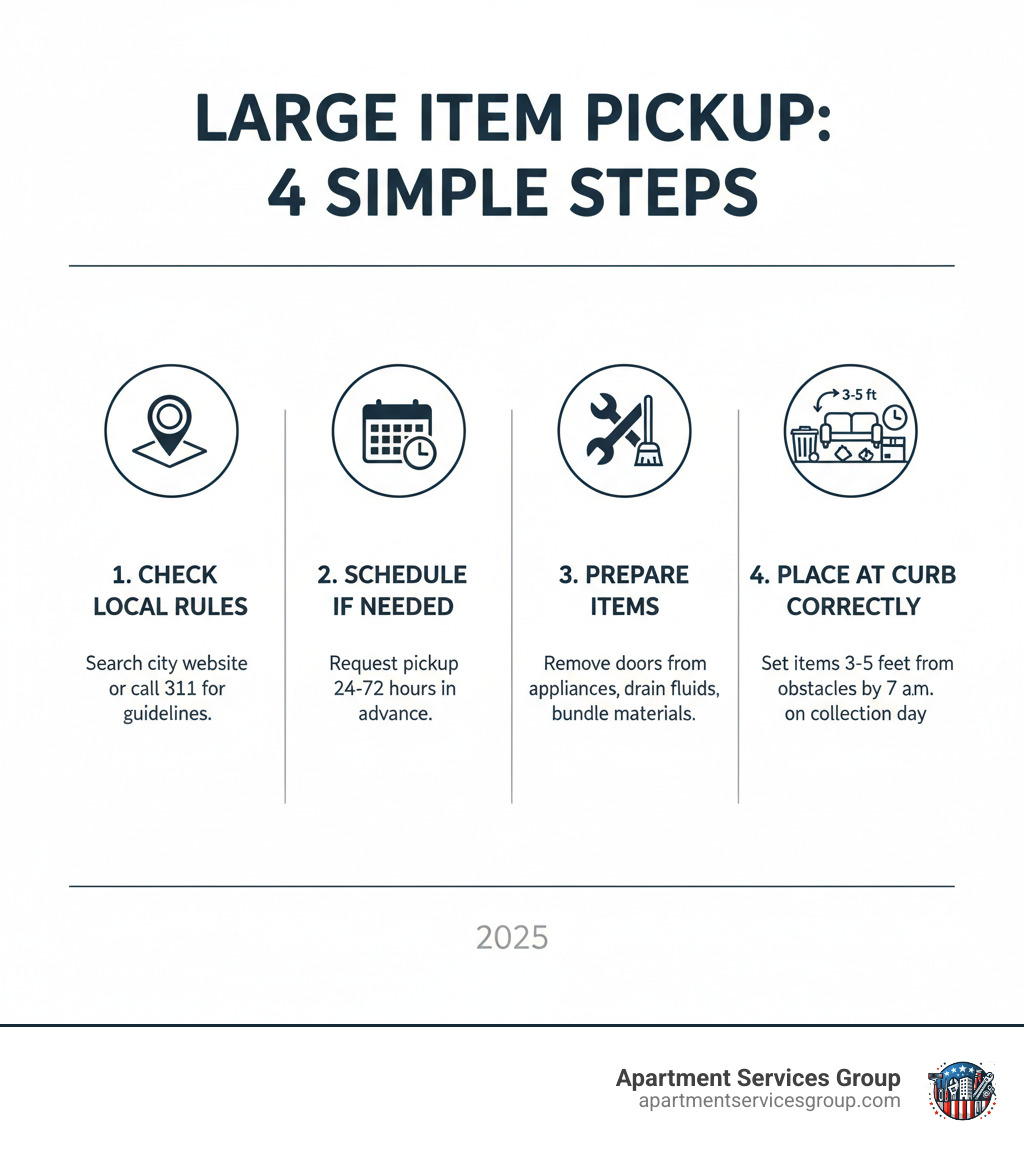
Quick Steps to Schedule Large Item Pickup:
- Find your local service – Search online for your city’s large item pickup service or call 311.
- Check what’s accepted – Most cities take furniture, appliances, and mattresses.
- Schedule ahead – Many services require 24-72 hours’ notice.
- Prepare items properly – Remove doors from refrigerators and drain fluids from equipment.
- Place at curb correctly – Set items 3-5 feet from other objects by 7 a.m. on pickup day.
Most cities offer this service monthly or by request; some provide it free, while others charge $35-$100. Items typically must be under a certain weight (from 150 to 2,000 pounds) and accessible for collection crews.
For property managers, coordinating large item disposal can be overwhelming. Missed pickups lead to tenant complaints and unsightly curbs. The average American generates about 4.9 pounds of trash daily, and bulky waste is a significant portion. Proper large item disposal helps divert waste from landfills, reduces illegal dumping, and keeps communities clean.
As Moe Shariff, owner of Apartment Services Group and American Trash Services in Houston, I’ve helped property managers coordinate large item trash pickup for over eight years. This guide walks you through municipal and private pickup options to ensure timely removal and tenant satisfaction.
What’s Considered a Large Item? (And What’s Not)
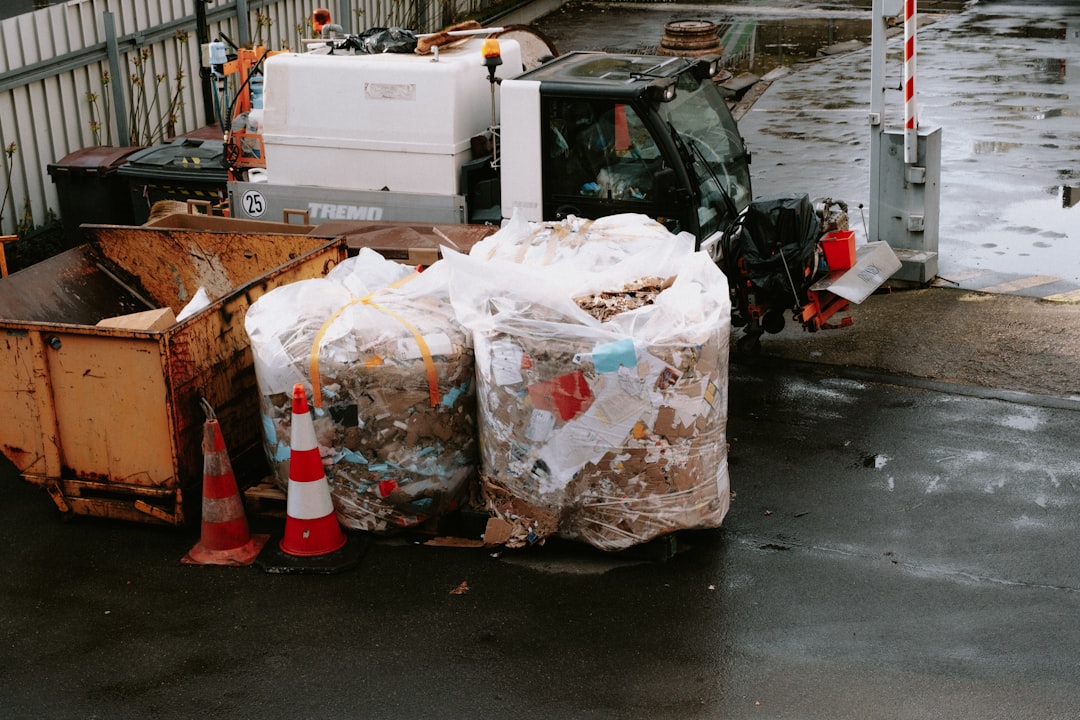
Before scheduling, you need to know what qualifies for large item trash pickup. The rule of thumb is simple: if it doesn’t fit in your regular trash cart, it’s probably a large item. However, each city has its own rules, and understanding them prevents missed pickups and potential fines.
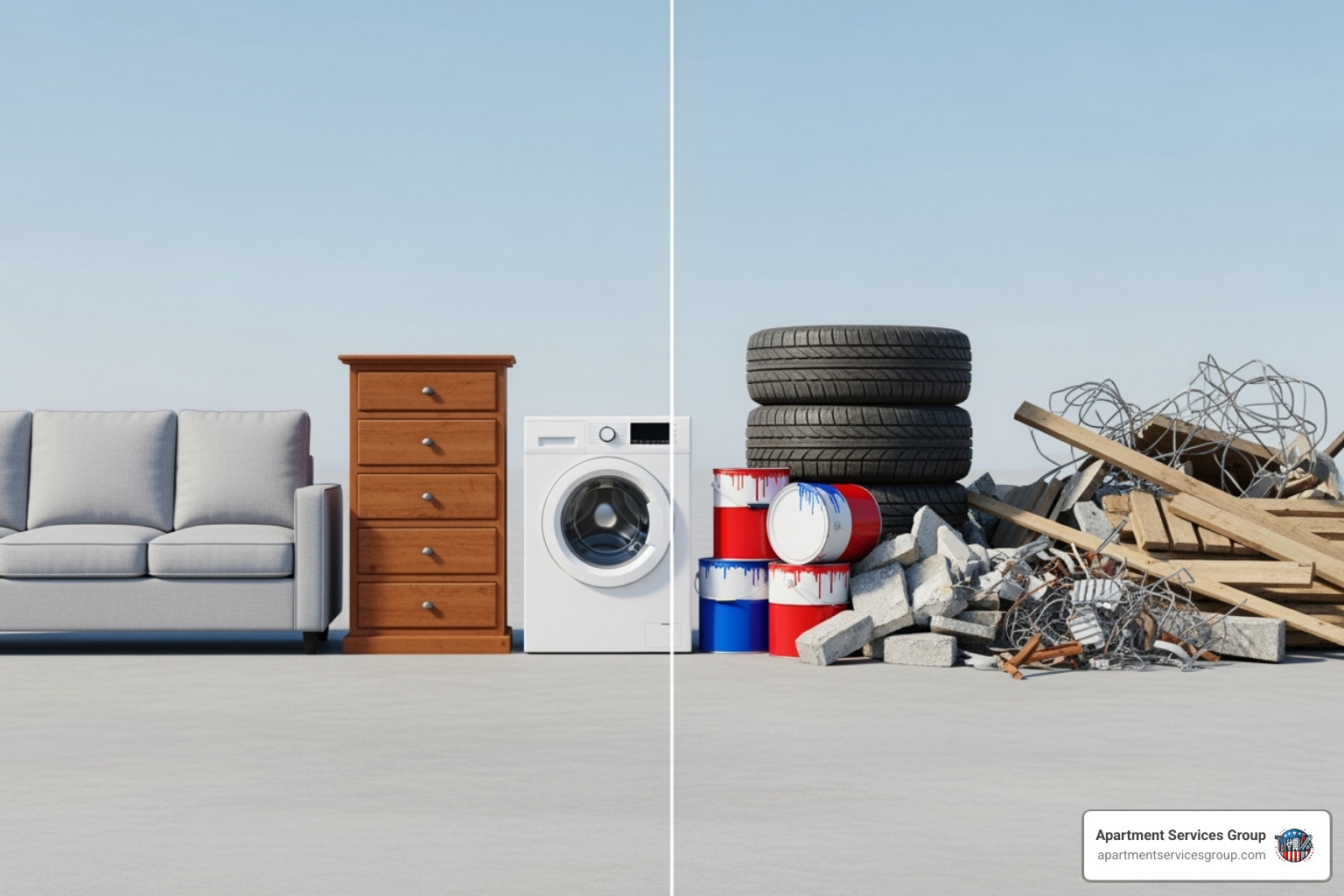
Accepted Bulky Items
Most cities accept common household items that are too big for your bin.
- Furniture: Couches, chairs, tables, desks, dressers, and bed frames are almost always accepted.
- Mattresses and box springs: These are nearly always accepted, though some cities require them to be wrapped in plastic.
- Appliances: Washing machines, dryers, stoves, and water heaters usually qualify. Refrigerators and freezers require special preparation.
- Outdoor Equipment: Grills (with propane tanks and charcoal removed) and lawn mowers (with gas and oil drained) are generally accepted.
- Other Items: Large toys, bicycles, and carpets are often accepted. Carpets may have size limits and need to be rolled and tied.
Items typically need to be under 150 pounds, though some services can handle up to 2,000 pounds. Smaller loose items should be bagged or boxed and labeled as bulky waste.
Items Typically NOT Accepted
Knowing what’s off-limits is just as important. Certain items require specialized disposal because they are hazardous or don’t belong in the regular waste stream.
- Construction and demolition debris: Bricks, concrete, lumber, drywall, and dirt are not considered household waste and must be hauled to a landfill or handled by a private contractor.
- Hazardous waste: Paints, pesticides, chemicals, automotive fluids, and propane tanks must go through Household Hazardous Waste (HHW) programs.
- Automotive parts and tires: Car batteries, engine parts, and tires are always excluded from bulk pickup.
- Electronics: TVs, computers, and printers contain hazardous materials and should be taken to e-waste recycling programs. For more on this, see our eco-friendly disposal guide.
- Other Exclusions: Extra bags of regular household garbage, large amounts of yard waste, and anything with a title (like a car or trailer) are not accepted.
Your Step-by-Step Guide to Municipal Large Item Trash Pickup
Navigating large item trash pickup can be confusing since every city has unique rules. This guide breaks down the process for using your city’s services for a smooth pickup.
Step 1: Find Your Local Guidelines
Always check your local rules first. The easiest way is to search online for your city’s solid waste or large item pickup services. Most municipal websites have dedicated pages with guidelines, schedules, and contact information. You can also call 311 in most cities for direct answers. Look for sections titled “Bulky Item Collection” or “Large Item Pickup” to find details on accepted items, scheduling, and fees.
Step 2: Schedule Your Pickup (If Required)
Some cities offer automatic monthly pickups on assigned days, but most require you to schedule in advance. This can often be done online through the city’s website or app, or by calling the waste management department or 311. Plan ahead, as cities typically require 24 to 72 hours’ notice. Many municipalities also limit the number of free pickups per year. Placing items at the curb without a required appointment can lead to fines.
Step 3: Understand Limits and Fees
Cities often impose limits on the volume (e.g., 10 cubic yards), item count (e.g., 6 items), or weight (e.g., under 150 pounds) they will collect. While many cities offer free large item pickup as part of regular services, others have a fee-based structure. Fees might be a flat rate (e.g., $50 per pickup) or escalate with each use. Exceeding limits without prior arrangement can result in automatic charges. Always confirm costs and limits beforehand to avoid surprise bills.
Step 4: Prepare Items and Place Them Correctly
Proper preparation and placement are crucial for safety and successful collection.
- Placement: Place items at the street curb, leaving at least 3 to 5 feet of clearance from other objects like bins, mailboxes, cars, and fire hydrants. Also, ensure 16 feet of overhead clearance from tree limbs or power lines.
- Timing: Set items out by the specified time, usually no later than 7:00 a.m. on collection day. Placing them out too early or too late can result in fines or a missed pickup.
- Preparation: Follow all preparation rules, such as bundling brush or removing doors from appliances.
Non-compliant items will not be collected, and you may receive a warning tag or citation. In case of bad weather, check your city’s waste management website for service updates.
Special Instructions for Common Bulky Items
Some common items require special preparation before large item trash pickup. These steps are essential for the safety of collection crews and to prevent environmental harm.
Preparing Appliances for Large Item Trash Pickup
Appliances are common bulk items but have important safety requirements.
- Refrigerators, freezers, and air conditioners: These contain refrigerants (like Freon) that must be removed by a certified technician before pickup. You will likely need to attach a tag or sticker from the technician as proof of removal.
- Remove Doors: For safety, you must remove the doors from refrigerators and freezers. This prevents children from getting trapped inside. Some cities also require this for washing machines.
- Lawn Mowers: Before setting a mower at the curb, you must drain all gasoline and oil to prevent spills and fire hazards.
For other appliances like stoves and dryers, simply ensure they are empty before pickup.
Handling Other Specific Materials
- Small Items: If you have several small items that are too big for your regular bin, place them in a cardboard box and label it “Bulky.”
- Tree Limbs and Brush: Most services require you to cut limbs into manageable lengths (e.g., 4 feet) and bundle them securely. Check for local limits on bundle weight and branch diameter.
- Glass: For items with plate glass, such as tabletops, tape the glass from corner to corner to prevent it from shattering. Alternatively, carefully break the glass and secure it in a sealed box.
- Fluids: Drain all liquids from items like water heaters or other equipment to prevent messy and hazardous spills during collection.
Following these instructions ensures your items are picked up and helps the large item trash pickup system work safely. For more details on managing bulk waste in apartment communities, see our guide on bulk trash removal.
Alternatives for Prohibited or Excess Items
When your city’s large item trash pickup service can’t take an item, you have other responsible options besides illegal dumping.

Donating Usable Furniture and Appliances
If your furniture or appliances are still in good, usable condition, donation is an excellent alternative. You keep items out of landfills and help someone in need. Organizations like Salvation Army, Goodwill Industries, and Habitat for Humanity ReStores often accept such items and may even offer pickup services for larger pieces. You can also use online platforms like Freecycle or local Buy Nothing groups to connect directly with people in your community.
Handling Hazardous and Electronic Waste
Hazardous materials and electronics are never accepted in bulk pickup and require special disposal.
- Household Hazardous Waste (HHW): Items like paint, pesticides, and automotive fluids must be taken to an HHW collection facility or a local drop-off event. Search online for your city’s HHW disposal program.
- Electronics (e-waste): TVs, computers, and printers should be taken to e-waste recycling events or permanent drop-off locations to recover valuable materials and prevent pollution.
- Medications: Use Drug Take-Back events or permanent collection boxes at pharmacies or hospitals to dispose of old medications safely.
- Medical Sharps: Place needles in a puncture-proof, non-clear container, seal it, label it “Do Not Recycle,” and place it in your regular trash cart.
Using Drop-Off Centers and Private Services
For items not accepted by municipal pickup, consider these options:
- City Landfills and Transfer Stations: These facilities are an affordable option for disposing of bulky waste and construction debris. You’ll likely need proof of residency and may have to pay a fee. Remember to tarp your load to prevent debris from flying out during transport.
- Private Junk Removal Companies: These services offer convenience by coming to your property, loading everything, and hauling it away. This is a great option for large quantities or items municipalities won’t take.
- Dumpster Rentals: For major cleanouts or renovations, renting a dumpster allows you to fill it at your own pace before it’s hauled away.
For property managers, coordinating these options can be complex. Apartment Services Group offers comprehensive solutions, including Houston trash valet services, to streamline waste management and keep your property clean.
Frequently Asked Questions about Large Item Trash Pickup
Here are quick answers to the most common questions about large item trash pickup.
How often can I schedule a large item pickup?
This varies by city. Some municipalities offer automatic monthly collection, while others provide a set number of by-request pickups per year (e.g., 8-12 times). Always check with your local waste management department to understand the specific frequency and scheduling rules in your area.
Are there fees for large item trash pickup?
It depends on your location. Many cities offer free pickup as part of regular waste services. However, some charge a flat fee, use an escalating fee structure for multiple pickups, or bill for exceeding volume limits. Special equipment may also incur extra costs. Always confirm potential fees when you schedule.
What happens if I miss my scheduled pickup or put items out late?
If you miss the deadline, your items will not be collected, and you will have to wait for the next cycle or reschedule. Leaving items at the curb for an extended period can create an eyesore and may result in fines or code compliance citations. Some cities use warning tags for violations. If you miss your pickup, contact your city’s waste service provider immediately to understand your options.
Conclusion: A Cleaner Community Starts at the Curb
Properly disposing of bulky items is about more than just clearing space—it’s about creating a cleaner, safer community. Responsible large item trash pickup prevents illegal dumping, reduces landfill waste, and keeps our neighborhoods looking their best.
Success is simple: know your local rules. A quick search for your local large item pickup guidelines or a call to 311 is the best first step. Remember to schedule ahead, as most cities require advance notice and may limit how often you can use the service.
Proper preparation is key. Draining fluids, removing refrigerator doors, and bundling brush protect collection crews and ensure your items are picked up. Following placement guidelines for curb distance and timing keeps sidewalks clear and prevents property damage.
For items that don’t qualify for large item trash pickup, alternatives are available. Donation centers give usable items a second life, while HHW facilities and e-waste programs handle hazardous materials. For everything else, private junk removal services and drop-off centers can fill the gap.
Property managers face unique bulk waste challenges. Apartment Services Group offers expert apartment complex solutions to handle everything from daily trash to bulk removal. Located in Houston at 16420 Park Ten Place, Ste #590, Houston, TX 77084, we provide dedicated service to ensure a seamless living experience for residents.
A cleaner community starts at the curb. By following guidelines and choosing responsible disposal methods, we all contribute to creating neighborhoods we are proud to call home.