Tenant education and communication strategies are not optional if you want to run a modern apartment community that residents praise rather than trash online. It’s simple: residents need to understand what to expect, and property teams must deliver—and communicate—consistently. Without that, forget smooth operations or high retention.
First, get inside your tenants’ heads. Understand their needs and expectations. They want security that feels real, prompt maintenance, clear renovation schedules, hassle-free trash disposal, and towing policies that don’t feel like a trap. Survey them. Ask current residents what keeps them happy and what makes them ready to move on. Use that intel to build your service promises.
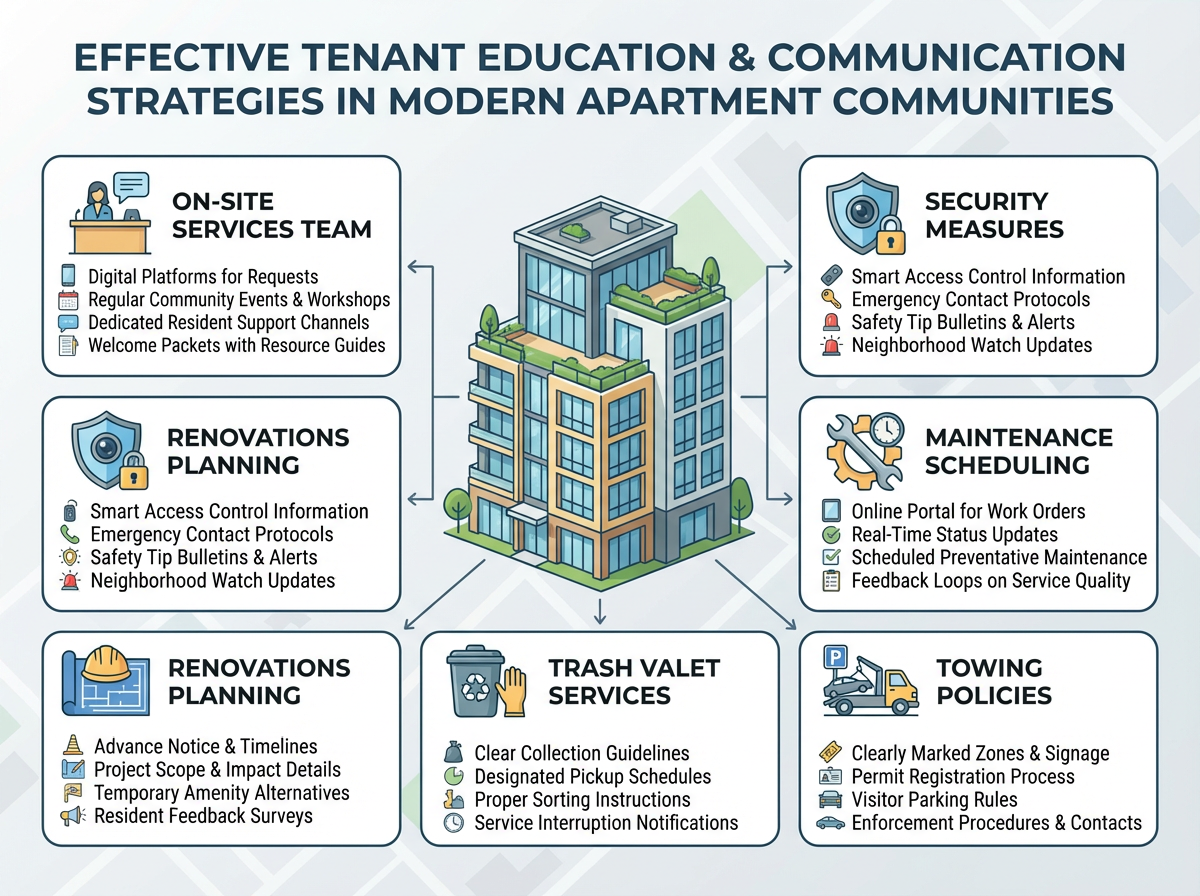
Next, set hard service standards. Define response times—for example, maintenance work orders must be acknowledged within 2 hours and completed within 48 hours unless it’s a big project. Security incidents should be logged and acted upon within an hour. Trash valet pickups happen on scheduled days without excuses. Renovations get a clear, communicated timeline. Towing policies are spelled out in lease agreements and reinforced with signs and reminders.
Now, build your on-site dream team. This means reliable security, a savvy maintenance crew, renovation coordinators who actually coordinate, trash valet operators on time, and towing vendors that don’t nickel-and-dime residents. Train these people to act as your frontline brand ambassadors. Teach them clear communication—what info to share with residents and when, how to handle complaints without triggering escalation, and how to document each interaction meticulously. Role-play scenarios. “This call about noisy renovations at 7 pm on a Sunday” comes up? What do they say? How fast do they act? This training isn’t fluff—it’s your frontline damage control.
Workflow is key. For maintenance requests, implement a system that logs the request, notifies the relevant crew, sets deadlines, and sends residents automated updates at key points: received, scheduled, completed. Use ticketing software or even simple shared spreadsheets to track these steps. Incident reporting for security should feed directly into weekly management reviews to spot patterns and fix repeat problems fast.
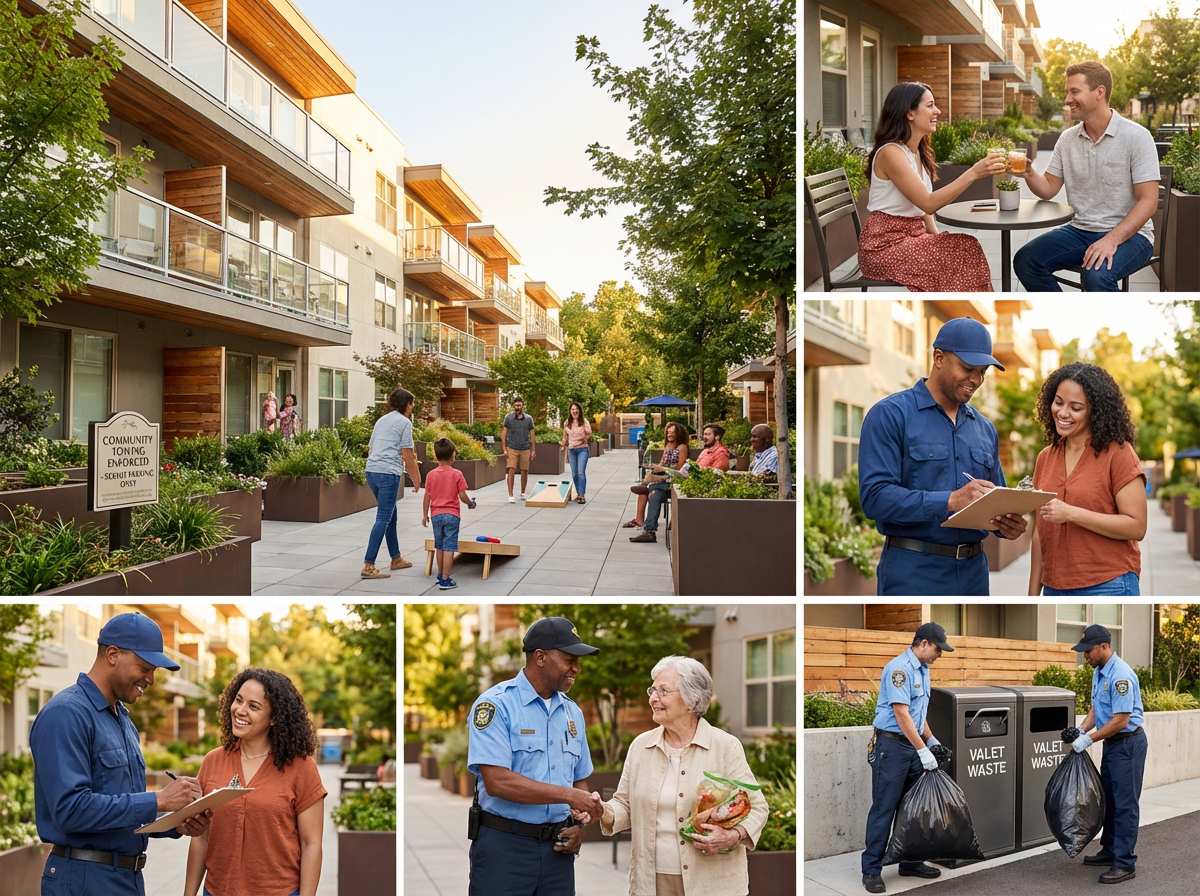
Trash valet and towing services often trip up communities. Centralized vendor management cuts the chaos immensely. When you coordinate all these services under one management umbrella—even if subcontracted—they talk to each other. Fewer missed pickups, less towing confusion, better resident satisfaction. Your property manager should get one point of contact for all external vendors and handle lead times, payments, and resident feedback centrally. If you want to see how this setup looks in practice, get a free quote from reliable providers specializing in security, renovations, trash valet, or towing. Don’t wait until you’re backed into a corner.
Metrics matter. Track response times, work order completion rates, incident counts, and, crucially, resident satisfaction scores. Ask tenants how they felt about the service within 24 hours of job completion. Use NPS or simple satisfaction surveys. Watch the numbers, and when things dip, act immediately. If response time drags, retrain or replace the crew. If residents complain about renovation noise or trash collection, tweak your communications or service times.
Checklists help keep everyone honest. Maintenance staff get daily task sheets. Security teams run shift handoffs with documented notes. Renovation coordinators confirm each project phase with residents in writing. Trash valet teams clock their routes. Towing companies must sign off on vehicle storage agreements with residents before action. No guessing, no surprises.
In real life, say you’ve lined up a renovation project. Use your communication strategy to send residents a detailed timeline notification three weeks before, update them weekly, and have your onsite coordinator available to answer questions. If security staff patrol around the clock, create clear channels for residents to report issues immediately via app or hotline. Trash valet staff confirm day-of pickups, or residents get an alert if delays happen.
Bottom line: tenant education and communication strategies are your frontline defense against chaos and complaints. They streamline operations, reduce friction, and keep residents sticking around. Invest early in clear, proactive communication, train your teams relentlessly, and centralize vendor management to smooth out the daily grind.
If you’re managing a modern apartment community and want to see how tightening tenant education and communications lifts resident experience, start by requesting free quotes from trusted security providers, renovation partners, trash valet companies, and towing service providers. Knowing your partners and setting clear expectations will change your management game—guaranteed.