Towing from apartment complex: 3 Essential Rights
Why Understanding Towing From Apartment Complex Rules Protects Your Rights
Towing from apartment complex parking lots is a common issue affecting tenants everywhere. Understanding when your car can legally be towed—and when it cannot—is essential for protecting your rights and avoiding unnecessary fees.
Quick Answer: When Can Your Car Be Towed From an Apartment Complex?
Your vehicle can be legally towed from an apartment complex if you are:
- Violating fire lane rules – Immediate tow without notice
- Blocking access points – Driveways, exits, or other vehicles
- Lacking a valid parking permit – After proper signage and lease notification
- Committing a parking violation – After a required notice period (e.g., 96 hours in California)
- Displaying significantly expired registration – Often requires notice to law enforcement
- Parking in a reserved spot – Parking in another tenant’s assigned space
However, the complex must have proper signage at all entrances, and your lease must outline the parking policies. Without these requirements, the tow may be illegal.
Coming home to find your car missing is a stressful experience. One tenant described finding their vehicle gone, initially fearing theft, only to learn it had been towed by their own apartment complex. Stories like this happen regularly, often due to unclear policies or even predatory towing practices.
The good news is that you have rights. State and local laws set strict requirements for when and how vehicles can be towed from private property. Property owners and towing companies that violate these rules can face serious consequences, including liability for damages and fines.
This guide will walk you through the legal reasons for towing, the required signage and notices, how to retrieve your vehicle, and what to do if you believe a tow was illegal. We’ll also cover how property managers can implement fair, legally compliant parking enforcement.
I’m Moe Shariff, owner of Apartment Services Group and American Towing Group in Houston. Over the past eight years, I’ve worked with hundreds of apartment complexes on towing from apartment complex properties, helping them establish fair parking policies while ensuring residents understand their rights and responsibilities.
Legal Reasons Your Car Can Be Towed
Nobody wants to find their car has vanished from the parking lot. Understanding when towing from apartment complex properties is legal can help you avoid that sinking feeling and the fees that come with it.
State laws, like the Texas Property Code and California Vehicle Code, govern when property owners can legally have your vehicle towed from private property. These laws protect both tenants and property managers by clearly defining what counts as a towable offense.
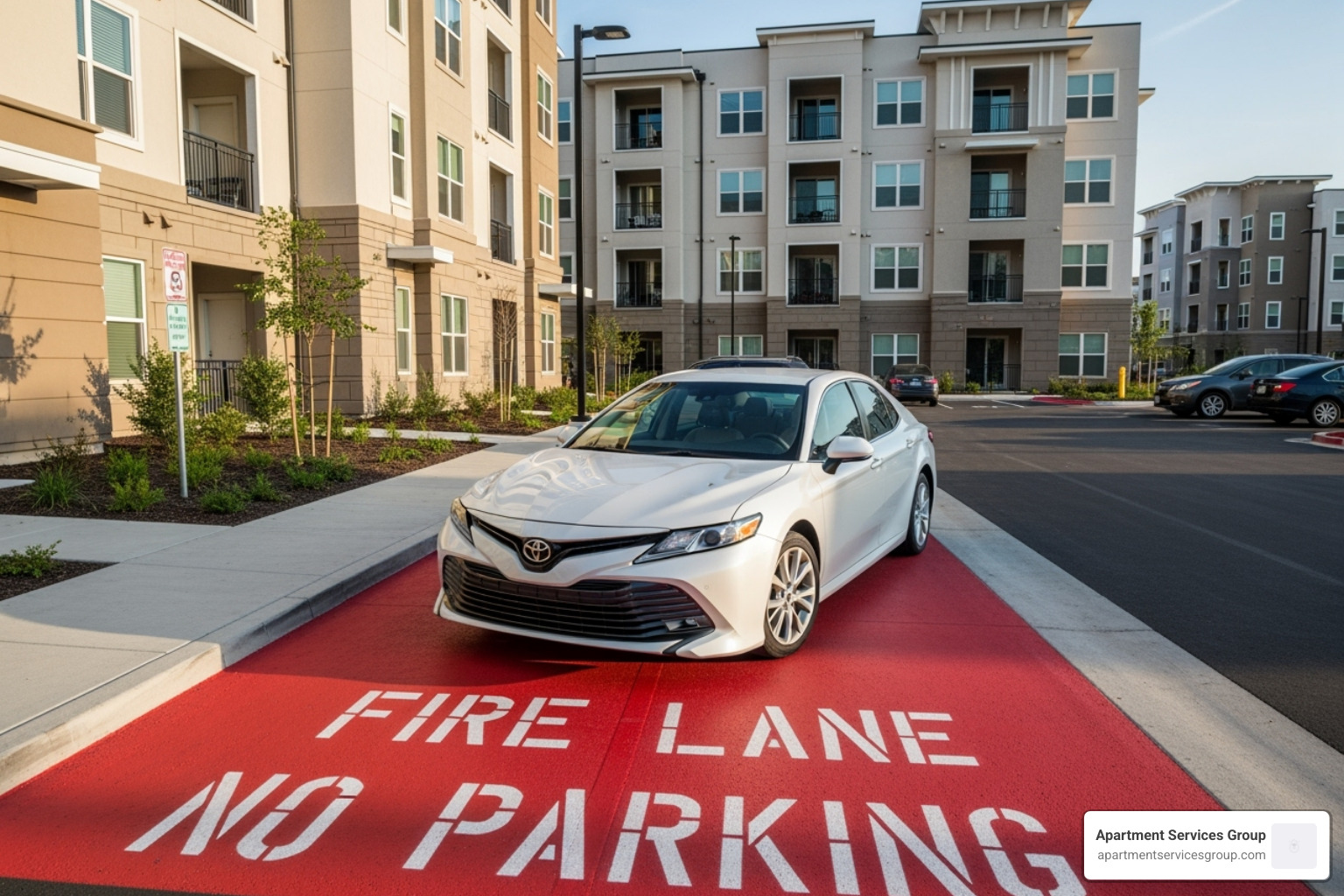
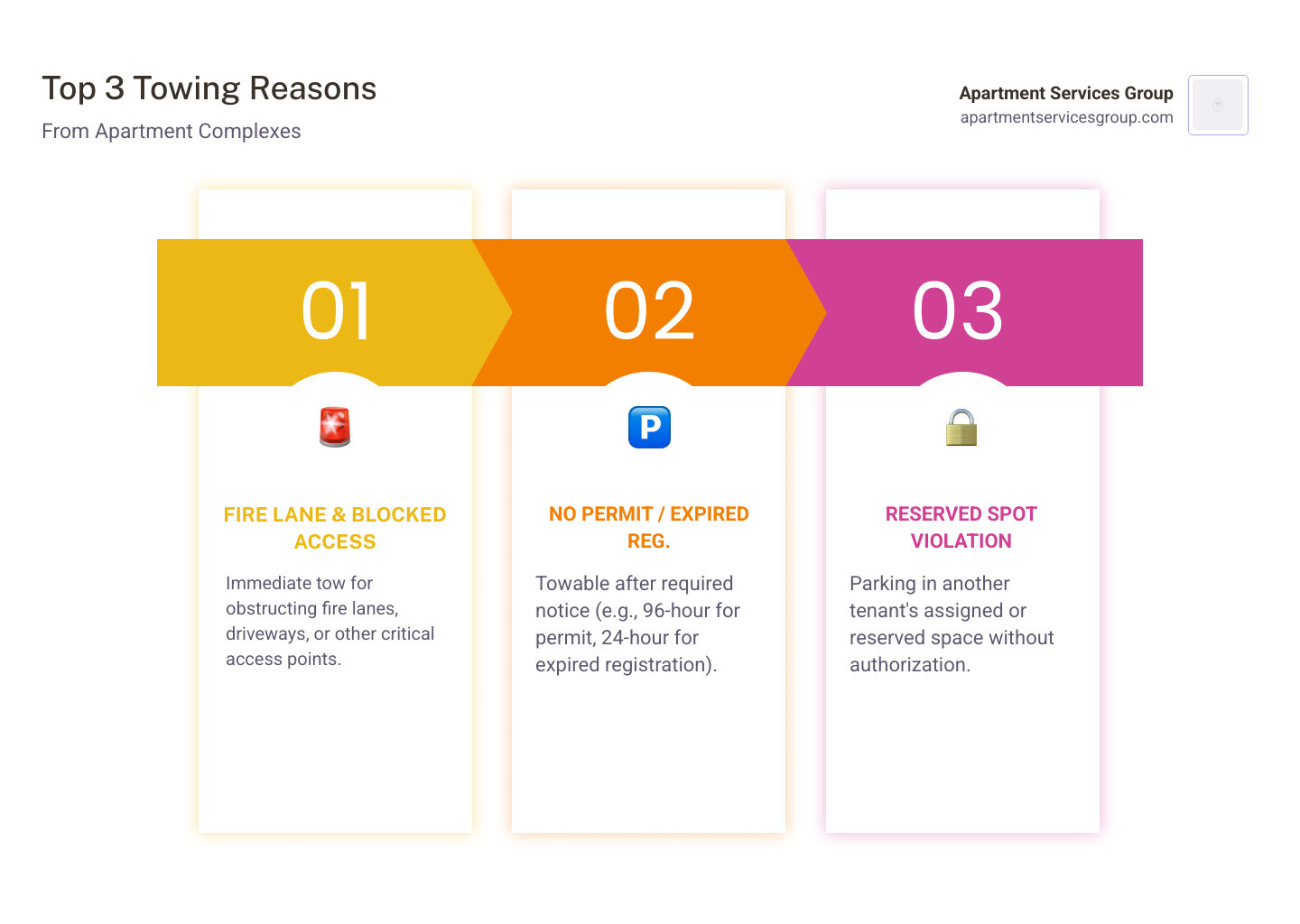
Let’s start with the most serious violations—the ones that can get your car towed immediately. Parking in a fire lane tops this list. Fire lanes are lifelines for emergency responders, and a blocked lane can have dire consequences. If your car is in a fire lane, it can be towed on the spot.
The same goes for blocking access points. This includes driveways, gates, loading zones, or boxing in another resident’s vehicle. These are safety hazards that affect the entire community.
Not every violation leads to an immediate tow. Some situations require notice. For general parking violations, some states like California require a 96-hour notice before towing. For vehicles with expired registration or those that appear abandoned (missing an engine or tires), the property may need to give a 24-hour notice to law enforcement before towing.
One of the most common reasons for towing from apartment complex parking lots is parking without a valid permit or in someone else’s assigned spot. Most complexes issue parking permits, and displaying yours correctly is crucial. If you’re in another tenant’s reserved space, that resident has the right to request a tow. At Apartment Services Group, we help property managers implement fair and effective Parking Enforcement systems that work for everyone.
Common Violations Leading to Towing
- Fire lane violations and blocked access points (dumpsters, mailboxes, other cars) are grounds for immediate removal.
- Missing or expired parking permits are a frequent and preventable cause for towing. Always ensure your permit is current and properly displayed.
- Parking in another tenant’s assigned spot can lead to a quick tow, as the paying resident has the right to their space.
- Vehicles with long-expired registration tags or inoperable/abandoned vehicles can be removed after a required notice period (e.g., 24 hours’ notice to police).
- Unauthorized vehicles, such as commercial trucks, trailers, boats, or RVs, may be towed if they violate the complex’s rules.
Where to Find Your Complex’s Parking Policies
“I didn’t know” is not a defense that will get your car back from the tow yard. Your lease agreement is the primary source for your complex’s parking rules. Landlords are legally required to provide these parking policies when you sign your lease, a principle outlined in laws across states like Texas.
Often, a separate parking addendum or community rules document will detail permit requirements, visitor parking, and other restrictions. If you can’t find these documents, ask your property manager for a current copy. Taking ten minutes to read the rules can save you hundreds of dollars and a major headache.
Know Before You’re Towed: Signage and Notice Requirements
That warning sign at your apartment complex entrance isn’t just decoration. In states like Texas and California, it’s a legal requirement that protects both you and your property manager. Understanding what these signs must say and what notice you’re entitled to before towing from apartment complex lots can prevent an expensive surprise.
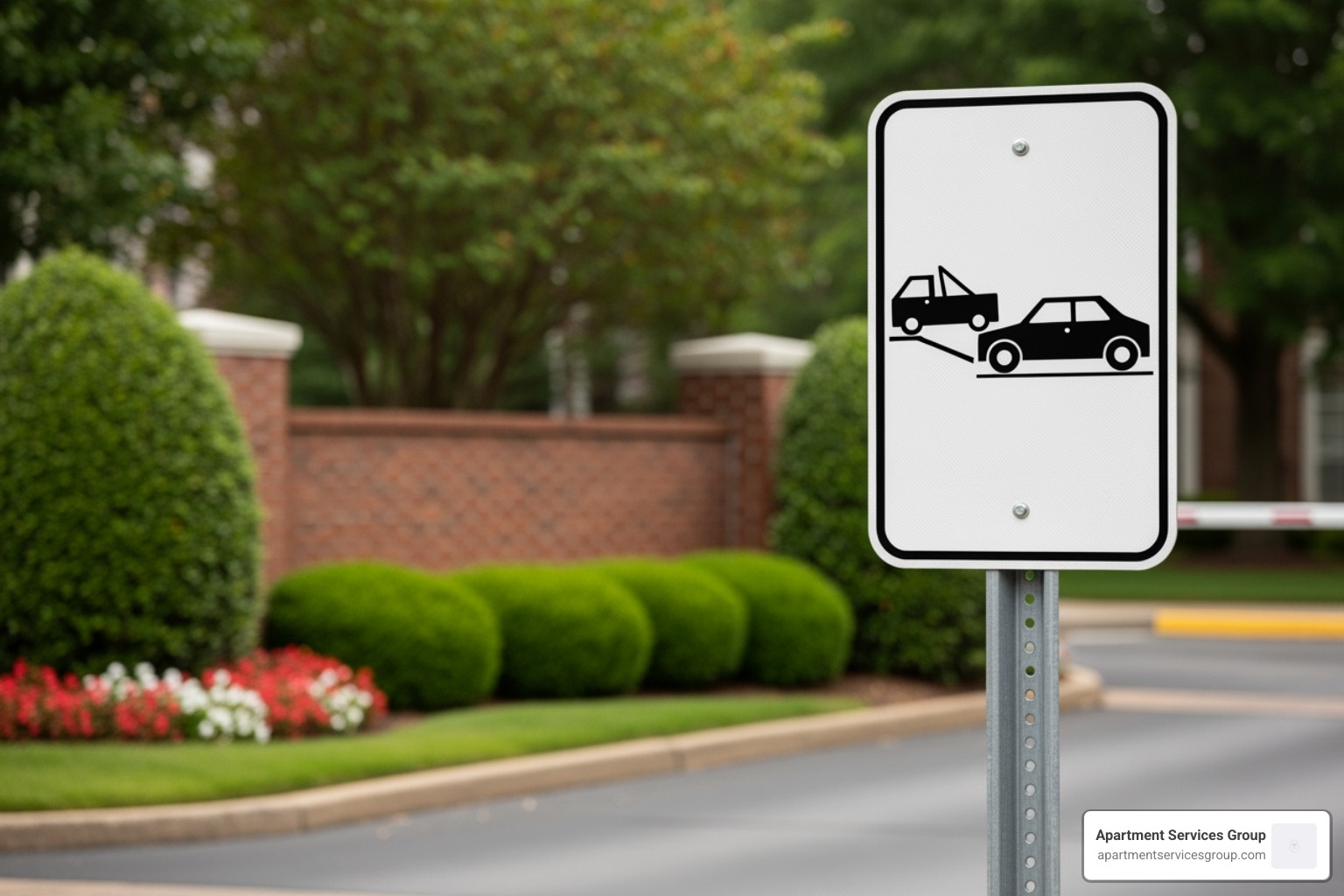
Clear, compliant signage is the law. Without it, even a seemingly legitimate tow can be challenged. We’ve seen disputes arise because a sign was too small or missing key information. Understanding these requirements is crucial for both residents and managers.
Understanding Towing Signage Laws
States have specific rules for towing signs. These are not suggestions but hard requirements that apartment complexes must follow.
First, signs must be posted at every vehicle entrance to the parking area. This ensures no one can claim they weren’t warned. The signs must also be large and clear enough to be easily read. For example, Texas requires signs to be at least 18×24 inches with 2-inch lettering, while California requires 17×22 inch signs with 1-inch lettering.
The sign’s content is also regulated. It must clearly state that unauthorized vehicles will be towed at the owner’s expense. It must also include the name and phone number of the towing company and, in many jurisdictions, contact information for the local law enforcement agency where the tow will be reported. You can review an example of these specific legal requirements here.
If your complex’s signs don’t meet these state-mandated requirements, any tow might be illegal, except for immediate safety hazards like blocking a fire lane.
Notice Periods: When Can They Tow?
How much warning do you get before a tow? It depends on the violation.
-
Immediate Towing: If you’ve parked in a fire lane or are blocking access points (driveways, gates, other cars), your vehicle can be towed immediately with no notice. These are critical safety issues with zero tolerance.
-
Notice Required: For most general parking violations, like parking in a non-designated area, a notice is often required. In California, for instance, a 96-hour notice must be placed on the vehicle. For vehicles that appear abandoned or inoperable, a 24-hour notice to law enforcement is typically required before towing.
In most cases, your apartment complex doesn’t have to give you personal notice before a tow. If they have proper signage and the parking rules are in your lease, they have met their legal notice requirements. This is why it’s so important to read the signs and your lease. Understanding these rules helps you know if a tow was legitimate or if you have grounds to challenge it.
Your Car is Gone: A Tenant’s Guide to Rights and Retrieval
That sinking feeling of finding an empty parking spot is awful. But if your vehicle has been towed from your apartment complex, you have specific rights and a clear path to getting it back.
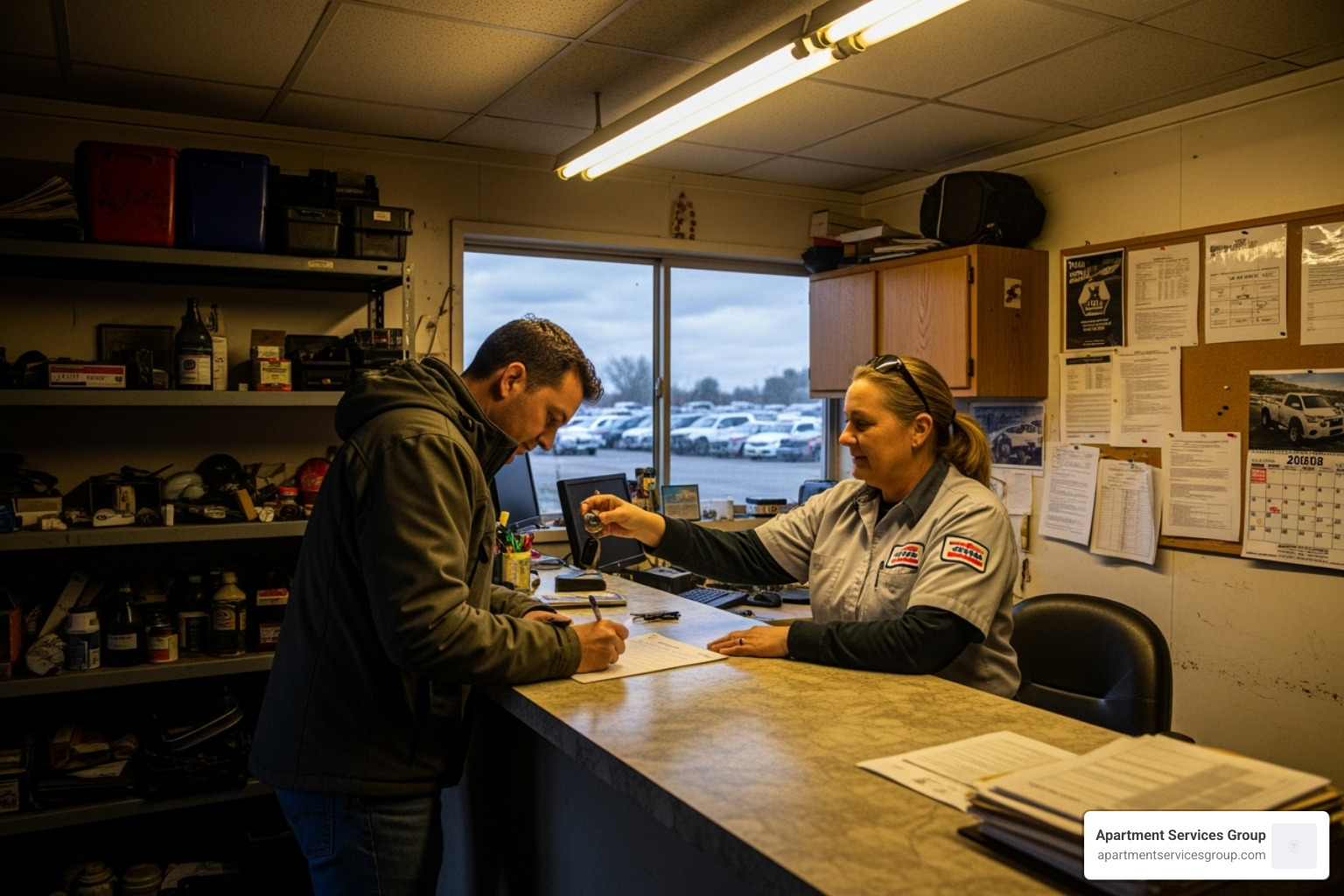
Whether you’re dealing with towing from apartment complex lots in Texas, California, or elsewhere, the principles of transparency and legal compliance apply. At Apartment Services Group, our Towing Services prioritize clear communication, but if you’re reading this, let’s focus on what to do next.
Steps to Retrieve Your Towed Vehicle
-
Confirm the Tow: First, confirm your car was towed and not stolen. Call your local police department’s non-emergency line. Towing companies are legally required to notify law enforcement shortly after a tow, usually within an hour.
-
Gather Your Documents: Before going to the impound lot, collect your driver’s license, proof of ownership (vehicle registration or title), and proof of insurance. Having these ready will save you time.
-
Inspect Your Vehicle: At the storage facility, inspect your vehicle for any new damage before you pay. Walk around the car, checking for scratches, dents, or broken mirrors. Take photos of anything that wasn’t there before. This is your evidence if you need to file a claim.
-
Pay the Fees: Towing and storage costs are often regulated by local authorities. Tow companies must accept both cash and credit cards; a “cash only” policy is a major red flag and is illegal in many states. Always get an itemized receipt detailing every charge.
Your Right to Reclaim Your Vehicle
Knowing your rights can save you significant money and stress.
-
On-Site Release: If you arrive while the tow truck is still on your apartment complex property, the driver must release your vehicle to you, even if it’s already hooked up. You may have to pay a “drop fee,” but this fee is legally capped—often at half the standard tow rate—and is much cheaper than a full tow and storage. You can find more details about these protections for states like California here.
-
Access to Personal Belongings: You have the right to retrieve personal belongings from your vehicle (like medication, a laptop, or a child’s car seat), even if you can’t afford to pay the full towing fees immediately.
-
Payment Methods: As mentioned, tow companies are required by law to accept major credit cards. If a company refuses your card and demands cash, they are violating the law.
-
Storage Fees: If you retrieve your vehicle within 24 hours, the towing company can typically only charge you for one day of storage. Don’t accept inflated charges for a partial day.
Fighting Back: What to Do About Illegal Towing from an Apartment Complex
It’s one thing if your car was legitimately towed, but another entirely if you believe the tow was illegal or predatory. Illegal towing from apartment complex properties happens, but you are not powerless. You have legal rights and concrete steps to fight back.

Predatory practices, like towing dozens of cars in a single night without proper warning, are not just inconvenient—they’re potentially illegal. Here’s how to identify and fight a wrongful tow.
Identifying an Illegal Tow
A tow may be illegal if:
- Signage is missing or inadequate: Signs at all entrances did not meet state requirements for size, lettering, or information.
- There was no proper authorization: The tow company lacked the required written authorization from the property owner or their agent for the tow.
- Notice requirements were ignored: You were not given a legally required notice period (e.g., 96 hours for a general violation in California) before the tow.
- Fees are excessive or payment is restricted: The company charged more than legally allowed, refused to provide an itemized receipt, or illegally demanded “cash only.”
- Law enforcement was not notified: The tow company failed to report the tow to police within the legally required timeframe (often one hour).
- On-site release was refused: The driver refused to release your vehicle on-site before leaving the property.
Steps to Take for a Wrongful Towing from an Apartment Complex
If you believe your car was towed illegally, act methodically.
-
Gather Evidence: This is your most critical step. Take photos of the parking spot, any missing or improper signage at all entrances, and collect your lease, parking permits, and the tow receipt. Get witness statements if possible.
-
Contact Management and the Tow Company: Calmly explain why you believe the tow was illegal and request all documentation, including the tow authorization. A simple conversation can sometimes resolve a mistake.
-
Send a Formal Demand Letter: If talking fails, send a written demand letter to both the towing company and the property owner. State the facts, your damages (towing fees, lost wages, etc.), and what you demand as a resolution. This shows you are serious about pursuing legal action.
-
File Formal Complaints: Report the illegal tow to local law enforcement and your state’s consumer protection agencies (like the Bureau of Automotive Repair in California or the Texas Department of Licensing and Regulation).
Suing for Illegal Towing from an Apartment Complex
If other methods fail, small claims court is an accessible option. You can sue both the property owner and the towing company.
State laws provide powerful protections. For example, if your vehicle was towed without proper authorization in California, you may be entitled to double the towing and storage fees. If a company overcharges, they may have to refund four times the overcharged amount. In Texas, a wrongful tow can be considered a deceptive trade practice, potentially entitling you to three times your actual damages.
Beyond these penalties, you can also sue for other losses, such as lost wages or rental car costs. Present your evidence clearly in court to demonstrate why the tow was illegal and what damages you suffered.
At Apartment Services Group, our parking enforcement services emphasize transparency and strict adherence to the law, because we know that predatory practices damage the community relationship we work to build.
Frequently Asked Questions about Apartment Towing
Dealing with towing from apartment complex situations brings up many questions. Here are the most common concerns, answered clearly based on general legal principles and our experience.
Can my landlord tow my car without notice in California?
Generally, your landlord does not have to give you personal notice (like a phone call) before a tow. The legal notice is typically provided through two means: 1) legally compliant signs posted at all entrances, and 2) the parking rules outlined in your lease agreement.
However, for certain violations, a notice must be placed directly on your vehicle. For many general parking infractions, states like California require a 96-hour (4-day) notice to be affixed to the car. For vehicles that appear abandoned, a 24-hour notice to local law enforcement is often required before a tow can be authorized.
Immediate towing without any on-vehicle notice is reserved for safety hazards, such as parking in a fire lane or blocking a driveway.
How much can a towing company legally charge in California?
Towing and storage fees are not arbitrary. They are typically regulated by local law enforcement agencies, and the maximum rates vary by city or county. Always ask for an itemized receipt to verify the charges.
If you retrieve your vehicle within 24 hours, you can generally only be charged for one day’s storage fee.
Consumer protection laws are strong. If you believe you were overcharged, you can file a complaint with state agencies. In some states, the penalties are severe. For example, California law states that a company charging excessive fees may be required to refund four times the overcharged amount.
What if I catch them in the act of towing my car?
If you see your car being hooked up, you have a crucial right. If the tow truck has not yet left the private property of your apartment complex, the operator must release your vehicle to you.
This is not always free. The operator can charge you a “drop fee” for the service already performed. However, this fee is legally capped. In many states, it cannot exceed half of the regular towing charge. This is far less expensive than paying for a full tow plus storage.
If the operator refuses to release your vehicle while still on the property, they are likely breaking the law. Stay calm, call local law enforcement’s non-emergency line to report the situation, and document the incident if you can do so safely.
Conclusion
Navigating the rules of towing from apartment complex properties can be complex, but knowledge is your best defense. Whether you’re a tenant or a property manager, understanding the regulations creates a fairer and more predictable environment for everyone.
Here are the key takeaways:
- Know Your Rights: State and local laws provide strong protections against unfair towing. Understanding when a tow is legal versus when it requires notice can save you hundreds of dollars.
- Read Your Lease: Your lease agreement and parking addendum are the official rulebooks for your community’s parking. Keep a copy and refer to it.
- Document Everything: In a dispute, evidence is everything. Take photos of signs (or lack thereof), keep receipts, and save all communications. Thorough documentation is your most powerful tool.
- Communicate Proactively: A quick conversation with your property manager about a visiting guest or a temporary parking need can prevent a tow before it ever happens.
For apartment owners and managers, well-managed parking is a cornerstone of a positive community. Clear policies, legally compliant signage, and fair enforcement reduce disputes and increase resident satisfaction.
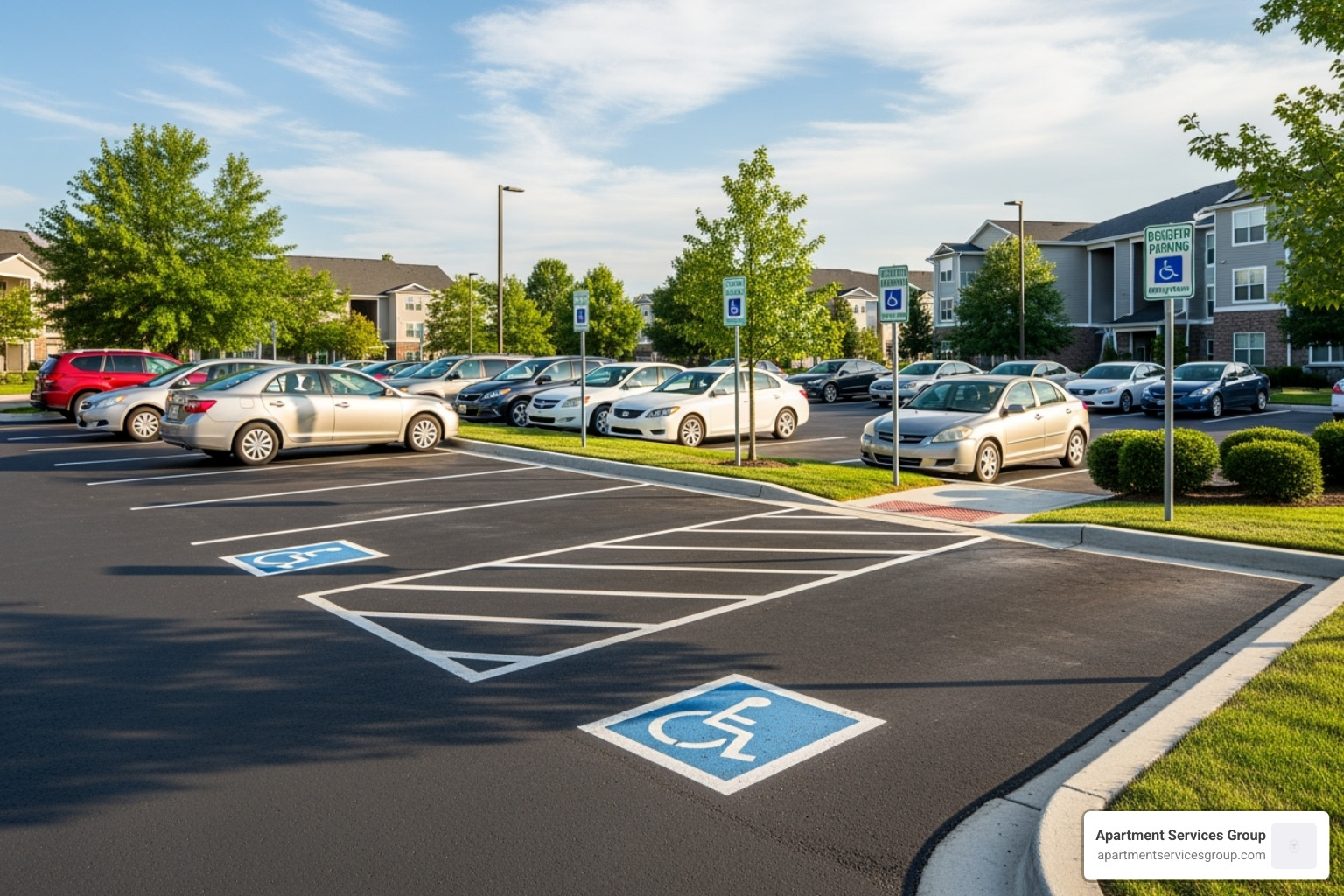
At Apartment Services Group, we’ve seen how proper parking management transforms communities. Residents want clarity, fairness, and respect. We approach parking enforcement as part of a larger commitment to creating harmonious living environments where everyone understands the rules and feels confident in the system.
If you’re a property manager looking to improve your parking policies and overall community operations, we can help. Find comprehensive apartment complex solutions that integrate maintenance, security, and fair parking enforcement to create a community residents are proud to call home.